

Ritual Running in the Ancient Landscape
Submitted by Andy_B on Saturday, 20 September 2025 Page Views: 87
Resources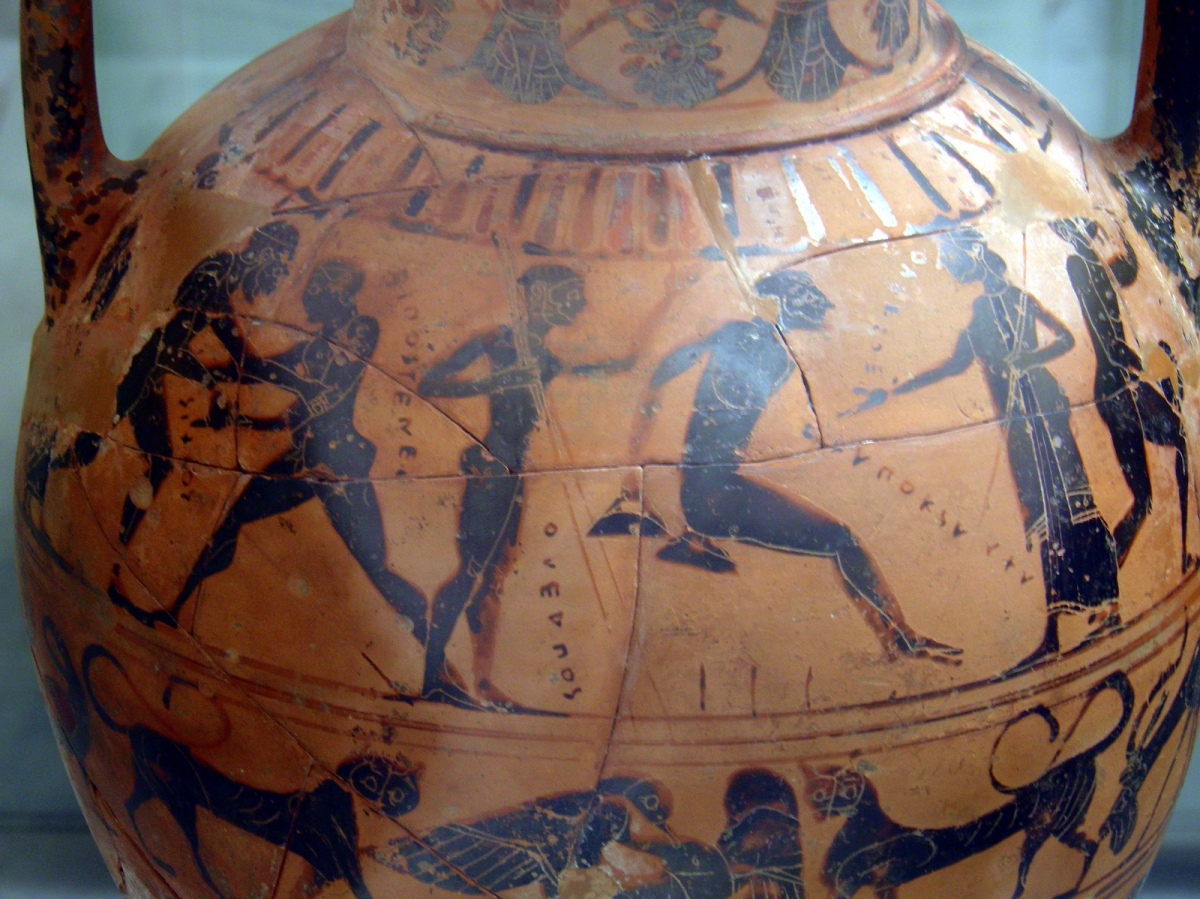
Endurance as an Ancestral Gift
Anthropologists now recognise that human beings are uniquely adapted for long-distance running. Persistence hunting — chasing animals until they overheated and collapsed — was practiced by early humans tens of thousands of years ago. In this sense, running was one of humanity’s oldest survival tools and is easily the oldest sport in the world. Over time, however, endurance running seems to have taken on symbolic dimensions, transforming from a means of acquiring food into a way of marking identity, status, and connection with the sacred.Hilltops and Sacred Races
Folklore from Ireland and Scotland preserves echoes of ritual footraces tied to seasonal festivals. At Lughnasadh, the August harvest festival, communities would gather on high places — such as Croagh Patrick or the Hill of Tara — where running contests were part of the celebrations. These were not merely games for entertainment; they symbolised renewal, fertility, and the cyclical passage of time. By ascending and descending hills, participants enacted the rhythm of death and rebirth that governed the agricultural year.Archaeologists note that many prehistoric monuments are sited on or near such high places. It is not hard to imagine processions, feasts, and races taking place in these liminal landscapes, binding physical exertion to spiritual meaning.
Stone Circles as Arenas
Stone circles, with their open, circular layouts, have often been interpreted as ritual gathering places. Could they also have been arenas for running contests? While direct evidence is elusive, the very form of the circle invites movement around its perimeter. Folklore traditions often describe people "running the stones" as an act of devotion or initiation. For example, in parts of Britain it was once customary to run sunwise around standing stones at midsummer for luck and protection. These folk practices may preserve a distant echo of prehistoric ritual running tied to sacred architecture.Runners Between Worlds
Ritual running may also have functioned as a form of liminality — a way of crossing thresholds between ordinary life and the sacred. In many cultures, movement between defined points is symbolic: from one hill to another, from a circle’s edge to its centre, or along a processional avenue. Running such routes at speed could heighten the intensity of the act, testing the body while opening a doorway to the otherworld.At sites like Stonehenge or Avebury, with their avenues linking circles and burial mounds, one can imagine participants running the length of these alignments during ceremonies, embodying journeys between life and death, or earth and sky.
Parallels Beyond Europe
The idea of ritual running is not confined to Europe. Among the Tarahumara people of Mexico, running long distances remains a sacred activity tied to festivals and social identity. In ancient Greece, before the classical Olympics, ritual races were already held in honour of local gods and heroes. The Spartan festival of Carneia, for instance, included endurance runs symbolising the community’s bond with Apollo. These parallels suggest that ritual running is a near-universal human practice with deep prehistoric roots.The Legacy of Ritual Running
Although the ancient races themselves are lost to time, their legacy may survive in both folklore and modern sport. Marathons, hill races, and seasonal community runs echo the structure of ancient ritual contests: physical endurance linked to celebration, place, and identity. When we lace up our shoes for a run today, we participate — perhaps unknowingly — in a tradition stretching back thousands of years.Modern athletics often portrays running as an individual pursuit of speed or endurance. Yet in prehistory, it was more likely communal, performed in a landscape alive with meaning. Running was not simply exercise, but a way to honour the gods, mark the seasons, and embody the connection between humans and the natural world.
Conclusion
Prehistoric Europe’s monuments and landscapes were stages for more than ritual processions or astronomical observations. They may also have witnessed the rhythmic pounding of human feet — men and women racing, circling, and climbing in celebration of life’s cycles. Ritual running reminds us that sport and spirituality were once inseparable, rooted in the land itself.When we stand today on a windswept hillfort or within a silent stone circle, we might picture not just builders and priests, but runners too — breathless, determined, and bound to their world through the ancient, sacred act of running.
