

Help Micropasts capture Radiocarbon dates from archaeological fieldwork reports
Submitted by Andy B on Friday, 05 February 2016 Page Views: 1584
DigsCountry: England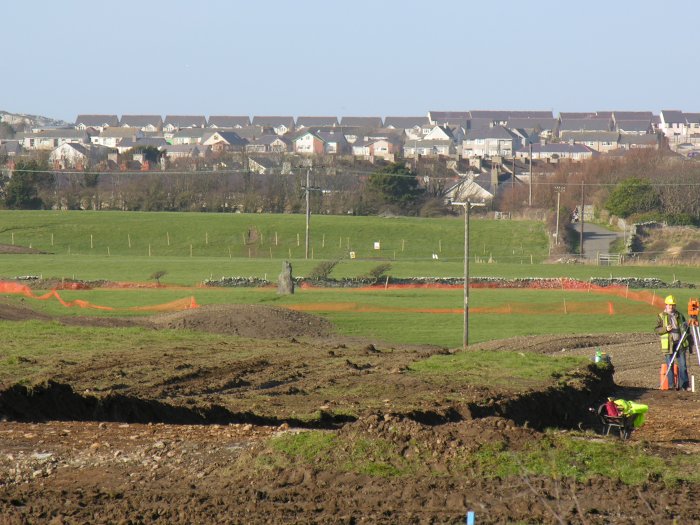
Researchers have used them to model the appearance or disappearance in human history of certain categories of historical monument more accurately, or to reconstruct past regional population highs and lows, others to consider patterns of climate change, and others to understand society's changing emphasis on different foodstuffs.
Over the last 25 years, there has been an explosion of archaeological fieldwork in advance of modern development projects (such as road building, house construction, retail outlets, train lines etc.). This has produced vast amounts of new evidence and a very large number of published reports (also known as grey literature) about archaeological sites, including many that contain radiocarbon dates.
Until recently, these reports were not published in easily accessibly places and were thus far too numerous and too scattered for their findings to make it regularly into mainstream archaeological interpretations of the UK's human past. However, over the last decade, the Archaeology Data Service (in close cooperation with individual archaeological companies, county heritage environment record-keepers and Historic England) has been building up an open access library of tens of thousands of such development-led archaeological reports.
Micropasts, in collaboration with the Archaeology Data Service, UCL Institute of Archaeology and the British Museum are asking for help to searching inside reports and entering any dates you find into a database in a systematic way. As always, any such contributions are made publicly available. It's easy to get started, by visiting
http://crowdsourced.micropasts.org/project/RadiocarbonHunt/

 We would like to know more about this location. Please feel free to add a brief description and any relevant information in your own language.
 Wir möchten mehr über diese Stätte erfahren. Bitte zögern Sie nicht, eine kurze Beschreibung und relevante Informationen in Deutsch hinzuzufügen.
 Nous aimerions en savoir encore un peu sur les lieux. S'il vous plaît n'hesitez pas à ajouter une courte description et tous les renseignements pertinents dans votre propre langue.
 Quisieramos informarnos un poco más de las lugares. No dude en añadir una breve descripción y otros datos relevantes en su propio idioma.