



From Ancient Sites to modern Office Buildings: Concrete across History
Submitted by Andy_B on Monday, 05 April 2021 Page Views: 707
Resources
But first, what exactly is concrete? Many people make the mistake of confusing concrete with cement, but they are not the same thing. While they might look similar, cement is actually only an ingredient in concrete, made out of a combination of limestone, chalk, clay, and gypsum. This mixture is then combined with water, resulting in a paste that turns to concrete when dried. Concrete is the most widely used building material in the world – more than aluminium, plastics, steel, and wood combined. According to a study conducted by QY Research, the global concrete market is on track to exceed $624 billion by 2025.
When was the earliest use of concrete recorded?
The history of concrete goes back to prehistoric times. More specifically, over 12 million years ago, in what is now Israel, people used what we now call cement to coat the exterior of their clay buildings. This coating, made up of burned limestone, interacted with the gas in the air, hardening and providing extra durability. In a way, this kind of cement was naturally occurring.Later on, around 10,000 BC, builders used concrete to make megalithic structures at one of the most ancient megalithic structures in the world. Archaeologists have found traces of cement at Göbekli Tepe. Located in what is now the Şanlıurfa Province of modern-day Turkey, Göbekli Tepe is considered probably the world’s oldest temple. Back then, builders did not have metal to reinforce the pillars of the temple, but they did use a prehistoric version of concrete.
The role of concrete in building iconic historic buildings
Fast forward a few thousand years, humanity learned to use concrete to build impressive monuments that are still around today. In 3000 BC, Ancient Egyptians used it to make the pyramids and, between 800 and 400 BC, concrete played a major role in building the Great Wall of China. Concrete was also used in Roman architecture, and researchers are even considering their mixing techniques as a way of producing longer-lasting, greener building materials. There’s a reason why Roman buildings like the Colosseum and the Pantheon lasted for thousands of years, and scientists believe we still have a lot to learn from them.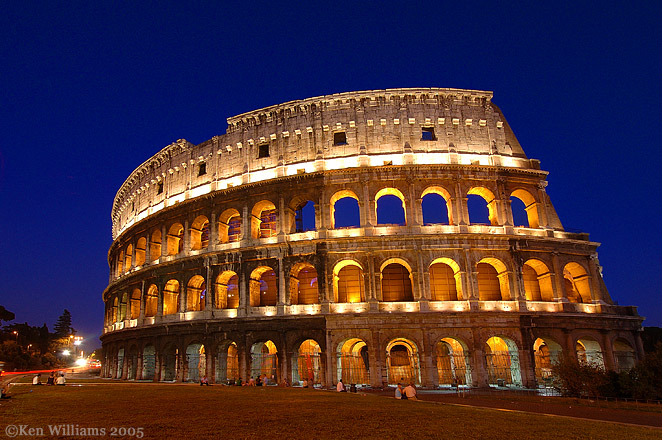
Innovative ways of using concrete today
The origins of modern concrete, as we know it today, start in 1824, when Joseph Aspdin invented “Portland Cement” – now the basic ingredient of concrete. In the following years, Portland cement underwent strength testing, and it was further reinforced with steel mesh and iron bars. Ever since, concrete was given a wide range of applications: war bunkers, the Panama Canal, not to mention major structures we still use today, such as the Alvord Lake Bridge in San Francisco and the Hoover Dam. Between 1956 and 1992, concrete was used for the building of the US Interstate Highway System. In 1963, the first concrete sports dome was built at the University of Illinois and, in 1992, the world’s first reinforced concrete skyscraper was built in Chicago.As for present-day use, concrete remains a highly durable, versatile material. Ready-mix concrete has a wide variety of applications, from residential to commercial and industrial. Similarly, concrete blocks can be used to reinforce security barriers, built waste recycling centres, interlock retaining walls, even in agriculture.
What does the future hold for the concrete industry? For one thing, researchers are trying to reinforce concrete even more. As it is used today, concrete lasts for around 100 years without requiring major renovations, whereas Roman concrete used aggregates that lasted much longer. What’s more, Roman concrete was also resistant to seawater, so scientists are trying to reverse-engineer the ancient formula. Other innovations focus on boosting concrete’s resistance to corrosion, which occurs when rainwater gets through the cracks and penetrates the steel bars inside. Of course, attention is also paid to sustainability. At present, the concrete industry gives off high levels of carbon dioxide, so researchers are testing ways of making the production process more eco-friendly.
Why is concrete such a popular building material?
There is no denying that concrete is one of the most popular and versatile materials, and the fact that it has been used from prehistoric times to the modern-day shows its enormous potential. But what exactly are its benefits, and why do so many builders choose it over other materials? Well, for one, concrete has high plasticity. This means that, when it’s wet, concrete can be moulded in literally any shape and then, after it dries, it becomes stronger and holds that shape for decades (even centuries, if properly maintained). Moreover, concrete is very durable. One might argue that modern concrete is not as hard as the concrete used in antiquity, but, even so, it can still last for centuries with the right maintenance. It can also be treated to be waterproof and fireproof, so chances are that centuries from now, concrete structures will outlast wooden and steel structures. Last but not least, concrete is one of the most affordable building materials, and the price/quality ratio is simply unbeatable. Besides, due to the fact that concrete buildings are resistant to mould, rust, fire, and moisture, insurance costs tend to be lower for them.With many thanks to ModernExplorers and Ken W for their kind help and support of this article, including their lovely photos.
