

Book Review: Hermeneutics of Megaliths by Costas Maritsas
Submitted by Andy B on Friday, 06 January 2017 Page Views: 2688
Reviews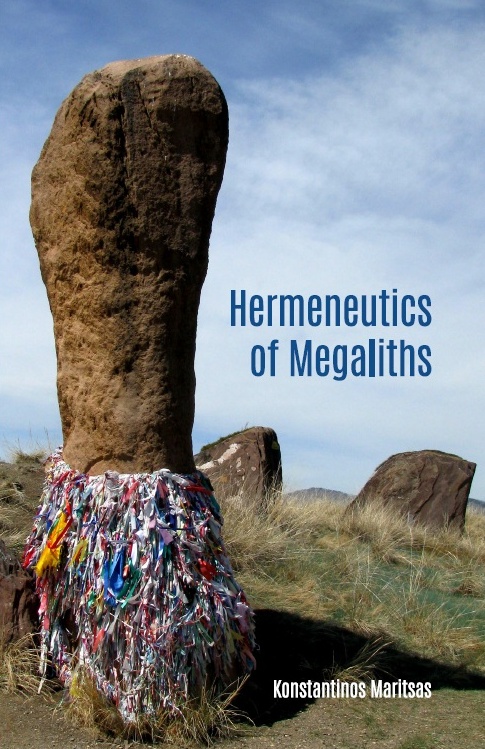
In his book Hermeneutics of Megaliths, Costas Maritsas attempts to tackle the problem of function of megaliths worldwide, with consideration of megalithic monuments from different parts of the world. This in itself is rather problematic, as the phenomenon of megaliths is by no means unified, despite similarities such as the presence of dolmens and standing stones on different continents.
Unfortunately, the author does not present any meaningful methodology for such a study, often making blanket statements and relying on generalizations regarding this very complex phenomenon, such as his rejection of the original function of megalithic tombs as burial sites, despite very good evidence for that from Western Europe (such as the Cotswold-Severn type long barrows which were often built on sites of earlier timber mortuary structures, so their primary purpose as burial sites is beyond reasonable doubt). In several passages of the book we are told that “many scientists believe” without any specific references - the author does not show either knowledge or interaction with the main body of academic literature about megaliths.
Given the lack of robust research methodology, it is not surprising that many of the hypothesis and conclusions offered are not grounded in actual evidence. The author interprets megalithic monuments as place of ritual dances and theatrical performance, imitating fights where men were observed by women. While the association of megaliths with ritual which could have included some form of dancing is certainly possible (especially given evidence for ceremonies in front of megalithic tombs in western Europe), such specific explanation as offered by the author is not supported with actual evidence.
The willingness to refer to ethnographic examples has to be commended (drawing ethnographic parallels to archaeological evidence is common in post-processual archaeology and has proved successful), but it has to be done within a defined methodology. Furthermore, the author compares monuments from completely different periods and cultures or even religious traditions (e.g. reference to frescos in St. Sophia Kiev Cathedral), drawing parallels between them and offering interpretations which are little more than imagination (such as a comparison between alleged phallic symbolism of Stonehenge and Greek temples).
The author makes leaps between different cultures and completely different types of monuments trying to draw similarities which are often vague. All of this is summed up by statements like “megaliths, being the first creation of civilized man, were already being created at the dawn of civilization (more than a hundred thousand years ago)” (p. 130) which place the book outside the realm of meaningful scholarship.
Some of Maritsas’ suggestions are more plausible than others. For example, his claim that megaliths were modelled after natural features can be true in some cases - such theory has been suggested for Silbury Hill in Wiltshire, which could have been inspired by some of the natural hills found in Wessex.
Overall, it is good to see the author looking for new ways to think about the phenomenon of megaliths. However, a lack of defined methodology, over-generalizations, a lack of serious interaction with the main body of academic research about megaliths and unsubstantiated hypothesis going against much of what we know about megaliths do not allow for a positive review of this work.
Review by a well-known Megalithic Portal contributor
Hermeneutics of Megaliths by Costas Maritsas
Published by Cambridge Scholars Publishing
Available from Amazon.co.uk

 We would like to know more about this location. Please feel free to add a brief description and any relevant information in your own language.
 Wir möchten mehr über diese Stätte erfahren. Bitte zögern Sie nicht, eine kurze Beschreibung und relevante Informationen in Deutsch hinzuzufügen.
 Nous aimerions en savoir encore un peu sur les lieux. S'il vous plaît n'hesitez pas à ajouter une courte description et tous les renseignements pertinents dans votre propre langue.
 Quisieramos informarnos un poco más de las lugares. No dude en añadir una breve descripción y otros datos relevantes en su propio idioma.