Featured: Explore Cornwall with the amazing Megalithic Portal smartphone app

Explore Cornwall with the amazing Megalithic Portal smartphone app

Random Image

Avebury Archaeology Map

Avebury Archaeology Map

Login

Register here - as a registered user you get more features and fewer ads.

Who's Online

There are currently, 1680 guests and 1 members online.

Sponsors

<< Our Photo Pages >> Tap o'Noth - Hillfort in Scotland in Aberdeenshire

Submitted by DrewParsons on Thursday, 21 May 2020  Page Views: 34774

Iron Age and Later PrehistorySite Name: Tap o'Noth
Country: Scotland
NOTE: This site is 0.3 km away from the location you searched for.

County: Aberdeenshire Type: Hillfort
Nearest Town: Alford  Nearest Village: Rhynie
Map Ref: NJ484293  Landranger Map Number: 37
Latitude: 57.351259N  Longitude: 2.859142W
Condition:
5Perfect
4Almost Perfect
3Reasonable but with some damage
2Ruined but still recognisable as an ancient site
1Pretty much destroyed, possibly visible as crop marks
0No data.
-1Completely destroyed
4 Ambience:
5Superb
4Good
3Ordinary
2Not Good
1Awful
0No data.
5 Access:
5Can be driven to, probably with disabled access
4Short walk on a footpath
3Requiring a bit more of a walk
2A long walk
1In the middle of nowhere, a nightmare to find
0No data.
2 Accuracy:
5co-ordinates taken by GPS or official recorded co-ordinates
4co-ordinates scaled from a detailed map
3co-ordinates scaled from a bad map
2co-ordinates of the nearest village
1co-ordinates of the nearest town
0no data
5

Internal Links:
External Links:

I have visited· I would like to visit

SumDoood SolarMegalith would like to visit

drolaf visited on 11th Aug 2024 - their rating: Cond: 3 Amb: 5 Access: 2 a long walk uphill 1.5 to 2 hours but worth it. long distance views from the top and very calm inside out of the wind. you can see lots of the vitrification. the small car park is empty at 7am but gets full by about 11. some fools even try and bring massive trailer of bicycles! mind the dog walkers little bags! a popular spot for all types.

megalithicmatt visited on 29th Apr 2011 - their rating: Cond: 3 Amb: 5 Access: 2 Visited loads of times. Great place, great views, great walls, great walk up.

DrewParsons HaggisAction Klingon have visited here

Average ratings for this site from all visit loggers: Condition: 3 Ambience: 5 Access: 2
Tap o'Noth
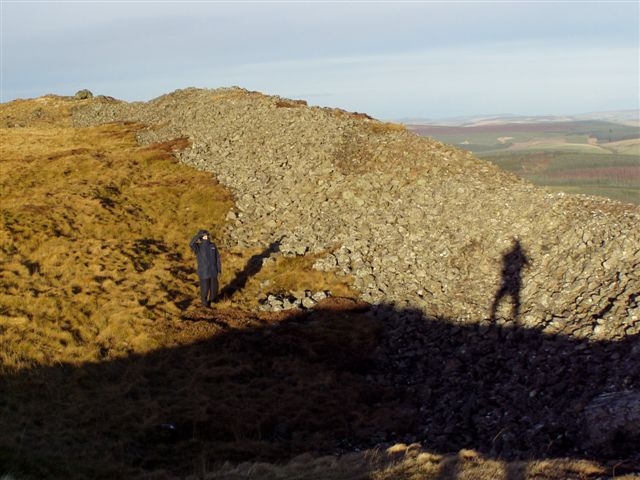
Tap o'Noth submitted by Cosmic : The north side (Vote or comment on this photo)
Tap O'Noth is an amazing vitrified hillfort in Aberdeenshire. It is located on the summit of the hill of the same name at 563 metres above sea level. The views extend right down to the coast on a fine day. It is the second highest hillfort in Scotland, exceeded in height only by Ben Griam Beg Fort in Sutherland at 580 metres. Tap O'Noth Fort covers an area of approximately 100 metres by 30 metres and comprises high boulder ramparts which tumble down the sides of the hill to create an imposing site. At different times two forts were built on this site. An interesting aspect of the fort is the extensive vitrification of the rocks which form the ramparts.

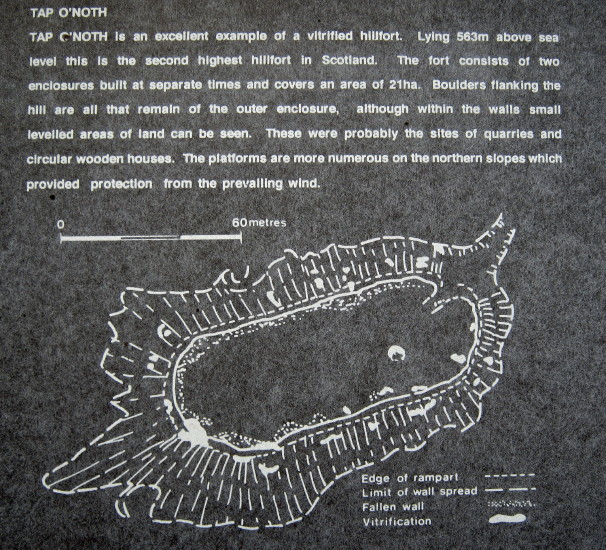
Some of the photos below illustrate this phenomena which once was considered to be the result of setting fire to wooden palisades during an attack on the fort. However, a more recent explanation based on other sites in the British Isles and Europe is that the rocks were deliberately vitrified in order to strengthen the ramparts. One of the photos below taken from the site sign at the car park shows the areas where the vitrification has occurred. Within the extant ramparts there are areas where housing, perhaps a water cistern and quarry sites have been located. Access is from the pleasant village of Rhyne. Follow the A941 west for 2 kilometres then turn north up a narrow signed lane to reach the car park and first of the various site signs. From here it took me 45 minutes walking (I am a fast walker) to reach the summit going first north then west to circumnavigate the high deer fence and ascent the hill on the track which runs towards the north east then turns towards the summit. There are excellent site signs at the car park and towards the summit.
References: Ralston Ian, Celtic Fortifications, Tempus, Stroud, 2007

Canmore: http://canmore.rcahms.gov.uk/en/site/17169/details/tap+o+noth/

Page originally by Vicky

We also have an experimental viewer with a panoramic view of the
vitrified wall of Tap o'Noth.

Note: New research suggests Tap O'Noth may have been home to over 4000 people in Pictish times, more details in the link on our page
You may be viewing yesterday's version of this page. To see the most up to date information please register for a free account.

Tap o'Noth
Tap o'Noth submitted by Klingon : View from Tap o'Noth at a windy day. (Vote or comment on this photo)

Tap o'Noth
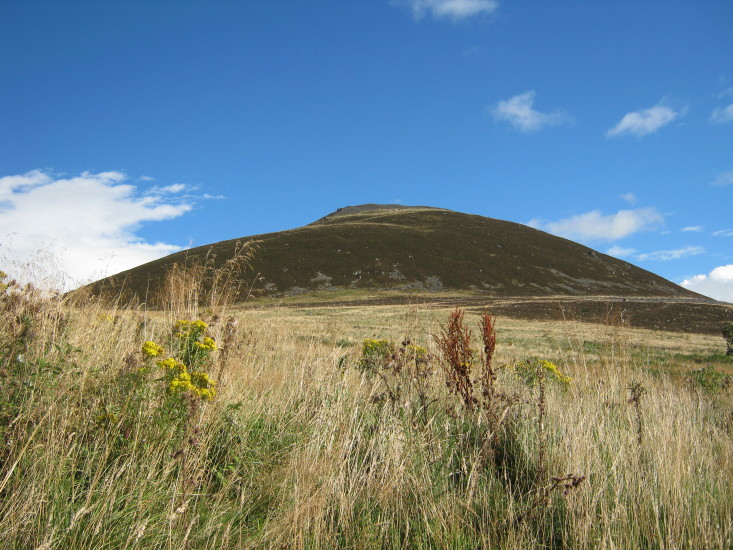
Tap o'Noth submitted by DrewParsons : Tap O'Noth hill with the hillfort perched at the top. September 2012. (Vote or comment on this photo)

Tap o'Noth
Tap o'Noth submitted by DrewParsons : Part of the informative site sign at the car park 2 km west of Rhynie village. The site plan shows areas of the ramparts which have been vitrified. September 2012. (Vote or comment on this photo)

Tap o'Noth
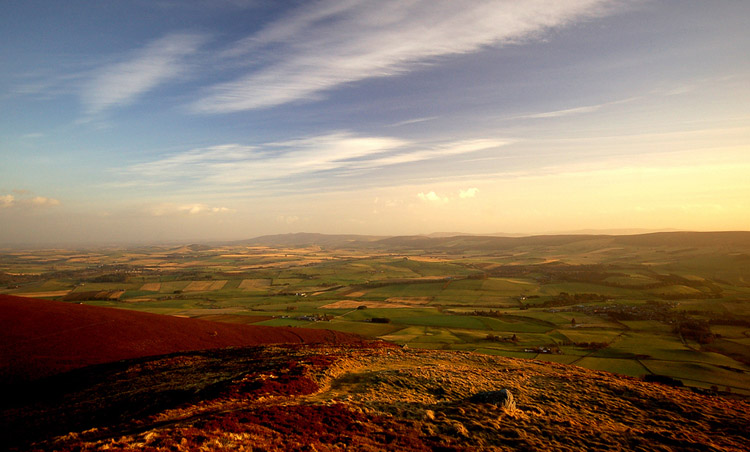
Tap o'Noth submitted by megalithicmatt : View from the top (Dec 2008) looking over Rhynie (right) and Garioch (left) towards Bennachie (centre left). (Vote or comment on this photo)

Tap o'Noth
Tap o'Noth submitted by Klingon : Melted rock at the wall. (1 comment)

Tap o'Noth
Tap o'Noth submitted by Cosmic : South side

Tap o'Noth
Tap o'Noth submitted by DrewParsons : The hillfort would have been a hard one to attack. September 2012.

Tap o'Noth
Tap o'Noth submitted by DrewParsons : View down the spreading ramparts towards the hinterland. The hillfort dominates the surrounding area. September 2012.

Tap o'Noth
Tap o'Noth submitted by Klingon : Tap o'Noth from its base.

Tap o'Noth
Tap o'Noth submitted by Cosmic : Interior of the hillfort (1 comment)

Tap o'Noth
Tap o'Noth submitted by drolaf : its an imposing site

Tap o'Noth
Tap o'Noth submitted by drolaf : its hard to get an idea of the large size of this enclosure in a photo

Tap o'Noth
Tap o'Noth submitted by Klingon : View of the vitrified wall from the centre. (2 comments)

Tap o'Noth
Tap o'Noth submitted by DrewParsons : View along the north eastern ramparts. September 2012.

Tap o'Noth
Tap o'Noth submitted by DrewParsons : View of the extensive interior of the fort. September 2012.

Tap o'Noth
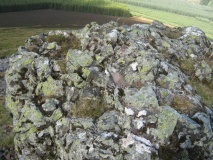
Tap o'Noth submitted by DrewParsons : Vitrified rock - once was considered to be the result of setting fire to wooden palisades during an attack on the fort. However, a more recent explanation based on other sites in the British Isles and Europe is that the rocks were deliberately vitrified in order to strengthen the ramparts. September 2012.

Tap o'Noth
Tap o'Noth submitted by DrewParsons : Vitrified rock at the north western end of the hillfort. September 2012.

Tap o'Noth
Tap o'Noth submitted by DrewParsons : Vitrified rock at the north western end of the fort. The rock has fused and it reminded me of volcanic rocks similarly fused in New Zealand. September 2012.

Tap o'Noth
Tap o'Noth submitted by DrewParsons : The extensive ramparts are between 6 and 8 metres wide. September 2012.

Tap o'Noth
Tap o'Noth submitted by DrewParsons : View inside the ramparts. September 2012.

Tap o'Noth
Tap o'Noth submitted by DrewParsons : Part of the ramparts at the summit. September 2012.

Tap o'Noth
Tap o'Noth submitted by DrewParsons : Detail from the comprehensive site sign near the entrance to the fort. From here there are extensive views down to the coast. September 2012.

Do not use the above information on other web sites or publications without permission of the contributor.
Click here to see more info for this site

Nearby sites

Click here to view sites on an interactive OS map

Key: Red: member's photo, Blue: 3rd party photo, Yellow: other image, Green: no photo - please go there and take one, Grey: site destroyed

Download sites to:
KML (Google Earth)
GPX (GPS waypoints)
CSV (Garmin/Navman)
CSV (Excel)

To unlock full downloads you need to sign up as a Contributory Member. Otherwise downloads are limited to 50 sites.


Turn off the page maps and other distractions

Nearby sites listing. In the following links * = Image available
 2.4km S 179° Upper Ord* Stone Circle (NJ484269)
 2.5km SE 127° Mill o'Noth* Standing Stones (NJ5034727801)
 2.6km SSE 146° Rhynie 2* Class I Pictish Symbol Stone (NJ49802715)
 2.7km SSE 148° Rhynie 4* Class I Pictish Symbol Stone (NJ49822700)
 2.7km S 188° Wheedlemont* Stone Circle (NJ4797226606)
 3.1km SSE 149° Rhynie 6* Class I Pictish Symbol Stone (NJ49972659)
 3.2km SSE 154° Rhynie Man* Class I Pictish Symbol Stone (NJ49762636)
 3.2km SSE 155° Craw Stane* Class I Pictish Symbol Stone (NJ4974926345)
 3.4km SSE 157° Rhynie 8* Class I Pictish Symbol Stone (NJ497262)
 3.4km SE 130° Corrstone Wood* Stone Circle (NJ510271)
 3.8km WNW 291° Wormy Hillock* Henge (NJ449307)
 5.0km ENE 78° Candy* Stone Circle (NJ533303)
 5.0km ESE 116° Clatt Bankhead Stone Circle (NJ529270)
 5.0km ESE 116° Bankhead of Clatt Multiple Stone Rows / Avenue (NJ529270)
 5.2km ESE 122° Clatt Hillhead Stone Circle (NJ528265)
 5.2km ESE 122° Hillhead of Clatt Multiple Stone Rows / Avenue (NJ528265)
 5.6km E 82° Newbigging Leslie Class I Pictish Symbol Stone (NJ53992998)
 5.6km E 82° Leith Hall* Class I Pictish Symbol Stone (NJ540300)
 6.4km ESE 120° Clatt 2* Class I Pictish Symbol Stone (NJ53892600)
 6.9km ESE 108° The Sunken Kirk, Seggieden Stone Circle (NJ54912708)
 7.0km E 100° Ardlair (Circle)* Stone Circle (NJ55272794)
 7.2km E 101° Ardlair (Pictish Stone)* Class I Pictish Symbol Stone (NJ5547027840)
 7.4km ESE 116° Tofthill, Clatt Stone Circle (NJ5526)
 7.5km NNE 26° Hill Of Bucharn Stone Circle (NJ518360)
 7.9km SE 130° Clatt 1* Class I Pictish Symbol Stone (NJ54422408)
View more nearby sites and additional images

<< Sønderborg Sønderskov 57-63 Rundhøjsklynge Helshøje

Sønderborg Sønderskov 373 Rundhøj >>

Please add your thoughts on this site

Great Crowns of Stone: The Recumbent Stone Circles of Scotland

Great Crowns of Stone: The Recumbent Stone Circles of Scotland

Sponsors

Latest Visit Logs

  • La Cieneguilla Petrolyphs
    “This is a historic site owned and managed by the Bureau of Land Management. It is located on the out…”
    by stonetracker · 11 Jun 2026
  • Ring of Brodgar
    “Early morning jaunt to get photos without humans.”
    by DeannaMcC · 10 Jun 2026
  • Badnabay
    “A short walk through rather boggy ground towards the west end of the horseshoe-shaped road coming of…”
    by RingPaw · 7 Jun 2026
  • Tsankawi
    “The complete Tsankawi Village loop trail is about 2 miles round trip. The parking lot is large, pave…”
    by stonetracker · 6 Jun 2026
  • Dun Beag (Struan)
    “Nothing much to add to earlier comments - a short walk but steep in parts. A spectacular site, defin…”
    by Glaschu · 5 Jun 2026

"Tap o'Noth" | Login/Create an Account | 11 News and Comments
  
Go back to top of page    Comments are owned by the poster. We aren't responsible for their content.
Ancient royal 'power base' uncovered in Aberdeenshire by Andy B on Saturday, 18 April 2026
(User Info | Send a Message)
A tiny Aberdeenshire community was once a royal Pictish power base with trade links to continental Europe, according to the results of a 10-year archaeology project.

Rhynie, near Huntly, has a population of about 500 people today but 1,400 years ago was likely to have been home to thousands.

Excavations led by the University of Aberdeen have revealed tools for making jewellery and other intricate metalwork, as well as glass vessels - containers - imported from western France.

On Tap o' Noth, a hill overlooking Rhynie, archaeologists identified one of the largest ancient settlements ever discovered in Scotland, with evidence of up to 800 huts.

The Picts, the descendants of Iron Age tribes, are known for decorating standing stones with intricate carvings and constructing impressive hillforts.

They ruled northern and eastern Scotland for hundreds of years before vanishing from written records about 1,100 years ago, the name of their kingdom disappearing with them.

The University of Aberdeen's Northern Picts Project said stone containers for refining silver, along with other finds, suggested the area had "elite status".

The archaeologists said the place-name Rhynie - which comes from the early Celtic word for king - further supported the idea the area was once a significant royal seat of Pictish power.

Prof Gordon Noble, who has led the research, said: "When we began work at Rhynie, we knew it was significant but we had no idea just how important it would turn out to be.

"What we've uncovered is the footprint of a major royal centre, a place that played a pivotal role in the formation of the Pictish kingdoms."

He added: "For decades, people assumed early medieval northern Scotland was sparsely populated and politically fragmented.

"Rhynie shows us something very different – a powerful, organised place with large settlements and sophisticated connections with the wider world."

The project's discoveries have been detailed in a new book "Rhynie, A Powerful Place of Pictland".

Source: BBC News www.bbc.co.uk/news/articles/cn8dxj669z7o

With thanks to Coldrum for the detauls,
[ Reply to This ]

Re: Tap o'Noth by Langers on Saturday, 20 January 2024
(User Info | Send a Message)
Simply Beautiful - It’s a fantastic hill fort/settlement and whilst the people may be long gone - if you visit in late August and early September you will find that it’s a larder of natural food. Blackberries and hazel nut trees on the low slopes; bilberries, crow berries and lingen berries higher up. Your ancestors were clever and whilst they may be gone their larder remains. Well worth a forage (remembering of course to take only what you need, leaving plenty for the wildlife). I see the same ancient ‘larders’ on almost all the hilltop settlements around the UK/EU. Maybe we should help to continue the tradition. When I do forage I leave plenty and also plant the seeds for the future. Langers the badger
[ Reply to This ]

Re: Tap o'Noth: Archaeologists unearth largest ever Pictish site by AngieLake on Friday, 15 May 2020
(User Info | Send a Message)
Interesting article online tonight:

'Mind-blowing' Pictish site near Aberdeen 'is the largest ever discovered' and was home to 4,000 native Scots in the 5th century

Tap O' Noth hill near Rhynie in Aberdeenshire was studied by archaeologists
Drone footage and depth analysis of the site revealed it was up to 17acres in size
Dates back to the fifth century and would have been home to up to 4,000 people

More here: https://www.dailymail.co.uk/sciencetech/article-8319699/Archaeologists-unearth-largest-Pictish-site-perched-hill.html
[ Reply to This ]

Re: Tap o'Noth by Anonymous on Sunday, 03 November 2013
Dear Sir,

an interesting aspect of the fort Tap O'Noth is "the extensive vitrification of the rocks which form the ramparts. Some rocks have even fused like volcanic rocks. According to your site this phenomena was considered to be the result of setting fire to wooden palisades during an attack on the fort. However, a more recent explanation based on other sites in the British Isles and Europe shall be that the rocks were deliberately vitrified in order to strengthen the ramparts.

Unfortunately both theories can not be right, because the temperatures of a wooden fire are far to low. For the right explanation by the German physicist Günter Bischoff ([email protected]) please see http://www.eichner-dresden.de/phaethon/

Dipl.-Ing. Friedrich Köhler
Kleinsedlitzer Straße 14
01809 Heidenau
[email protected]

[ Reply to This ]

Re: Tap o'Noth by DrewParsons on Thursday, 01 November 2012
(User Info | Send a Message)
Tap O'Noth is an amazing vitrified hillfort located on the summit of the eponymously named hill at 563 metres above sea level. The views extend right down to the coast on a fine day. It is the second highest hillfort in Scotland (exceeded in height only by Ben Griam Beg Fort in Sutherland at 580 metres). Tap O'Noth Fort covers an area of approximately 100 metres by 30 metres and comprises high boulder ramparts which tumble down the sides of the hill to create an imposing site. At different times two forts were built on this site. An interesting aspect of the fort is the extensive vitrification of the rocks which form the ramparts. Some of the photos below illustrate this phenomena which once was considered to be the result of setting fire to wooden palisades during an attack on the fort. However, a more recent explanation based on other sites in the British Isles and Europe is that the rocks were deliberately vitrified in order to strengthen the ramparts. One of the photos below...

Read the rest of this post...
[ Reply to This ]

Tap o'Noth Street View by Klingon on Saturday, 27 March 2010
(User Info | Send a Message)
Link to Street View
[ Reply to This ]

Re: Tap o'Noth by Anonymous on Saturday, 28 November 2009
We climbed Tap O'Noth in December three years ago and the wind was so fierce I thought we'd be blown off the top! Beautiful views and a good stout walk. Only problem: access thru the cow pasture and the sign "Beware of the Bull!".
Two North Carolina Travelers
PS: Anybody know how tall it is? If it is the second highest hillfort in Scotland, what is the highest?
[ Reply to This ]

Re: Tap o'Noth by Anonymous on Monday, 07 September 2009
the rocks of tap o noth have been melted by nuclear radiation
[ Reply to This ]
    Re: Tap o'Noth by bat400 on Tuesday, 08 September 2009
    (User Info | Send a Message)
    So, you're saying the "radiation" melted the rock? Or do you mean the heat from a nuclear reaction melted the rock? So, you're saying the site is contaminated with radiation now?
    [ Reply to This ]

Re: Tap o'Noth by Anonymous on Saturday, 11 October 2008
i was brought up at the base of it in a nice little place called rhynie, the best place on the planet ,from darren mitchell, scott english is my brother
[ Reply to This ]

Your Name: Anonymous [ Register Now ]
Subject:


Add your comment or contribution to this page. Spam or offensive posts are deleted immediately, don't even bother

<<< What is five plus one as a number? (Please type the answer to this question in the little box on the left)
You can also embed videos and other things. For Youtube please copy and paste the 'embed code'.
For Google Street View please include Street View in the text.
Create a web link like this: <a href="https://www.megalithic.co.uk">This is a link</a>  

Allowed HTML is:
<p> <b> <i> <a> <img> <em> <br> <strong> <blockquote> <tt> <li> <ol> <ul> <object> <param> <embed> <iframe>

We would like to know more about this location. Please feel free to add a brief description and any relevant information in your own language.
Wir möchten mehr über diese Stätte erfahren. Bitte zögern Sie nicht, eine kurze Beschreibung und relevante Informationen in Deutsch hinzuzufügen.
Nous aimerions en savoir encore un peu sur les lieux. S'il vous plaît n'hesitez pas à ajouter une courte description et tous les renseignements pertinents dans votre propre langue.
Quisieramos informarnos un poco más de las lugares. No dude en añadir una breve descripción y otros datos relevantes en su propio idioma.