



<< Our Photo Pages >> Buckland Rings - Ancient Village or Settlement in England in Hampshire
Submitted by JimChampion on Wednesday, 31 July 2019 Page Views: 22831
Multi-periodSite Name: Buckland RingsCountry: England County: Hampshire Type: Ancient Village or Settlement
Nearest Town: Lymington Nearest Village: Buckland
Map Ref: SZ315968 Landranger Map Number: 196
Latitude: 50.769935N Longitude: 1.554671W
Condition:
| 5 | Perfect |
| 4 | Almost Perfect |
| 3 | Reasonable but with some damage |
| 2 | Ruined but still recognisable as an ancient site |
| 1 | Pretty much destroyed, possibly visible as crop marks |
| 0 | No data. |
| -1 | Completely destroyed |
| 5 | Superb |
| 4 | Good |
| 3 | Ordinary |
| 2 | Not Good |
| 1 | Awful |
| 0 | No data. |
| 5 | Can be driven to, probably with disabled access |
| 4 | Short walk on a footpath |
| 3 | Requiring a bit more of a walk |
| 2 | A long walk |
| 1 | In the middle of nowhere, a nightmare to find |
| 0 | No data. |
| 5 | co-ordinates taken by GPS or official recorded co-ordinates |
| 4 | co-ordinates scaled from a detailed map |
| 3 | co-ordinates scaled from a bad map |
| 2 | co-ordinates of the nearest village |
| 1 | co-ordinates of the nearest town |
| 0 | no data |
Internal Links:


External Links:


I have visited· I would like to visit
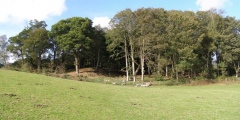
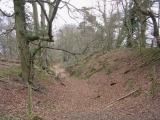
dubnicos visited on 1st Jan 2010 - their rating: Cond: 3 Amb: 2 Access: 4 I have been here more times than I care to mind, as Buckland Rings is less than half a mile from my parents' front door in Lymington. The grassy interior and the wooded ramparts are nice, of course, and a welcome habitat for wild rabbits and foxes which are often highly visible. However the ambience is ruined by a number of factors - chief among them proximity to the main road and a rather musically inclined power station. It is a fairly popular spot for strolling or walking the dog for many local people - which would be nice save for the ubiquitous litter which comes as a consequence. Preservation is for the most part fairly good, though not exceptional; the ramparts still stand pretty tall on some sides, however in other places they have been almost completely levelled. Overall the site does leave a fair bit to be desired; it's not particularly worth a visit - the New Forest has plenty of other prehistoric attractions which have a far better feel to them. On the other hand - I keep going back...
SteveC visited on 1st Jan 1970 - their rating: Amb: 4 Access: 4 Lived in Lymington until the age 18
JimChampion have visited here
Average ratings for this site from all visit loggers: Ambience: 3 Access: 4
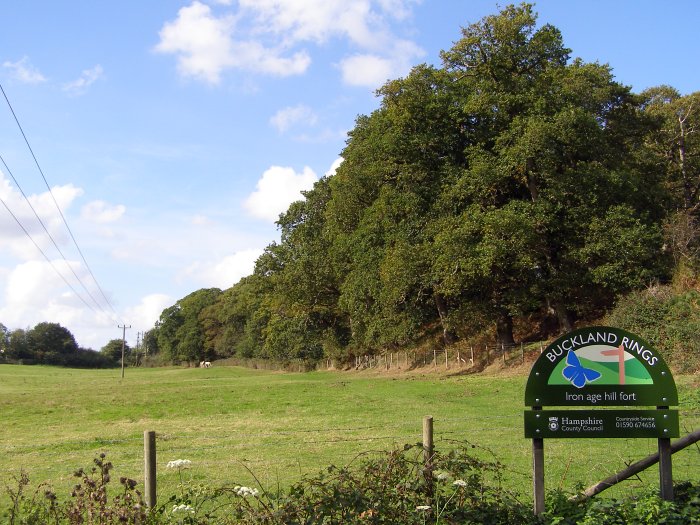
Small scale excavations were carried out in the entrance area by Christopher Hawkes in the 1930's. Modern interpretation of his results and evidence from other excavated forts suggest that the Buckland Rings could have been constructed as early as 400 BC and the defences may have been rebuilt several times before abandonment, probably before the Roman Conquest in 43 AD. [source]
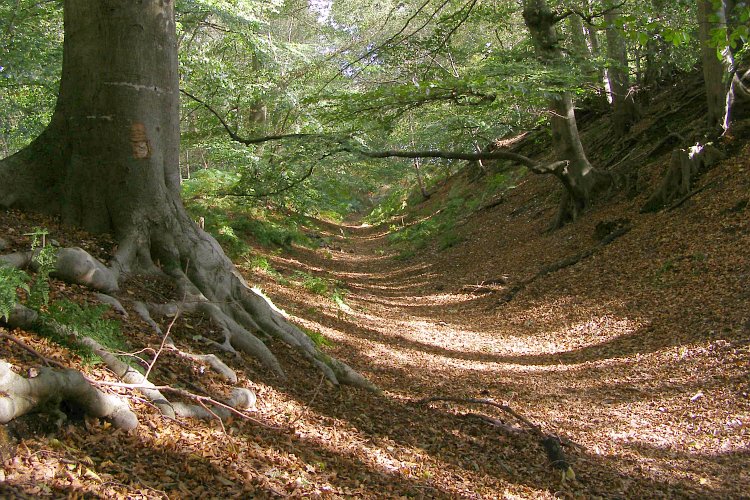
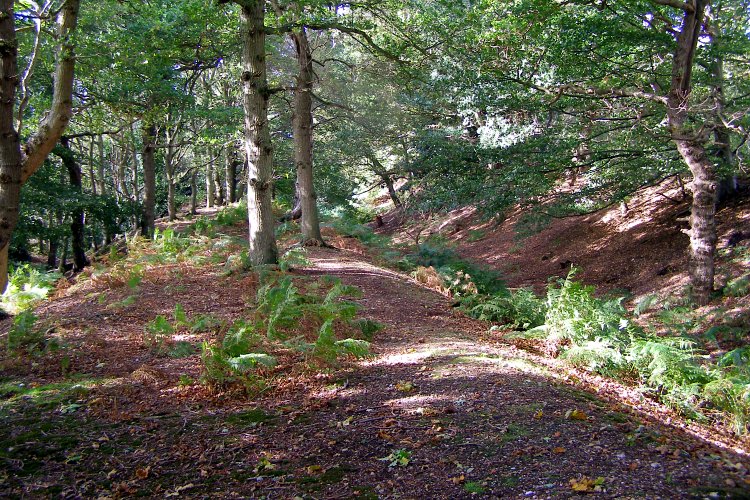
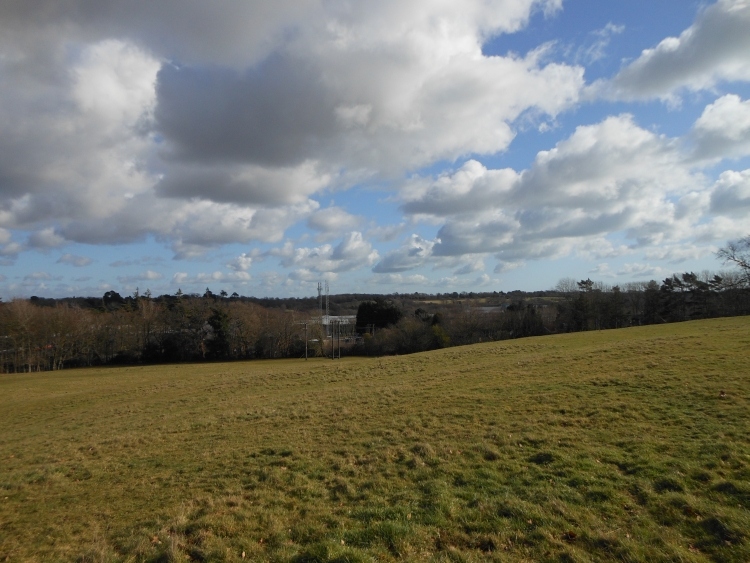
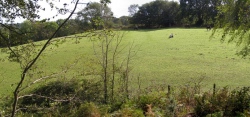
There is nothing "ring"-like about the earthworks, they are incredibly rectangular for a pre-Roman project. The missing part of the eastern defences is quite significant and permits a view across the Lymington River valley from the grassy rectangular interior.
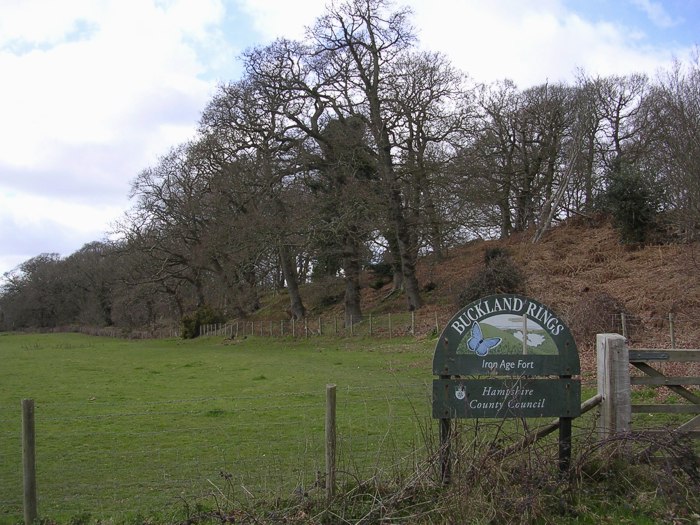
Access The public have access to most of the site via permissive paths, the most obvious access points are to the south and east of the site with Hampshire County Council signs and kissing gates. There is no dedicated car park so you'll have to improvise: park discreetly and thoughtfully on a residential side-street and take a short walk. There are two private properties occupying the eastern edge of the site.
Note: Video Talk: Will Buckland Rings Reveal its secrets? Josie Hagan, Bournemouth University, and various other New Forest related talks, from the New Forest Knowledge Conference 2017
You may be viewing yesterday's version of this page. To see the most up to date information please register for a free account.

Do not use the above information on other web sites or publications without permission of the contributor.
Click here to see more info for this site
Nearby sites
 Click here to view sites on an interactive OS map
Key: Red: member's photo, Blue: 3rd party photo, Yellow: other image, Green: no photo - please go there and take one, Grey: site destroyed
Download sites to:
KML (Google Earth)
GPX (GPS waypoints)
CSV (Garmin/Navman)
CSV (Excel)
To unlock full downloads you need to sign up as a Contributory Member. Otherwise downloads are limited to 50 sites.
Turn off the page maps and other distractions
Nearby sites listing. In the following links * = Image available
2.6km NW 311° Shirley Holms* Round Barrow(s) (SZ295985)
3.7km NE 46° Laurences Barrow* Round Barrow(s) (SZ34139937)
3.7km NNW 330° Setley Plain disc barrows* Round Barrow(s) (SU29620002)
4.1km NE 38° Beaulieu Heath (West)* Round Barrow(s) (SU3400)
4.8km NW 309° Longslade View tumulus* Round Barrow(s) (SZ278998)
5.4km NNE 23° Pudding Barrow* Round Barrow(s) (SU336018)
7.7km NNW 334° Ober Heath* Round Barrow(s) (SU281037)
8.6km SE 143° Bouldnor Underwater Settlement and Wooden Structure* Ancient Trackway (SZ367900)
8.8km NW 317° Ferny Knap tumuli* Round Barrow(s) (SU255032)
9.9km NE 38° Culverley Farm Bowl Barrow Round Barrow(s) (SU37530461)
9.9km NW 307° Clay Hill tumuli* Round Barrow(s) (SU235027)
10.5km E 80° Exbury Promontory Fort / Cliff Castle (SZ419987)
10.7km NNE 25° Yew Tree Heath* Round Barrow(s) (SU3589506556)
11.0km S 181° Headon Warren* Round Barrow(s) (SZ314858)
11.1km S 180° Heatherdown* Round Barrow(s) (SZ31508570)
11.3km ENE 57° Beaulieu Heath (East)* Round Barrow(s) (SU4103)
11.4km N 353° New Forest Museum* Museum (SU30020813)
11.4km S 170° Long Mortuary Enclosure, 800mtr West of Freshwater Bay House* Barrow Cemetery (SZ3362785568)
11.5km S 177° Highdown barrows* Round Barrow(s) (SZ32168535)
11.5km S 175° Tennyson Monument Enclosure* Misc. Earthwork (SZ32498533)
11.5km S 175° Tennyson Down Field System* Ancient Village or Settlement (SZ32508532)
11.6km N 11° Matley Heath* Round Barrow(s) (SU336082)
11.6km NE 37° Dibden Bottom* Barrow Cemetery (SU385061)
11.7km SSE 162° Afton Down* Barrow Cemetery (SZ352857)
11.9km S 184° West High Down* Round Barrow(s) (SZ30678495)
View more nearby sites and additional images


 We would like to know more about this location. Please feel free to add a brief description and any relevant information in your own language.
 Wir möchten mehr über diese Stätte erfahren. Bitte zögern Sie nicht, eine kurze Beschreibung und relevante Informationen in Deutsch hinzuzufügen.
 Nous aimerions en savoir encore un peu sur les lieux. S'il vous plaît n'hesitez pas à ajouter une courte description et tous les renseignements pertinents dans votre propre langue.
 Quisieramos informarnos un poco más de las lugares. No dude en añadir una breve descripción y otros datos relevantes en su propio idioma.