Featured: Current Archaeology Book of the Year 2019!

Current Archaeology Book of the Year 2019!

Random Image

Megaliths by David Corio

Megaliths by David Corio

Login

Register here - as a registered user you get more features and fewer ads.

Who's Online

There are currently, 2296 guests and 6 members online.

Sponsors

<< Our Photo Pages >> London Natural History Museum - Museum in England in Greater London

Submitted by coldrum on Monday, 03 February 2014  Page Views: 20962

MuseumsSite Name: London Natural History Museum
Country: England
NOTE: This site is 1.721 km away from the location you searched for.

County: Greater London Type: Museum
Nearest Town: London  Nearest Village: South Kensington
Map Ref: TQ266792
Latitude: 51.497572N  Longitude: 0.177601W
Condition:
5Perfect
4Almost Perfect
3Reasonable but with some damage
2Ruined but still recognisable as an ancient site
1Pretty much destroyed, possibly visible as crop marks
0No data.
-1Completely destroyed
5 Ambience:
5Superb
4Good
3Ordinary
2Not Good
1Awful
0No data.
5 Access:
5Can be driven to, probably with disabled access
4Short walk on a footpath
3Requiring a bit more of a walk
2A long walk
1In the middle of nowhere, a nightmare to find
0No data.
5 Accuracy:
5co-ordinates taken by GPS or official recorded co-ordinates
4co-ordinates scaled from a detailed map
3co-ordinates scaled from a bad map
2co-ordinates of the nearest village
1co-ordinates of the nearest town
0no data
4

Internal Links:
External Links:

I have visited· I would like to visit

MelissaBWrite would like to visit

IanMu4966 visited on 31st May 2025 - their rating: Cond: 5 Amb: 4 Access: 5

rvbaker2003 visited on 1st Aug 2022 - their rating: Cond: 5 Amb: 5 Access: 5

RedKite1985 visited on 6th Jun 2022 - their rating: Cond: 5 Amb: 5 Access: 5 Can never get bored here!

XIII visited on 1st May 2012 - their rating: Cond: 5 Amb: 4 Access: 5

Andy B visited on 16th Feb 2011 Location of the ancient bones featured in Episode Two of BBC's History of Ancient Britain

CoppellaiaMatta visited on 1st Jan 2002 ...and it's a gorgeous building!

Tdiver visited on 1st Jan 1974 - their rating: Cond: 5 Amb: 5 Access: 5

coin visited - their rating: Cond: 5 Amb: 4 Access: 5

lucasn visited - their rating: Cond: 5 Amb: 4 Access: 4

kthdsn visited - their rating: Cond: 5 Amb: 5 Access: 5

DrewParsons myf hevveh have visited here

Average ratings for this site from all visit loggers: Condition: 5 Ambience: 4.5 Access: 4.88
London Natural History Museum
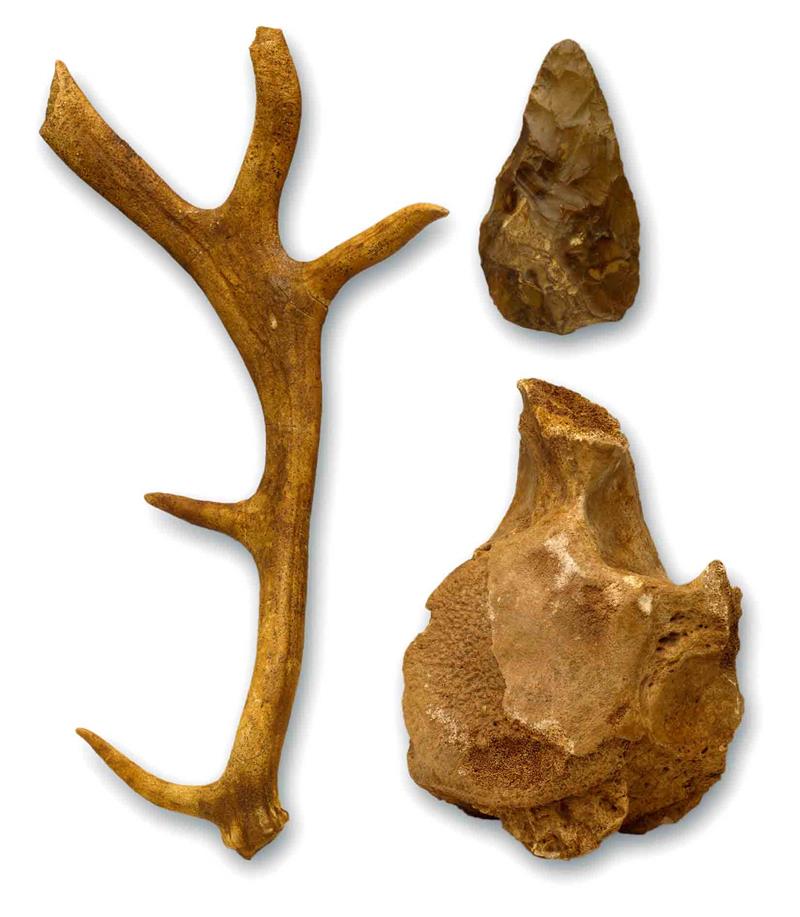
London Natural History Museum submitted by dodomad : Hoxnian anters, bones & hand axe from Swanscombe Image copyright: The Trustees of the Natural History Museum (Vote or comment on this photo)
The Natural History Museum, London has a collection of early stone tools and various hominid remains including the bone from Boxgrove man, the Swanscombe skull and much much more of course. Mind the schoolkids!

Official Web Site

Note: One Million Years of the Human Story exhibition runs from 13th Feb to 28th Sept 2014 - see the latest comment on our page.
You may be viewing yesterday's version of this page. To see the most up to date information please register for a free account.

London Natural History Museum
London Natural History Museum submitted by Creative Commons : Looking up at the Natural History Museum, with the autumn sunshine and blue sky enhancing the colour of the brickwork. Copyright Christine Matthews and licensed for reuse under the Creative Commons Licence. (Vote or comment on this photo)

London Natural History Museum
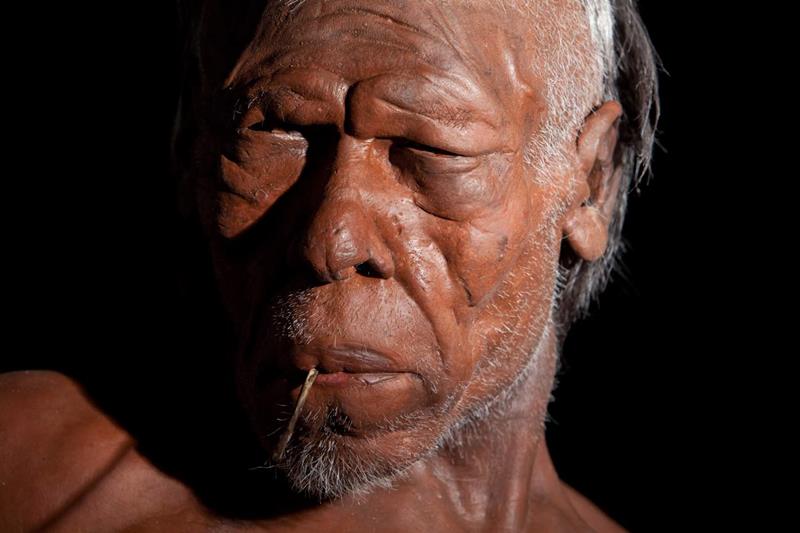
London Natural History Museum submitted by dodomad : Specially commissioned Neanderthal and Homo sapiens models (above) that are the most life-like and scientifically accurate ever made feature in the exhibition Britain: One Million Years of the Human Story, 13 February to 28 September 2014 Image copyright: The Trustees of the Natural History Museum (Vote or comment on this photo)

London Natural History Museum
London Natural History Museum submitted by Creative Commons : Entrance to Natural History Museum, Cromwell Road, London SW7 Copyright Christine Matthews and licensed for reuse under the Creative Commons Licence. (Vote or comment on this photo)

London Natural History Museum
London Natural History Museum submitted by Creative Commons : Looking up at the main staircase in the Natural History Museum. Copyright Christine Matthews and licensed for reuse under the Creative Commons Licence. (Vote or comment on this photo)

London Natural History Museum
London Natural History Museum submitted by Creative Commons : Natural History Museum as seen from the east, with a temporary ice rink. Copyright Christine Matthews and licensed for reuse under the Creative Commons Licence. (Vote or comment on this photo)

London Natural History Museum
London Natural History Museum submitted by Creative Commons : The impressive Visions of Earth gallery in the Natural History Museum. Copyright Sue Adair and licensed for reuse under the Creative Commons Licence.

London Natural History Museum
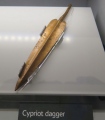
London Natural History Museum submitted by DrewParsons : Cypriot Dagger dated to around 2000BC on display at this museum in April 2015 and on loan from UCL Institute of Archaeology.

London Natural History Museum
London Natural History Museum submitted by Creative Commons : Inside the Natural History Museum looking towards the entrance. Copyright Christine Matthews and licensed for reuse under the Creative Commons Licence.

Do not use the above information on other web sites or publications without permission of the contributor.
Click here to see more info for this site

Nearby sites

Click here to view sites on an interactive OS map

Key: Red: member's photo, Blue: 3rd party photo, Yellow: other image, Green: no photo - please go there and take one, Grey: site destroyed

Download sites to:
KML (Google Earth)
GPX (GPS waypoints)
CSV (Garmin/Navman)
CSV (Excel)

To unlock full downloads you need to sign up as a Contributory Member. Otherwise downloads are limited to 50 sites.


Turn off the page maps and other distractions

Nearby sites listing. In the following links * = Image available
 879m NW 323° St Govor's Well* Holy Well or Sacred Spring (TQ2605079887)
 1.5km ESE 123° Tutankhamun: Treasures of the Golden Pharaoh exhibition, Saatchi Gallery* Museum (TQ279784)
 3.6km NE 49° The One and The Many* Modern Stone Circle etc (TQ2926981650)
 3.8km ESE 108° Mesolithic structure near Vauxhall bridge* Timber Circle (TQ30217814)
 4.1km ENE 73° Cleopatra's Needle (London)* Marker Stone (TQ3054380516)
 4.2km NE 56° British Museum* Museum (TQ300816)
 4.2km NE 47° Petrie Museum of Egyptian Archaeology* Museum (TQ2962882172)
 4.6km NW 316° Kensal Green* Modern Stone Circle etc (TQ233824)
 5.0km NE 51° Coram* Modern Stone Circle etc (TQ3044582417)
 5.3km ENE 69° Bridewell (Fleet Street) Holy Well or Sacred Spring (TQ315812)
 5.6km ENE 59° Skinner's Well (Finsbury) Holy Well or Sacred Spring (TQ313822)
 5.6km E 98° Cuming Museum Museum (TQ322786)
 5.7km ENE 60° Clerk's Well (Farringdon Lane) Holy Well or Sacred Spring (TQ3145282134)
 5.8km ENE 65° Cow Cross (Finsbury) Ancient Cross (TQ31788181)
 5.9km ENE 72° Broken Cross (Westminster) Ancient Cross (TQ322812)
 5.9km ENE 69° Museum of London* Museum (TQ321815)
 6.2km ENE 74° Mithras Temple (London)* Ancient Temple (TQ3252181031)
 6.3km ENE 76° London Stone* Marker Stone (TQ3267680903)
 6.7km ENE 75° Roman Basilica at 85 Gracechurch Street* Ancient Palace (TQ3303481051)
 6.9km N 2° Chalybeate Well* Holy Well or Sacred Spring (TQ2671986055)
 6.9km E 79° All Hallows by the Tower* Museum (TQ3337380695)
 7.0km E 79° St Olave's Well* Holy Well or Sacred Spring (TQ335807)
 7.3km SSW 213° Putney Heath Round Barrow(s) (TQ22797295)
 7.3km NW 317° St Mary's Well (London)* Holy Well or Sacred Spring (TQ214844)
 7.4km N 8° Hampstead Heath Barrow* Round Barrow(s) (TQ2738286518)
View more nearby sites and additional images

<< Steinkreis Börnecke

Tel Burgin >>

Please add your thoughts on this site

Lines on the Landscape, Circles from the Sky: Monuments of Neolithic Orkney

Lines on the Landscape, Circles from the Sky: Monuments of Neolithic Orkney

Sponsors

Latest Visit Logs

  • The Bargain Stone
    “Sadly when I was there it was covered by a large box. At least the workers renovating the church ha…”
    by cactus_chris · 15 Jun 2026
  • Sigtuna U 389
    “Right next to the museum entrance, this runestone is hard to miss.”
    by CharcoalBurner89 · 15 Jun 2026
  • The Awen Stone
    “Situated in the grounds of West End Campsite, easily visible and accessible as of June 2026.”
    by TimPrevett · 15 Jun 2026
  • Dolmen de la Roc de l'Arca
    “GPS co-ordinates are accurate. Use the same parking as for Dolmen de la Cauna del Moro and walk 200…”
    by Jhalst1 · 14 Jun 2026
  • Dolmen de la Cauna del Moro
    “The GPS co-ordinates are accurate, and you can drive to withing 10m of the dolmen. There is parking …”
    by Jhalst1 · 14 Jun 2026

"London Natural History Museum" | Login/Create an Account | 18 News and Comments
  
Go back to top of page    Comments are owned by the poster. We aren't responsible for their content.
Colonising Britain – One million years of our human story by Andy B on Tuesday, 11 February 2014
(User Info | Send a Message)
When did the first people arrive in what is now Britain? Ongoing research into an extraordinary concentration of Palaeolithic sites on the coasts of Norfolk and Suffolk has uncovered evidence of human activity dating back about 900,000 years – almost twice as long as previously thought. Now the subject of a major exhibition at London’s Natural History Museum, these findings bring the successive waves of prehistoric pioneers that populated these shores into unprecedented focus, as Chris Stringer told Karolyn Shindler.

http://www.archaeology.co.uk/articles/features/colonising-britain-one-million-years-of-our-human-story.htm
[ Reply to This ]
    Re: Colonising Britain – One million years of our human story by Andy B on Tuesday, 11 February 2014
    (User Info | Send a Message)
    Archaeologists have found the earliest human footprints known outside Africa, at Happisburgh on the Norfolk coast. Dating back 800,000 years, the prints are thought to have been made by five individuals, including both adults and children.

    They were identified by a team of scientists led by the British Museum, Natural History Museum, and Queen Mary University of London, after heavy seas removed beach sands to reveal a series of hollows in the silt at low tide.

    Analysis of digital images of these hollows confirmed that they were ancient human footprints, direct evidence of the earliest known humans in northern Europe. In some cases the prints were so clear that the heel, arch, and even toes could be identified.

    ‘At first we weren’t sure what we were seeing, but as we sponged off the seawater, it was clear that the hollows resembled prints, perhaps human footprints, and that we needed to record the surface as quickly as possible before the sea eroded it away.’

    The age of the site is based on examination of glacial deposits overlying the finds, which contain extinct animals and environmental evidence dating back more than 800,000 years. The footprints come from the same deposits.

    http://www.archaeology.co.uk/articles/news/earliest-human-footprints-outside-africa-found-in-norfolk.htm
    [ Reply to This ]
    Re: Colonising Britain – One million years of our human story by bat400 on Friday, 25 July 2014
    (User Info | Send a Message)
    And another similar link sent by coldrum from http://www.culture24.org.uk
    [ Reply to This ]
      Re: Colonising Britain – One million years of our human story by sem on Friday, 25 July 2014
      (User Info | Send a Message)
      It's nice to see a link to MegP here under Sites We Like, right next to a picture of "the startlingly convincing Neanderthal in the classic pose of an earnest museum-goer – hands clasped behind his back, head tilted a little to one side, a gentle smile..."
      [ Reply to This ]

One Million Years of the Human Story (AHOB) runs from 13th Feb to 28th Sept 2014 by Andy B on Monday, 03 February 2014
(User Info | Send a Message)
The Swanscombe skull, from the earliest known Neanderthal in Britain, and the Clacton spear, the oldest wooden spear in the world, are just some of the incredible objects from Britain’s past that will go on show for the first time in Britain: One Million Years of the Human Story – opening 13 February 2014.

Remarkable finds from sites such as Kents Cavern in Devon, Pontnewydd in North Wales and Happisburgh in Norfolk will take you back nearly one million years to uncover what life was really like for our ancient relatives.

Drawing on 12 years’ of research by an extended network of scientists, led by the Natural History Museum, this new exhibition tells the enchanting story of the changing faces and spaces of prehistoric Britain. The latest scientific techniques and life-size models bring rarely seen specimens to life so you can look back, long before the Romans, Saxons and Vikings, to piece together how humans came and went in Britain over the last million years.

Professor...

Read the rest of this post...
[ Reply to This ]
    Re: One Million Years of the Human Story (AHOB) runs from 13th Feb to 28th Sept 2014 by Andy B on Monday, 03 February 2014
    (User Info | Send a Message)
    Britain: One Million Years of the Human Story, 13 February to 28 September 2014

    See Britons as you have never seen them before and explore how we have come and gone from this land over the ages. Britain: One Million Years of the Human Story traces the changing faces and landscapes of this country, drawing on more than 10 years of research by a large network of scientists, led by the Natural History Museum.

    From hippos that swam in the Thames and the earliest Neanderthals in Europe, to intriguing ancient evidence of cannibalism, this exhibition brings together rare fossil specimens and artefacts to give the most complete picture of our past so far.

    Highlights include:

    * Specially commissioned Neanderthal and Homo sapiens models that are the most life-like and scientifically accurate ever made.
    * Stone tools from Happisburgh in Norfolk that show us ancient humans arrived in Britain around 900,000 years ago – 400,000 years earlier than first thought.
    * A 400,000...

    Read the rest of this post...
    [ Reply to This ]
    Re: One Million Years of the Human Story (AHOB) runs from 13th Feb to 28th Sept 2014 by Andy B on Monday, 03 February 2014
    (User Info | Send a Message)
    See also:

    http://www.nhm.ac.uk/nature-online/life/human-origins/human-occupation-britain/

    http://www.ahobproject.org/
    [ Reply to This ]

Discovery of a horse engraving from Bruniquel, France by bat400 on Sunday, 27 October 2013
(User Info | Send a Message)
There are many examples of Palaeolithic portable engravings that have been discovered, long after their excavation, among the collections stored in museums.
It is far rarer, however, for a new engraving to be found among faunal material curated within a palaeontological collection.


In the article publish in Antiquity 285 (2011) the researchers (Laura M. Kaagan, Paul G. Bahn & Adrian M. Lister) report on the discovery of a horse engraving in the collection of the Palaeontology Department of the Natural History Museum (NHM), London, some 140 years after the excavation and acquisition of the specimen.

The new engraving was found among the horse remains from the Late Magdalenian site of Roc du Courbet, Bruniquel, France.


Thanks to coldrum for the link. Source: http://www.pasthorizonspr.com
[ Reply to This ]

Science Uncovered festival, 27 September 2013 at the NHM and all over Europe by Andy B on Tuesday, 24 September 2013
(User Info | Send a Message)
Choose from hundreds of exciting free activities at our Science Uncovered festival on 27 September 2013. We are joined by 400 scientists on the night.


For details of all Science Stations, talks, tours, activities and shows, download a map PDF (1.4 MB).
http://www.nhm.ac.uk/resources-rx/files/su2013_sk_map-123359.pdf

Tickets for certain events will be available on the night. Get more event details below.
http://www.nhm.ac.uk/visit-us/whats-on/after-hours/science-uncovered/whats-on/index.html

some examples:

Meet the Ancestors
Join a whistle-stop tour of human evolution. From our earliest ancestors who lived 6 million years ago to the Neanderthals and the dawn of Homo sapiens, track the journey of our species out of Africa and discuss our place in evolution.
Our Place in Evolution gallery
Meet: Darwin's statue, Central Hall stairs
18.15, 19.00, 20.30, 21.15
Each tour lasts 25 minutes and has space for 15 people

Science Stations – get up close and personal...

Read the rest of this post...
[ Reply to This ]
    new 3D map of an ancient human burial site by Andy B on Wednesday, 25 September 2013
    (User Info | Send a Message)
    I was scratching my head as to what the "new 3D map of an ancient human burial site" is referring to but I think the answer is in the news item posted just below - New Life for Nubian Bones
    [ Reply to This ]
      Re: new 3D map of an ancient human burial site by bat400 on Wednesday, 25 September 2013
      (User Info | Send a Message)
      What "new 3D map"?
      [ Reply to This ]
      Re: new 3D map of an ancient human burial site by golux on Thursday, 26 September 2013
      (User Info | Send a Message)
      The "3D map of human remains" currently making the headlines is one made by archaeologists using an aerial drone to photograph a site in Peru - see here.
      [ Reply to This ]
        Re: new 3D map of an ancient human burial site by Andy B on Thursday, 26 September 2013
        (User Info | Send a Message)
        Are you sure Golux? - I can't see any reference to the NHM being involved in that - or anyone from the UK? I assumed they were making a 3d map of where all the Nubian bones from the article below were deposited, but I could be wrong as that is a pure guess!
        [ Reply to This ]
        Re: new 3D map of an ancient human burial site by golux on Friday, 27 September 2013
        (User Info | Send a Message)
        Yes I am sure what I said is correct.

        I couldn't find any details of a "3D map of human remains" anywhere on the NHM website. If the investigation of Nubian bones had produced such a map then I would expect the media to be making a song and dance about it, as they have regarding the Peruvian map I referred to. The NHM are not shy about gaining publicity and would surely have leaped onto this bandwagon if they had a 3d map of their own to show off. Failing that, maybe they are displaying a copy of the Peruvian map to demonstrate what is happening at the cutting edge of archaeology, and to pull in the punters?
        [ Reply to This ]

New Life for Nubian Bones - 2012 workshop by bat400 on Monday, 23 September 2013
(User Info | Send a Message)
A two and a half year transatlantic search by researchers at The University of Manchester for the remains of thousands of Nubian skeletons will culminate in a fascinating workshop.

The project has been led by Professor Rosalie David (University of Manchester) and Professor Norman MacLeod (Natural History Museum.) Since 2010 they and a team of researchers, have been identifying the whereabouts of the remains of bodies collected on the first archaeological survey of Nubia more than one hundred years ago.

7,500 skeletons and mummies dating back to between 4,000BC and 1,000AD were excavated during the dig which took place in Southern Egypt from 1907 to 1911. It was a race against time for the American archaeologist, George Reisner, and his team who were battling the rising waters building up behind the newly completed Aswan Low Dam.

The fact the area was flooded by the end of the excavation demonstrates the historical importance of what they found and the significance of the Nubian...

Read the rest of this post...
[ Reply to This ]

Lost and found, the first find of an early human artwork by bat400 on Sunday, 15 September 2013
(User Info | Send a Message)
A 14,000-year-old engraved reindeer antler is possibly the first piece of early human art ever found. The specimen was uncovered in the 1800s and has been in the vast collections of the Natural History Museum. Its scientific importance, and clues as to how it was made are only now being revealed, scientists report today.

Natural History Museum scientists have pieced together the antler's history. It was found between 1830 and 1848 in Neschers, France, by local village priest Jean-Baptiste Croizet. There are no known records of early human artwork finds before this time and so it is the first, or one of the first, discoveries of Stone Age portable art.

The engraving shows part of a figure of a horse, and was made by stone age people (modern humans) towards the end of the last ice age. Although these people were hunter-gatherers, living before agriculture and domestication of animals had begun, they were nevertheless skilled technicians and artists.

In the 1800s very little was...

Read the rest of this post...
[ Reply to This ]

Neanderthals: how needles and skins gave us the edge on our kissing cousins. by bat400 on Monday, 17 January 2011
(User Info | Send a Message)
The Neanderthal genome tells us we were very similar: in fact we interbred. But intellect and invention meant that we lived while they perished, says Robin McKie, of The Guardian.

On the ground floor of the Natural History Museum in London, arrays of Formica-covered cabinets stretch from floor to ceiling and from one end of the great building to the other. Some of nature's finest glories are stored here: pygmy hippo bones from Sicily, mammoth tusks from Siberia and skulls of giant sloths from South America.

Many treasures compete for attention, but there is one sample, kept in a small plywood box, that deserves especial interest: the Swanscombe skull. Found near Gravesend last century, it is made up of three pieces of the brain case of a 400,000-year-old female and is one of only half-a-dozen bits of skeleton that can be traced to men and women who lived in Britain before the end of the last ice age. Human remains do not get more precious than this.

However, the Swanscombe find is...

Read the rest of this post...
[ Reply to This ]

Axe that clove creationism found at museum after 150 years by coldrum on Friday, 19 June 2009
(User Info | Send a Message)
Axe that clove creationism found at museum after 150 years

A lump of flint that challenged creationist history and was dubbed by an eminent archaeologist "the stone that shattered the time barrier" has been tracked down after 150 years in the vast stores of the Natural History Museum in London.

On 26 May 1859, six months before Charles Darwin shattered the biblical creation story when he finally plucked up the courage to publish his theory of natural selection, the stone hand axe from the bottom of a French quarry was presented to the world at a lecture at the Royal Society in London.

Neither John Evans nor Joseph Prestwich, the businessmen and amateur archaeologist and geologist who found it, nor their distinguished audience, could guess its true age, around 400,000 years. But they did know it came from "a very remote period", when the woolly mammoth and rhinos, whose bones were mixed up in the same layer, roamed the plains of northern France.

There was no way the...

Read the rest of this post...
[ Reply to This ]

Your Name: Anonymous [ Register Now ]
Subject:


Add your comment or contribution to this page. Spam or offensive posts are deleted immediately, don't even bother

<<< What is five plus one as a number? (Please type the answer to this question in the little box on the left)
You can also embed videos and other things. For Youtube please copy and paste the 'embed code'.
For Google Street View please include Street View in the text.
Create a web link like this: <a href="https://www.megalithic.co.uk">This is a link</a>  

Allowed HTML is:
<p> <b> <i> <a> <img> <em> <br> <strong> <blockquote> <tt> <li> <ol> <ul> <object> <param> <embed> <iframe>

We would like to know more about this location. Please feel free to add a brief description and any relevant information in your own language.
Wir möchten mehr über diese Stätte erfahren. Bitte zögern Sie nicht, eine kurze Beschreibung und relevante Informationen in Deutsch hinzuzufügen.
Nous aimerions en savoir encore un peu sur les lieux. S'il vous plaît n'hesitez pas à ajouter une courte description et tous les renseignements pertinents dans votre propre langue.
Quisieramos informarnos un poco más de las lugares. No dude en añadir una breve descripción y otros datos relevantes en su propio idioma.