Featured: Stonehenge Tea Towels - Worldwide delivery

 Stonehenge Tea Towels - Worldwide delivery

Random Image

The Henge Monuments of the British Isles: Myth and Archaeology

The Henge Monuments of the British Isles: Myth and Archaeology

Login

Register here - as a registered user you get more features and fewer ads.

Who's Online

There are currently, 1049 guests and 2 members online.

Sponsors

<< Our Photo Pages >> Whitehawk - Causewayed Enclosure in England in East Sussex

Submitted by Andy B on Wednesday, 03 July 2024  Page Views: 42693

Neolithic and Bronze AgeSite Name: Whitehawk
Country: England
NOTE: This site is 1.3 km away from the location you searched for.

County: East Sussex Type: Causewayed Enclosure
Nearest Town: Brighton  Nearest Village: Kemp Town
Map Ref: TQ33030477  Landranger Map Number: 198
Latitude: 50.827192N  Longitude: 0.112527W
Condition:
5Perfect
4Almost Perfect
3Reasonable but with some damage
2Ruined but still recognisable as an ancient site
1Pretty much destroyed, possibly visible as crop marks
0No data.
-1Completely destroyed
3 Ambience:
5Superb
4Good
3Ordinary
2Not Good
1Awful
0No data.
3 Access:
5Can be driven to, probably with disabled access
4Short walk on a footpath
3Requiring a bit more of a walk
2A long walk
1In the middle of nowhere, a nightmare to find
0No data.
4 Accuracy:
5co-ordinates taken by GPS or official recorded co-ordinates
4co-ordinates scaled from a detailed map
3co-ordinates scaled from a bad map
2co-ordinates of the nearest village
1co-ordinates of the nearest town
0no data
4

Internal Links:
External Links:

I have visited· I would like to visit

stolinskie visited on 1st Jan 2013 - their rating: Cond: 1 Amb: 5 Access: 5 love this spot, even though it's so destroyed

JohnLindsay visited on 1st Mar 2012 - their rating: Cond: 2 Amb: 3 Access: 4 Found this last week, number 1 bus to another set of tower blocks, then a short walk. There is no signing that I could find so interpretaton depends on imagination. You are on Brighton race Course so you could imagine that as a ccursus. Excavated by Curwen, Archaeology of Sussex, in the Brighton History Centre. There is a 2004 book by the Friends of Whitehawk, an organisation worth supporting perhaps. The whole area could do with a bit of loving attention. This becomes a spiral of virtue matter. I asked locally where it was, and the locals don't know. There is though a white hawk carved in the chalk somewhere or other hereabouts. How to do a good walk from here to Hollingbury I haven't worked out yet, that is a green and smart matter. The group of Whitehawk, Hollingbruy Ditchling Beacon, Devil's Dyke would seem to me to be a collection of national importance which makes it a #disKUvery matter.

Andy B have visited here

Average ratings for this site from all visit loggers: Condition: 1.5 Ambience: 4 Access: 4.5

Whitehawk
Whitehawk submitted by Andy B : On 14th May 2024 I visited the Neolithic Cannibals art installation and exhibition in Brighton created by sound artist Simon James and pupils from local schools up on the estate at Whitehawk. Simon explains: Lots of people ask why we called it Neolithic Cannibals. I discovered some historical 'othering' in the language used by an archaeologist to describe the Neolithic community on Whitehawk Hill,... (Vote or comment on this photo)
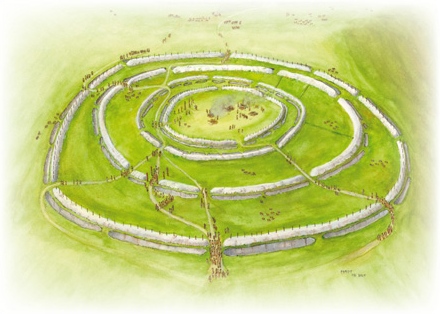
Causewayed Enclosure in East Sussex. Whitehawk Camp is one of Britain’s earliest neolithic monuments. The hill was chosen some 5,500 years ago as the site for a series of circular ditches and banks which marked the hill as an area for feasting, burials and other activities of a ritual nature.

Up to five of these circular ditch rings have been traced on the hill and these have been shown to have regular interruptions in their courses.

Similar arrangements are known from other sites within Britain, all dating to the late stone age. This curious and obviously non-defensive arrangement gives these sites their name: causewayed enclosures. They represent the earliest ritual circles in northern Europe and predate later stone age enclosures like Stonehenge and Avebury by up to 1000 years. They all appear to have been built around 3500 B.C.

Archaeologists have explored only a small portion of Whitehawk Camp. Within the fill of the surviving ditches the remains of four complete burials have been found alongside huge numbers of stone age flint tools, pieces of pottery and the bones of ox, cattle, pig, deer and other fragmentary human remains. These suggest the consumption of large amounts of meat as part of the activities which took place on the hill.

Read more at Brighton & Hove Council

Note: In May I visited the Neolithic Cannibals art installation and exhibition in Brighton created by sound artist Simon James and pupils from local schools up on the estate at Whitehawk. It included artefacts rarely seen on display. I also went on a guided walk around Whitehawk ‘camp’ on the Brighton downs with archaeologist Jon Sygrave. Photos of all these are now on our page
You may be viewing yesterday's version of this page. To see the most up to date information please register for a free account.

Whitehawk
Whitehawk submitted by Andy B : Reconstruction of the Whitehawk causewayed enclosure in Sussex, copyright English Heritage (1 comment - Vote or comment on this photo)

Whitehawk
Whitehawk submitted by Bladup : Lidar image of Whitehawk Causewayed Enclosure Source: www.lidarfinder.com (Vote or comment on this photo)

Whitehawk
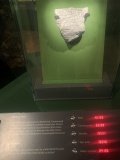
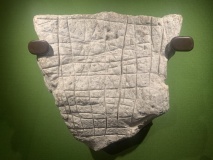
Whitehawk submitted by Andy B : An artefact from Brigton museum that is not normally on display - one of those enigmatic chalk plaques found in a Neolithic context. (Vote or comment on this photo)

Whitehawk
Whitehawk submitted by Andy B : More artefacts from Brigton museum that are not normally on display. (Vote or comment on this photo)

Whitehawk
Whitehawk submitted by Andy B : A reconstruction of a device used for primitive geophysics in the early 20th century. Known as 'bosing' you basically bonk this heavy lump on a stick on the earth, listen carefully to the response and you can hear different soil densities and so estimate the location of hidden ditches and so on

Whitehawk
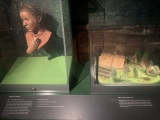
Whitehawk submitted by Andy B : This amazing vintage model was lent by Brighton museum for the Neolithic Cannibals art installation and exhibition. You can see the projections from the sound presentation behind.

Whitehawk
Whitehawk submitted by Andy B : This amazing vintage model was lent by Brighton museum for the Neolithic Cannibals art installation and exhibition. Now usually in storage, older viewers may remember it fondly from their old prehistory gallery.

Whitehawk
Whitehawk submitted by Andy B : The passage in the 1950s excavation report for Whitehawk that speculates (wrongly) about Neolithic Cannibals.

Whitehawk
Whitehawk submitted by Andy B : Artefacts lent by Brighton museum for the Neolithic Cannibals art installation and exhibition.

Whitehawk
Whitehawk submitted by Andy B

Whitehawk
Whitehawk submitted by Andy B : Display panels from the Neolithic Cannibals art installation in Brighton.

Whitehawk
Whitehawk submitted by Andy B : On 14th May 2024 I visited the Neolithic Cannibals art installation and exhibition in Brighton created by sound artist Simon James and pupils from local schools up on the estate at Whitehawk. Simon explains: Lots of people ask why we called it Neolithic Cannibals. I discovered some historical 'othering' in the language used by an archaeologist to describe the Neolithic community on Whitehawk Hill,...

Whitehawk
Whitehawk submitted by Andy B : When is a hillfort not a hillfort? When it’s 2500 years older and a causewayed enclosure. I didn’t realise you can still see some traces of the banks at Whitehawk. 150 years ago they were really prominent. Here they are pointed out by archaeologist Jon Sygrave.

Whitehawk
Whitehawk submitted by Andy B : On 14th May 2024 I joined a fascinating guided walk around Whitehawk ‘camp’ on the Brighton downs led by archaeologist Jon Sygrave. This is the southern part of the site.

Whitehawk
Whitehawk submitted by Andy B : On 14th May 2024 I joined a fascinating guided walk around Whitehawk ‘camp’ on the Brighton downs led by archaeologist Jon Sygrave.

Whitehawk
Whitehawk submitted by Andy B : On 14th May 2024 I joined a fascinating guided walk around Whitehawk ‘camp’ on the Brighton downs led by archaeologist Jon Sygrave. This was one of his illustrations showing a plan of the excavations.

Whitehawk
Whitehawk submitted by Andy B : The voting tally for what the chalk plaque was used for. What do you think?

Whitehawk
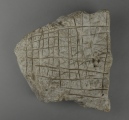
Whitehawk submitted by Andy B : This chalk block was found in Whitehawk Causewayed Enclosure, It is covered in ordered scored lines. Similar blocks have been found in local Neolithic flint mines. Does this block show a link between the flint miners and those that built Whitehawk Causewayed Enclosure? Object on display in Brighton Museum where you can vote for what you think its purpose was.

Whitehawk
Whitehawk submitted by Andy B : Close up of the two fossil sea urchins buried with Whitehawk woman.

Whitehawk
Whitehawk submitted by Andy B : This woman was buried in a ditch at an entrance to Whitehawk Causewayed Enclosure. Small and slight, she probably died in childbirth. Her careful burial at Whitehawk may mean she was part of an important family. Buried with her were: • two small pieces of chalk with holes • two fossil sea urchins • half the leg bone of an ox and other animal remains

Whitehawk
Whitehawk submitted by Andy B : This woman was buried in a ditch at an entrance to Whitehawk Causewayed Enclosure. Small and slight, she probably died in childbirth. Her careful burial at Whitehawk may mean she was part of an important family: She grew up close to Wales, Normandy, Brittany or Spain. Her clothes were made from animal skins. She would have worked hard looking after animals, growing crops and grinding wheat into fl...

Whitehawk
Whitehawk submitted by Andy B : The Whitehawk Project has been repacking archaeological finds from the 1920s and 30s excavations, including some interesting scored chalk blocks like this one. Image Credit: Brighton Museum and Art Gallery (1 comment)

Do not use the above information on other web sites or publications without permission of the contributor.
Click here to see more info for this site

Nearby sites

Click here to view sites on an interactive OS map

Key: Red: member's photo, Blue: 3rd party photo, Yellow: other image, Green: no photo - please go there and take one, Grey: site destroyed

Download sites to:
KML (Google Earth)
GPX (GPS waypoints)
CSV (Garmin/Navman)
CSV (Excel)

To unlock full downloads you need to sign up as a Contributory Member. Otherwise downloads are limited to 50 sites.


Turn off the page maps and other distractions

Nearby sites listing. In the following links * = Image available
 1.9km WSW 257° Brighton Museum and Art Gallery* Museum (TQ312043)
 3.1km NNW 346° Hollingbury* Hillfort (TQ322078)
 3.6km W 277° Hove Barrow* Round Barrow(s) (TQ2948105096)
 3.9km ESE 123° Beacon Hill Tumuli Barrow Cemetery (TQ364027)
 4.5km WNW 288° The Goldstone* Natural Stone / Erratic / Other Natural Feature (TQ2868306021)
 4.6km NNE 32° Stones around Falmer Village Pump Natural Stone / Erratic / Other Natural Feature (TQ354087)
 4.8km W 272° Hove Museum and Art Gallery* Museum (TQ282048)
 4.9km SE 124° Hangman's Stone (Rottingdean ) Marker Stone (TQ372021)
 5.4km N 356° Rocky Clump* Natural Stone / Erratic / Other Natural Feature (TQ325101)
 5.4km N 359° Pudding Bag Tumuli Barrow Cemetery (TQ328102)
 5.8km N 6° Stanmer Stones* Natural Stone / Erratic / Other Natural Feature (TQ3350010600)
 6.1km NNE 14° Moon's Bottom Tumulus Round Barrow(s) (TQ343107)
 6.5km W 276° St. Leonards Church Sarsens Natural Stone / Erratic / Other Natural Feature (TQ26560524)
 6.9km ESE 110° Pedlersburgh* Round Barrow(s) (TQ396026)
 7.2km ENE 65° The Gurdy Stone* Modern Stone Circle etc (TQ3948408002)
 7.4km ESE 106° Telscombe Cross Dyke Misc. Earthwork (TQ402029)
 7.5km N 350° Standean* Natural Stone / Erratic / Other Natural Feature (TQ316121)
 7.6km WNW 283° Church Hill Standing Stones Natural Stone / Erratic / Other Natural Feature (TQ2554506318)
 7.7km N 1° Ditchling Beacon Tumulus* Round Barrow(s) (TQ3302512474)
 7.9km N 355° Ditchling Beacon Field System Misc. Earthwork (TQ322126)
 7.9km NNE 21° Plumpton Plain Bronze Age Settlement* Ancient Village or Settlement (TQ35671224)
 8.2km N 10° Western Brow Tumuli* Round Barrow(s) (TQ343129)
 8.2km N 2° Ditchling Beacon Fort* Hillfort (TQ33151300)
 8.3km N 354° Ditchling Beacon Tumuli 2* Round Barrow(s) (TQ319130)
 8.3km N 349° Tumuli near Ditchling Beacon* Round Barrow(s) (TQ313129)
View more nearby sites and additional images

<< Blešno

Finsbury Park earthworks >>

Please add your thoughts on this site

Avebury Archaeology Map - Worldwide Delivery

Avebury Archaeology Map - Worldwide Delivery

Sponsors

Latest Visit Logs

  • Badnabay
    “A short walk through rather boggy ground towards the west end of the horseshoe-shaped road coming of…”
    by RingPaw · 7 Jun 2026
  • Tsankawi
    “The complete Tsankawi Village loop trail is about 2 miles round trip. The parking lot is large, pave…”
    by stonetracker · 6 Jun 2026
  • Dun Beag (Struan)
    “Nothing much to add to earlier comments - a short walk but steep in parts. A spectacular site, defin…”
    by Glaschu · 5 Jun 2026
  • Gwal y Filiast
    “Did the anti clockwise circular walk from login, track through field by Dickman (timber merchant) is…”
    by Possumputer · 4 Jun 2026
  • Dun Buidhe
    “Access - it's easy to get to the causeway. You walk across one island which is rough ground but noth…”
    by Glaschu · 3 Jun 2026

"Whitehawk" | Login/Create an Account | 21 News and Comments
  
Go back to top of page    Comments are owned by the poster. We aren't responsible for their content.
Re: Whitehawk by stolinskie on Thursday, 31 October 2024
(User Info | Send a Message)
It has an excellent article on wikipedia - en.wikipedia.org/wiki/Whitehawk_Camp
[ Reply to This ]

Neolithic Cannibals art and sound project, 4th May 19th May 2024 at Lighthouse by Andy B on Monday, 04 March 2024
(User Info | Send a Message)
A socially engaged sound art project and exhibition from the young people of Whitehawk and East Brighton, and artist Simon James, who was born and raised in Whitehawk.

Explored through the deep time history of the Neolithic in East Brighton and the contemporary soundscape of Whitehawk, the Neolithic Cannibals exhibition mixes archaeology, psycho-geography, sound art, and activism to transport audiences to a place where imaginative and fantastical sounds will invite deep listening to an area that can often be considered hidden and unheard.

Through a series of workshops the young people of Whitehawk have listened to and sounded the contemporary environment of East Brighton using the Whitehawk Hill Neolithic Camp, discovered in 1929 through a geophysical listening technique known as Bosing, as a symbolic focal point and inspiration for their sonic explorations.

The Neolithic Cannibals exhibition at Lighthouse will recreate the Neolithic Camp - a place of communion, celebration and ritual, as a compassionate listening space inviting audiences to discover Whitehawk's richness, joy, playfulness and hope, empowering local voices through rarely explored sonic expressions. Audiences will leave with a deeper appreciation for empathetic listening, and consider the power of collective effort and the part we all play in addressing complex and current social issues.

Exhibition Times:
Saturday 4th May - Sunday 19th May 2024,
Weds to Sundays. Doors: 12PM-5PM. (Closed Monday and Tuesday, except Monday 6 May or by appointment.)
More at www.lighthouse.org.uk/events/neolithiccannibals
[ Reply to This ]

Whitehawk Camp Neolithic Causewayed Enclosure talk/tour, Wednesday 13th September by Andy B on Wednesday, 06 September 2023
(User Info | Send a Message)
Fed up with Regency architecture? Come along and explore the first visible enclosing of a large communal space in our region.

Situated in a commanding position above East Brighton, close to the Race Course, lays one of Britain's earliest Stone Age monuments. The hill top here was chosen some 5,650 years ago as the site for a large ceremonial enclosure, an area for undertaking feasting, burials and communing.

Dating to c. 3,650 B.C. the monument represents one of the earliest ritual circles in the UK. A c. 60 minute guided tour of this unique part of Brighton & Hove's heritage will be given by Jon Sygrave from UCL's Institute of Archaeology. The tour will provide an introduction to the early British Neolithic in Sussex and the layout and significance of the Whitehawk enclosure.

Wednesday 13 September: 1800-1900
No booking required

Approximately 60 minutes. For updates on this event and any last minute changes, see: www.rth.org.uk/BHOD23

Meet: Corner of Manor Hill and Queensway (the roundabout at this point also connecting with Firle Road and Freshfield Road), Brighton at 17:55

More details: www.heritageopendays.org.uk/visiting/event/whitehawk-camp-neolithic-causewayed-enclosure
[ Reply to This ]

Tuesday December 2nd - 2014 Big Dig at Whitehawk Camp talk by Matt Pope, Brighton by Andy B on Tuesday, 07 October 2014
(User Info | Send a Message)
December 2nd 'The 2014 Big Dig at Whitehawk Camp' - illustrated talk by Matt Pope of University College, London

'Tuesday at Friends' meets every Tuesday between 2:30 and 3:30 pm during term-time at

The Friends Meeting House, Ship Street, Brighton BN1 1AF - tel: 01273 770258, Warden - Terry Byrne

The meetings are open to everyone, young or old - admission £1.50 at the door. There is no need to book - just turn up. We hope to entertain and inform you in a pleasant welcoming atmosphere.

http://www.tuesdayatfriends.org.uk/
[ Reply to This ]

Whitehawk Hill dig and open day 2014 by Andy B on Tuesday, 07 October 2014
(User Info | Send a Message)
From 25th August: Hundreds flocked to a heritage site hoping to discover the secrets of Sussex’s history.

The Whitehawk Dig, which had everything from an archaeological excavation to a deer-carving exhibition, took place in Brighton on Saturday. The banks at the top of Whitehawk Hill Road sit on top of ancient Stone Age ground.

Archaeologists Owen O’Donnell and John Spiller believe the area could be one of the most important for Neolithic times.

Mr O’Donnell said: “It’s an amazing piece of land and so much history lies in these banks. This area is one of the most important in Britain and maybe even Europe in terms of the Neolithic times.

“It shows the first initial signs of proper farming, in terms of people identifying a piece of land and taking residence there as opposed to harvesting everything there is to take and moving on.

“It's a really fascinating place and proves there were people here 5,000 years ago.”

More at
http://www.theargus.co.uk/news/11430276.Digg...

Read the rest of this post...
[ Reply to This ]
    Re: Whitehawk Hill dig 2014 - video and audio by Andy B on Tuesday, 07 October 2014
    (User Info | Send a Message)


    Project manager for Archaeology South East Jon Sygrave explains how they’re exploring a nationally-significant site, older than Stonehenge.

    https://audioboom.com/boos/2406289-find-out-who-lived-in-brighton-5000-years-ago
    [ Reply to This ]
    Re: Whitehawk Hill dig and open day 2014 by Andy B on Tuesday, 07 October 2014
    (User Info | Send a Message)
    19 June 2014: A geophysical survey of Whitehawk Causewayed Enclosure has revealed previously unknown archaeological features.

    The work was undertaken by the Centre for Applied Archaeology (CAA) and the Brighton and Hove Archaeological Society (BHAS) as part of the Whitehawk Camp Community Archaeology Project which aims to connect Brighton's communities with the nationally important Whitehawk Causewayed Enclosure, the burial place of Brighton's first residents.

    The team used magnetometry to ’map’ magnetic anomalies in the soil, rock and bedrock. The survey was undertaken to find out more about the extent and nature of this nationally significant Stone Age site and also, importantly, to help the project team to decide on the location of a community excavation set to take place on the site from 11-29 August 2014.

    The survey detected several possible archaeological features, which could dramatically extend the size of the monument (currently the size of 8 football pitches) and/or provide further detail as to the lives of the Neolithic or Stone Age people who constructed it. The archaeological excavation during August will target these potential features and assess whether they relate to the monument.

    Meanwhile, work on the archive of archaeological finds from the 1920s and 30s excavations has commenced at Brighton Museum and Art Gallery and it is hoped that some more archaeological revelations will be discovered in the archives!

    For further information please visit the Whitehawk Camp Community Archaeology Project website or via our social media:

    http://www.ucl.ac.uk/caa/whitehawk-hlf

    http://www.ucl.ac.uk/caa/whitehawk-hlf/media

    http://digwhitehawk.tumblr.com/

    http://mockduck.livejournal.com/1102828.html

    [ Reply to This ]
    Archaeology teaching resources by Andy B on Tuesday, 07 October 2014
    (User Info | Send a Message)
    New set of Neolithic teaching resources focusing on dig Whitehawk - free downloads from Brighton Museum

    Brighton Museum Archaeology Teacher Pack
    Brighton Museum Bronze Age classroom resource
    Brighton Museum Iron age classroom resource
    Brighton Museum Neolithic classroom resource
    Brighton Museum Mesolithic classroom resource
    Brighton Museum Palaeolithic classroom resource

    http://www.heritagelearningbrighton.org.uk/resources
    [ Reply to This ]

Whitehawk Camp - Neolithic Causewayed Enclosure or Stone Age circle? Thurs 12th Sept by Andy B on Tuesday, 03 September 2013
(User Info | Send a Message)
Come along and explore the first visible enclosing of a large communal space in our region. Situated in a commanding position above East Brighton, close to the Race Course, lays one of Britain's earliest Stone Age monuments. The hill top here was chosen some 5,500 years ago as the site for a ceremonial enclosure, an area for undertaking feasting, burials and communing.

Dating to c. 3,500 B.C. the monument represents one of the earliest ritual circles in northern Europe and predates later Neolithic enclosures like Stonehenge and Avebury by up to 1,000 years.

A c.60 minute guided tour of this unique part of Brighton & Hove's heritage will be given by Jon Sygrave from UCL's Institute of Archaeology. The tour will provide an introduction to the early British Neolithic in Sussex and the layout and significance of the Whitehawk enclosure.

Opening Times Thursday 12th September: 1730 - 1830
Booking Details Free activity but to assist us meet expectations, please pre-book this...

Read the rest of this post...
[ Reply to This ]

Guided walk around Whitehawk Hill Wednesday12th September by Andy B on Tuesday, 04 September 2012
(User Info | Send a Message)
There is a walk around the site with Paul Gorringe, the ranger on Wednesday 12th September 5:30pm – 7pm (meet at the top of Manor Hill)

Earlier on Wednesday 12th September Paul the ranger will be manning a consultation stall at the Whitehawk library between 2pm and 4pm.

http://www.brighton-hove.gov.uk/index.cfm?request=c1251676
[ Reply to This ]

Consultation on the future management of Whitehawk Hill - loss of access land by Andy B on Tuesday, 04 September 2012
(User Info | Send a Message)
Brighton Council are undertaking a consultation until the end of September on the future management of Whitehawk Hill. Here’s the link to it and to their brochure explaining some excellent and well-overdue management plans for this neglected but valuable Downland site, which was excluded from the National Park. http://www.brighton-hove.gov.uk/index.cfm?request=c1251676

There are some suggestions of great concern and below is the initial response from Dave Bangs, author of A Freedom to Roam Guide to the Brighton Downs and ex chair of Friends of Whitehawk Down.

Dave Bangs writes:

This area was correctly scheduled under the original LNR Management Plan for reversion to a mosaic of grassland and scrub.

It is a critically important wild play area for adjacent communities, and should be managed to enhance that informal function, which provides a universal benefit for all visitors, not just fenced-off allotmentees.

It is a critically important viewpoint over...

Read the rest of this post...
[ Reply to This ]

‘The Domestication of Britain’- Dating the Early Neolithic by Andy B on Sunday, 13 May 2012
(User Info | Send a Message)
‘The Domestication of Britain’- Dating the Early Neolithic (4000 – 3500BC) in Britain

In the July August 2011 edition of British Archaeology magazine, there is an exciting article on research that is helping to shed light on new perspectives of the early neolithic in Britain.

The article, by Alasdair Whittle, Frances Healy & Alex Bayliss, details how the team have commissioned new radiocarbon dates from various monuments of the early neolithic in Britain. This has helped to produce a detailed and clearer chronology of how farming and new associated technologies & monuments (in this case causewayed enclosures) first spread throughout these isles.

For the first time in British archaeology the results have shown in depth how prehistoric events can be discerned at the generational level in the archaeological record.

http://thesebonesofmine.wordpress.com/2011/06/19/the-domestication-of-britain-dating-the-early-neolithic-4000-3500bc-in-britain/
[ Reply to This ]

Whitehawk Enclosure tour, Saturday 10th September 2011 by Andy B on Saturday, 03 September 2011
(User Info | Send a Message)
The Whitehawk Enclosure (Archaeology)
Brighton & Hove, East Sussex

Fed up with Regency architecture? Come along and explore the first visible enclosing of a large communal space in our region. Situated in a commanding position above East Brighton, close to the Race Course, lays one of Britain's earliest Stone Age monuments. The hill top here was chosen some 5,000 years ago as the site for a ceremonial enclosure, an area for undertaking feasting, burials and activities of a ritual nature. Up to five circular ditches have been traced on the hill and these have been shown to have regular interruptions in their courses.

Similar arrangements are known from other sites within Britain, all dating to the late Stone Age. This curious and obviously non-defensive arrangement gives these sites their name: causewayed enclosures. Dating to 3,500 B.C, they represent the earliest ritual circles in northern Europe and predate later Neolithic enclosures like Stonehenge and Avebury by up to...

Read the rest of this post...
[ Reply to This ]

Re: Archaeology dating technique uncovers 'property boom' of 3700 BC by MikeAitch on Thursday, 09 June 2011
(User Info | Send a Message)
BBC article with some aerial photos here.
[ Reply to This ]

Re: Archaeology dating technique uncovers 'property boom' of 3700 BC by h_fenton on Tuesday, 07 June 2011
(User Info | Send a Message)
So my impression is that its not really a new dating technique as such where finds have some sort of analysis done on them to produce a date. The researchers have looked high and low for all the possible dates they can find from a variety of sources.
Inputed all the dates along with the co-ordinates of where things were found into the computer, then done a bit of filtering and statistical analysis before plotting the data onto the map and drawing lines between dates of the same value, which has produced contour lines which indicates spreading of particular categories of datable evidence.
[ Reply to This ]

Re: Archaeology dating technique uncovers 'property boom' of 3700 BC by coldrum on Tuesday, 07 June 2011
(User Info | Send a Message)
Interesting article but I was under the impression that other dating techniques are used in conjunction with Carbon 14 any-way.
It's good to see that as technology advances we are learning more about our ancestors.
[ Reply to This ]

Archaeology dating technique uncovers 'property boom' of 3700 BC by Andy B on Tuesday, 07 June 2011
(User Info | Send a Message)
A new scientific dating technique has revealed there was a building spree more than 5,500 years ago, when many of the most spectacular monuments in the English landscape, such as Maiden Castle in Dorset and Windmill Hill in Wiltshire, were built, used and abandoned in a single lifetime.

Article interviewing Alex Bayliss, archaeologist and dating expert at English Heritage in the Guardian

http://www.guardian.co.uk/science/2011/jun/06/archaeology-dating-property-boom-3700bc
[ Reply to This ]

3,700BC Britain's First Construction Boom by Andy B on Tuesday, 07 June 2011
(User Info | Send a Message)
A ground-breaking scientific dating project led by English Heritage and Cardiff University has succeeded in dating prehistoric features down to a margin of decades instead of centuries. By applying this method to a type of early Neolithic earthwork called causewayed enclosures, it has revealed that Britain experienced a frenetic period of monument building in the decades after 3,700BC, with the country's first big monuments being erected some 1,000 years before Stonehenge was created.

Causewayed enclosures are known prehistoric features, but up to now it has been thought that they spread slowly across Britain over five centuries. But this research reveals that this new class of huge monuments spread rapidly all over southern Britain in a short span of 75 years, starting from the Thames Estuary through Kent and Sussex, and then west, on an intense scale that was not apparent before.

REVOLUTIONISING THE PERCEPTION OF PREHISTORY

The new knowledge that this happened in a flurry...

Read the rest of this post...
[ Reply to This ]

New introductory guide to Causewayed Enclosures, free download by Andy B on Tuesday, 07 June 2011
(User Info | Send a Message)
See also: An introductory guide to Causewayed Enclosures

http://www.english-heritage.org.uk/publications/iha-causewayed-enclosures/causewayedenclosures.pdf
[ Reply to This ]

Re: Whitehawk by coldrum on Tuesday, 30 March 2010
(User Info | Send a Message)
Street View


View Larger Map
[ Reply to This ]

Links to more information on this site by coldrum on Wednesday, 23 July 2008
(User Info | Send a Message)
Links to information on this site:

http://www.brighton-hove.gov.uk/index.cfm?request=c1189614

http://ads.ahds.ac.uk/catalogue/adsdata/cbaresrep/pdf/029/02904001.pdf
[ Reply to This ]

Your Name: Anonymous [ Register Now ]
Subject:


Add your comment or contribution to this page. Spam or offensive posts are deleted immediately, don't even bother

<<< What is five plus one as a number? (Please type the answer to this question in the little box on the left)
You can also embed videos and other things. For Youtube please copy and paste the 'embed code'.
For Google Street View please include Street View in the text.
Create a web link like this: <a href="https://www.megalithic.co.uk">This is a link</a>  

Allowed HTML is:
<p> <b> <i> <a> <img> <em> <br> <strong> <blockquote> <tt> <li> <ol> <ul> <object> <param> <embed> <iframe>

We would like to know more about this location. Please feel free to add a brief description and any relevant information in your own language.
Wir möchten mehr über diese Stätte erfahren. Bitte zögern Sie nicht, eine kurze Beschreibung und relevante Informationen in Deutsch hinzuzufügen.
Nous aimerions en savoir encore un peu sur les lieux. S'il vous plaît n'hesitez pas à ajouter une courte description et tous les renseignements pertinents dans votre propre langue.
Quisieramos informarnos un poco más de las lugares. No dude en añadir una breve descripción y otros datos relevantes en su propio idioma.