
Register here - as a registered user you get more features and fewer ads.
Pytheas says he visited all of Britain (does not say by land) so there is no evidence he went on land much, apart from to visit a temple near a town or port (polis) and see local houses and storage. As a merchant geographer, Pytheas’ mission was to measure sun positions as far north as he could, so was unlikely to get distracted by a slow long land journey. As he was primarily interested in the far north, Pytheas would probably have visited sites there. He may have been surprised and impressed to find wheelhouses and brochs in the far north, with busy trading communities. Scatness was on the tin route from Cornwall, as it imported tin to make bronze with local copper, and exported it to Britain and further.
The description of two crops a year does not mean that he visited a temple in the south. Cereal crops can be grown in two seasons in the north (long summer days)-spring barley and oats, and winter wheat, one crop for human food the other for beer and animal fodder. Barley was found at Scatness.
Pytheas describes a temple to Apollo. Apollo was a god of healing, music and (sun) light. He was possibly a luni-solar god like Thoth, so also represented reflected sunlight from the moon. Pytheas' moon god (un-named) comes every 19 years. There are several Later Iron Age shrines found in southern England with an external an outer nemeton, temenos, or sacred space, and with a (roofed, domed) inner circular enclosure, naos, for the votive pit. With contact to the eastern Mediterranean from at least 1200 BC, this suggests there were earlier ones. The temple Pytheas saw was described as spherical, so perhaps had a domed roof, or was a large mound.
A possibility is Maes Howe, as Pytheas names Orcas. Another possibility is that he identified a shrine at Scatness or Jarlshof.
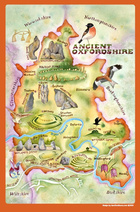
He may have visited an Iron age shrine when he first landed in England. If he took the tin route, he may have landed at the ports of Hengistbury or Poole. A likely location for the polis is Maiden Castle, a large complex carrying on trade with mainland Europe, and just 5 miles inland from Weymouth.
Bearing in mind that there are only second and third hand quotes of the original text, we should be wary of adding information from later Roman writers, and even more wary of inserting speculation as fact. There is far more evidence of Iron Age activity in Shetland than on Salisbury plain.
Something is not right. This message is just to keep things from messing up down the road