
Why Casino Games Keep Returning to Ancient Mythology
Submitted by Andy_B on Tuesday, 29 September 2026 Page Views: 4
Resources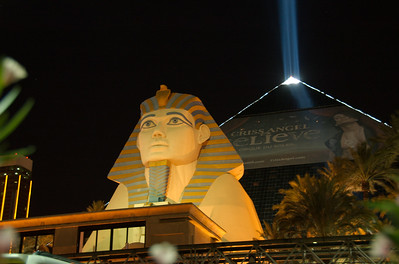 On 26 November 1922 Howard Carter breached a sealed doorway in the Valley of the Kings, and when Lord Carnarvon asked whether he could see anything, Carter's own journal records the answer: "Yes, it is wonderful." Within a few years a cigarette factory in Camden, now Greater London House, had been given a painted temple front and a pair of giant black cats, and Egyptian motifs were spreading to cinema fronts, among them the lotus frieze on the Carlton in Islington.
Egyptomania had come in waves before. Historic England's book Egypt in England traces the habit from the Egyptian House in Penzance to the catacomb entrance of Highgate Cemetery's Egyptian Avenue. The latest wave has washed up in casino game art.
The same five symbols
Every Egyptian Revival has drawn on the same handful of motifs: the scarab, the eye, the obelisk, the cartouche, the jackal-headed god. These motifs re-emerge regularly in slot games, usually rendered in gold against dark stone, and with about as much concern for historical accuracy as a 1920s cinema foyer. They're legible at a glance, and gold on stone reads as treasure without a word of text. A Victorian architect choosing a pylon gateway for a cemetery was making much the same calculation: the style announced mystery and permanence before anyone read the inscription.The weighing of the heart in the Papyrus of Ani, made at Thebes around 1250 BC and now in the British Museum, is one of the most dramatic scenes in ancient art. Anubis steadies the scales while Ani's heart is weighed against the feather of Maat, with Thoth recording the result and Ammit, part crocodile, part lion, part hippopotamus, waiting to eat the heart if it fails. It has a judge, a monster and a pass-or-fail verdict, which is more plot than most game designers get handed.
Fortune, fate and a wheel
The Egyptians had their own game of chance too. Senet, whose name means "passing", was played on a board of thirty squares in three rows, with moves set by throwing sticks rather than dice. By the New Kingdom it had become bound up with the soul's journey to the afterlife, and Tutankhamun was buried with no fewer than five game boxes.Greece and Rome gambled with dice and knucklebones, and they also gave chance a face. Tyche handed out good and bad luck on a whim, and her Roman counterpart Fortuna was shown with a rudder for steering destinies, a cornucopia for abundance and a ball for uncertainty. Around 525, awaiting execution, Boethius wrote The Consolation of Philosophy, in which Fortune turns her wheel and reminds the reader that whatever rises on it will come down. A random number generator is Fortune's wheel with the goddess taken out, and it keeps no record of the last result. Games tend to paint her back in anyway, usually as a goddess or a pharaoh watching from the corner of the screen.
Sunlit stone and rune-cut granite
Norse themes swap the sandstone and gold leaf for grey sea, iron and carved stone. The Elder Futhark had 24 letters and takes its name from the first six, and runes stayed in use in parts of Scandinavia into the early modern period.Where the Norse games go wrong is the standing stones, which turn up in the background of plenty of them. The stones of Callanish on the Isle of Lewis were raised thousands of years before any Viking longship reached the Hebrides, a circle of thirteen stones around a tall central monolith. Lewis does have a genuine Norse treasure, though: the chessmen found at Uig and first shown in Edinburgh in 1831, carved from walrus ivory and whale tooth, probably in Trondheim around 1150 to 1200. They're split today between the British Museum and National Museums Scotland, and their glum, cheek-in-hand queens have more personality than most of the Valkyries on a reel.
