
Why Ancient Stone Circles Still Have Something to Say About Sound
Submitted by Andy_B on Wednesday, 16 September 2026 Page Views: 258
Resources Stand inside Avebury's outer ring on a still morning and the quiet does something odd. Traffic noise drops away, voices carry differently, and a shout across the bank sounds flatter than it should. Visitors have noticed this for years, usually in passing, but a small strand of archaeological research has taken it seriously enough to measure.
That interest in built acoustic space has drifted into corporate life too: workplaces now build a corporate wellness day around the same low, resonant sound researchers have recorded inside Neolithic chambers, using gongs, bowls and sustained tones rather than stone and turf.
Chambers built to hold a note
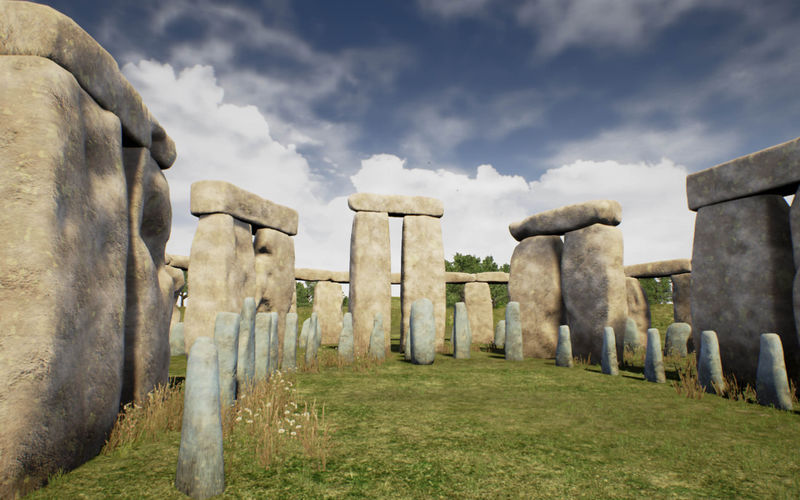
The clearest evidence comes from chambered tombs rather than open circles. In the 1990s, acoustic researchers testing sites including Newgrange in Ireland's Boyne Valley found that several passage tombs resonate strongly at frequencies close to 110Hz, a pitch not far from a low male chant or a large drum. Later fieldwork on British and Irish cairns reported similar standing wave patterns inside stone chambers, though nobody can say with certainty whether Neolithic builders designed for that effect or stumbled into it. The Boyne Valley tombs remain some of the best documented examples, and you can browse the Newgrange records or the wider chambered tomb listings to see how many sites fall into this category.Open circles behave differently. Stonehenge's dressed sarsens, once complete, would have reflected and partly enclosed sound inside the ring rather than scattering it across the plain, an effect modern acoustic modelling has tried to recreate using scale replicas. Fieldwork using scale models at the University of Huddersfield rebuilt the circle's geometry at reduced size and found the enclosed ring behaved differently from open ground. Whether that mattered to the builders is a separate question from whether it happened, and archaeologists tend to keep the two apart. The site's stone circle records offer a useful comparison point, and English Heritage's history covers the building phases in more depth.
| Site type | Acoustic feature studied | Reported finding |
|---|---|---|
| Passage tombs (e.g. Newgrange) | Chamber resonance | Frequencies close to 110Hz, suggestive not conclusive |
| Stone circles (e.g. Stonehenge) | Sound reflection and enclosure | Scale modelling suggests reduced sound spill within the ring |
| Chambered cairns | Standing waves | Some cairns show amplification at specific low frequencies |
From ritual chamber to boardroom
Modern sound practice borrows the same basic physics: low, sustained tones in an enclosed space change how a room, and a body, respond. None of this makes a Neolithic tomb a spa, and nobody serious claims prehistoric builders were treating anxiety. But the parallel explains why sessions built around resonance and breath have found a market well beyond wellness retreats. Some organisations now book a sound bath session for staff in the same week they might otherwise schedule a training day, treating an afternoon of guided resonance work as a practical alternative to a lecture on resilience. Well-planned team building activities in London can complement these quieter sessions by adding collaborative challenges that develop trust and connection.Workplace stress is not a marginal concern. The Health and Safety Executive's work-related stress, depression and anxiety statistics show that these conditions remain a major cause of working days lost in the UK, which is why some employers now treat a single afternoon of guided resonance work, rather than a lecture on resilience, as time well spent. A short, structured session works partly because it asks nothing of the participant except to sit still, which is rarer in an office than it sounds.
What it means for anyone visiting the sites
None of this changes what you'll actually experience at a stone circle: wind, sheep, the odd interpretive sign. But it rewards listening as much as looking. Avebury and Stonehenge both sit within a UNESCO World Heritage Site precisely because their landscape, not just their stones, was part of the design, acoustics included. Anyone planning a visit can check current site information through the Megalithic Portal's stone circle listings before setting out.The builders left no manual. What survives is the geometry, and increasingly, the sound it was built to hold.