

Uncovering the Gambling Traditions of Ancient Cultures
Submitted by Andy_B on Tuesday, 15 October 2024 Page Views: 2278
Resources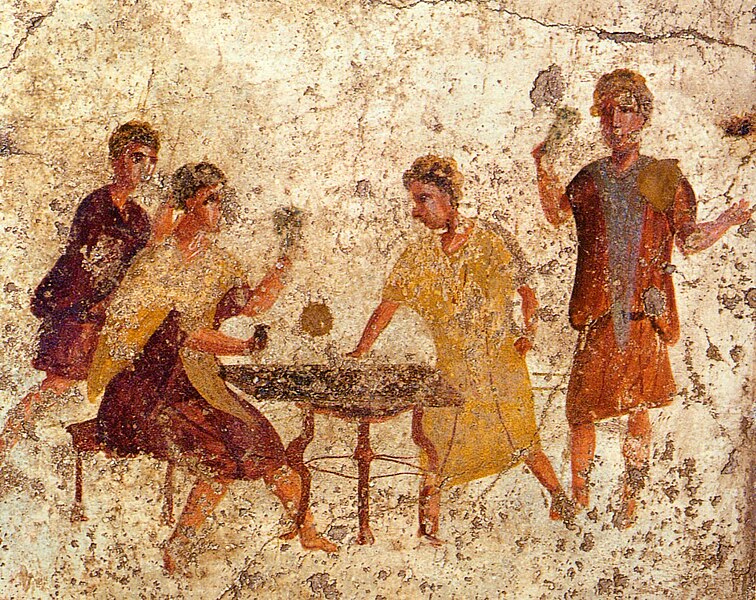
Long before dice rolled in Roman arenas or cards were shuffled in Renaissance Italy, gambling was a significant aspect of many ancient societies.
The Ritualistic Dice of Mesopotamia
Mesopotamia, often called the “Cradle of Civilization,” was home to some of the earliest known gambling artifacts. Dice, unearthed in ancient Mesopotamian sites dating as far back as 3000 BCE, point to the role of games of chance in early human life. However, these were not just for fun—they were tools for divine communication.Mesopotamians believed that throwing dice could reveal the gods' will, linking gambling to fate and prophecy. Temples often hosted such games, where participants gambled not for mere wealth but for spiritual insight and guidance.
Senet in Ancient Egypt: A Game of Life and Death
The ancient Egyptians’ approach to gambling was tied to their view of the afterlife. Senet, a game that dates back to 3100 BCE, was one of Egypt’s most iconic gambling pastimes. At first glance, it appears to be a simple board game with pieces moved according to the roll of dice or casting sticks. But, as with many things in ancient Egypt, Senet was far more than just a leisure activity.The game was thought to symbolize the soul’s journey through the afterlife. Tombs adorned with Senet boards reflect how seriously Egyptians took the game—it wasn’t just for living mortals but also for the dead.
While ancient Egyptians played Senet for enjoyment, they also believed it could help secure a safe passage to the afterlife. Players invoked divine favor, aligning their actions with spiritual significance as they sought victory and eternal peace.
Stone Casts of the Celtic World
Moving west to the Celtic regions, another megalithic culture with a distinct taste for gambling traditions emerges. The Celts, known for their mysterious stone circles and elaborate burial mounds, also had a fascination with games of chance. Evidence suggests that gambling in these societies wasn’t confined to private settings but played out during major communal gatherings, often accompanied by rituals and feasts. Stones, intricately carved, were used in games akin to dice throws.Interestingly, like in Mesopotamia, throwing a stone or carved object carried significant weight. It was believed that the gods could influence the outcome of these games, and players gambled for material gains and spiritual blessings.
Interestingly, many of the
Astragali in the Greek and Roman Worlds
Astragali, or knucklebones, was a popular gambling tool in Mesopotamia and Greece and Rome, with the game becoming central to various aspects of life. By the time it reached Greece and Rome, gambling had become a spectacle.Roman emperors were known to bet large sums during gladiatorial games, and spectators would gamble on everything from chariot races to animal fights. But beneath this public display of gambling lay the ancient tradition of astragali.
For the Greeks, gambling was not just a test of luck but a competition overseen by the gods. The deity Hermes, often associated with trickery and fortune, was believed to watch over gambling sessions.
Asian Megaliths and the Early Origins of Lottery
In ancient China, as far back as 2300 BCE, tiles have been found that indicate the early forms of gambling games. These games are considered an early version of lotteries, later used to fund large public projects. The fact that gambling in the form of a lottery was used for such significant cultural milestones demonstrates its profound role in ancient society.In this context, lotteries were more than a way to earn money—they were tools of collective ambition. Communities would gather to contribute to these games, knowing that the wealth generated would be used for something far greater than themselves.
Summary
From Egypt’s mystical Senet boards to the divinely influenced dice of Mesopotamia, ancient gambling traditions reveal much about the cultures that practiced them. These early games were more than mere entertainment; they offered a way to engage with fate, the divine, and the mysteries of life.As each stone was cast or dice rolled, ancient peoples weren’t just playing—they were participating in a cosmic game of chance that linked the mortal with the immortal. Whether gambling for spiritual enlightenment, public works, or mere amusement, megalithic cultures showed us that the games of chance are as old as human history.