


Top British Universities to study archaeology, with advice for foreign students
Submitted by Andy_B on Friday, 10 May 2024 Page Views: 2224
Resources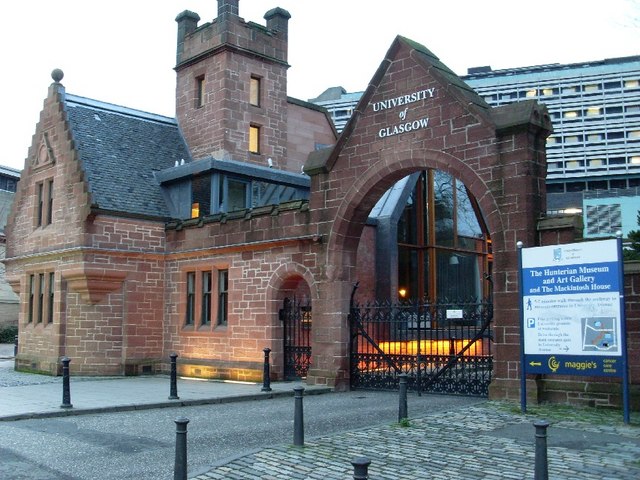
As university students often juggle multiple assignments, powerpoint writing services can be an invaluable resource. For those who wonder, "Can someone make my powerpoint for me?" The answer is yes. Various services offer to craft engaging and informative powerpoint presentations, specifically tailored for educational purposes. This support is particularly useful when preparing presentations that complement a broader educational essay or project.
Along with my list I’m going to include the subject rankings from The Guardian University league tables for Archaeology, which is rather oddly lumped in with Forensic Science (so under 'F'), which possibly slews the ratings towards institutions specialising in the scientific aspects of archaeology rather than the more touchy-feely end. Follow the links from there to all the courses mentioned.
But first, some things to consider as an international student when looking at a potential place to study:
What percentage of students are international? You may feel more ‘at home’ somewhere with a good mix of students from many countries.
What specific support do they offered with things like accommodation? Some universities insist on you going off and living in ‘digs’ in town in the second year, which can be a rather hit and miss affair. Campus universities can be more pleasant places to study, but much archaeology is based at the older ‘red brick’ universities in town centres which have limited accommodation options. However being right in the middle of a town can make for a livelier and less insular life.
 Do they offer a foundation course to help get you up to speed with the studying in the UK? Some universities offer this in house, or there are related institutions such as Oxford-Royale who offer their own foundation and Oxford Summer School offerings. These focus both on specific study skills to help you with the academic culture in a British university, as well as up to date subject matter in your specific field. Coming to the UK alone to study can be something of a culture shock so a foundation course or summer school could be a very good option if you are less confident with your written or spoken English, or how things work in a university setting.
But most of all get out, make friends and try and build contacts. Here at the Megalithic Portal we welcome international students getting involved with researching and editing our very extensive ancient sites database, and we have had a number of very keen students gaining experience and making contacts in the world of archaeology, and who have helped us a great deal in turn.
If you live in another EU country, the UK government has confirmed that the Erasmus exchange programme is still running for students from other EU countries to study in the UK for year 2019/20 entry despite the abominations of Brexit, but perhaps don’t delay as sadly there is no guarantee such programmes will continue longer term. Already applications from EU students to study at UK universities are way up on their previous numbers, with wanting to take part before it’s too late bo doubt being a factor.
So here is my (albeit somewhat subjective) list, and in no particular order, but let's start with a couple in Scotland:
Glasgow (Guardian 10th for archaeology)
The gateway to many active Scottish archaeology projects and with many excellent academic staff. In addition Glasgow offers some unusual mixtures of subjects, including combining archaeology with one of psychology, geography, maths, business economics, politics or earth science. Perhaps good if you are not 100% certain that a career in archaeology is for you, and you want to keep your options open.
The Univerity of Highlands and Islands (no Guardian rating)
What could be better than to study with the megalithic sites of Orkney on your doorstep and the opportunity to work on material from the Ness of Brodgar?
York (Guardian 13th)
A place with an amazing atmosphere to study, and a lot of other archaeology going on with it being the home of the Council for British Archaeology, the Archaeology Data Service and Internet Archaeology Journal.
 University College London (UCL) (Guardian 3rd)
Although personally I wouldn’t be keen on studying in central London due to the high cost, and sometimes dubious accommodation, UCL has an amazing reputation for research and recruit some of the best academic staff around. They also have the world-renowned Pietrie Museum and offer an Archaeology BA degree with the opportunity to study abroad. The third year of the degree can be spent at an approved partner university in Australia, Canada, Europe, Japan or the United States.
Why haven’t I included Cambridge (1st) or Oxford (4th) yet - well they really go without saying as world class places to study, and not everyone finds them a good fit for their temperament or academic ability - I’m trying to give some other recommendations you may not have considered.
Southampton (16th) have an excellent prehistory research and summer excavation programmes, as do Bournemouth University, and Reading (14th) with the opportunity to dig at Silchester Roman (and Iron Age) town
Durham (6th) has an extremely good reputation, and offer a choice of BA or BSc courses - the BSc includes more science based modules. With either there’s also the option of a year’s studying abroad. Another good option is that international students can start on the International Foundation Year pathway programme at Durham’s dedicated foundation study centre.
The University of Central Lancashire (30th) has a strong background in Forensic Science, and their archaeology course is part of that department. They are well placed to offer research opportunities across Wales and the North of England and we have followed some very interesting work over the years
 Our contributor ‘SolarMegalith’ offers some experiences: “One of the important things is, in my opinion, to make the best of the possibilities which the university provides and which are not part of the compulsory timetable. In Durham there was a possibility to request loans from libraries from abroad through the University library, as well as to request purchases of books for the library. There is also a possibility to access to libraries of other universities in Britain through SCONUL “
“Also you will have access to many online journals and databases such as JSTOR through the university library. So there are many opportunities to gain access to materials which are otherwise difficult to get hold of. “
“Another thing is to look for short university courses and workshops in different areas - I took two on Geographical Information Systems and one on preparation to write-up a thesis, but there were many others, all available for free for Durham University students. “
Also while you are a student, take the opportunity to get much useful software, which is otherwise very expensive (such as the aforementioned GIS), for free on a student licence. These possibilities are unique to being at university so I think students should try to make the most of them.”
With many thanks to SolarMegalith and the various university admissions departments quoted for assistance with this article.