


The Technology Changing How We Appreciate Ancient History
Submitted by Andy_B on Wednesday, 13 September 2023 Page Views: 272
Resources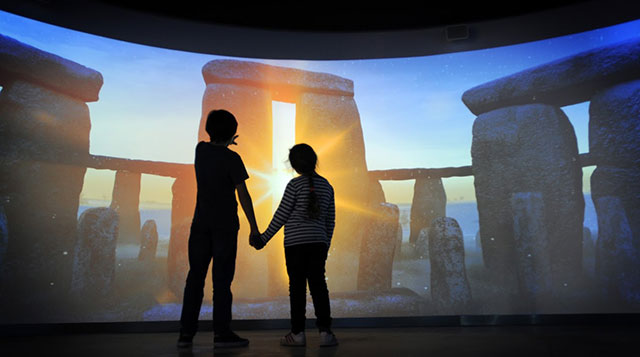
With that said, ignoring how modern technology contributes to our appreciation of history can limit our enjoyment and experience. From advanced digital recreations to simple, fun games, tech provides myriad avenues to explore forgotten worlds in a way that analogue solutions alone can't match.
Simple Fun
There are many ways to jump into historically influenced fun in the digital space, ranging from more detailed and complicated 3D worlds to more streamlined 2D systems. For anyone with access to more full-fledged video games, titles like those in the Assassin’s Creed series are famous for their recreations of historical locations and landmarks. Assassin’s Creed: Odyssey takes players to Ancient Greece, Syndicate to Victorian London, and Brotherhood centres on Rome. Each features historical landmarks painstakingly recreated to a period-accurate appearance in a setting that lets you test your knowledge against that of the developers.
More casual experiences based on historical sites are also commonly found in the best online slots in the UK. The websites that feature these games like Party Casino and 666 Casino offer thousands of slot games to choose from, with many based on ancient civilisations. These feature themed symbols, backgrounds and additional special features to creatively depict a wide range of historical locations and eras, from the Old West to ancient Egypt or even the Aztec Empire.
The Virtual and Augmented Frontiers
The cutting-edge technology used to explore historical sites is found in virtual and augmented reality systems. These have only really become viable for the mass market in the last decade, and while they're typically associated with video games, they're also powerful tools for research.
VR
Virtual reality works with a video headset you wear with a screen for each eye. The slightly different perspective tricks our brain into experiencing depth, creating the namesake of a virtual reality. These headsets let users see the ancient world through virtual reality, thanks to dedicated companies like Lithodomos VR. If you've ever wanted to see the Parthenon at its peak, or the Colosseum when it was in use, this is the closest anyone has been able to get in over a thousand years.
VR can be used from your home, and the services which manage historical programs and features don’t stop at static physical models. Using VR you can take guided tours, listen to detailed histories, and feel a sense of scale you can’t through traditional media. If you've ever travelled to historical sites then you know how easy it is to get caught up in the character and soul of an important site. VR can help give better context to your previous experiences and build a new level of understanding.
AR
Augmented reality is more often used as a tool compared to VR, and it’s powerful and flexible in how it can build on a passion for history. Consider a famous site like Whitehawk, the causewayed enclosure in England in East Sussex. Sites like this are still undergoing exploration, and it might be years before visitors can see the entire camp exposed. Even then, ruins and brochures alone can make it difficult to picture a long-abandoned site at its prime.
Via the use of mobile phones, AR can be used as a kind of window to demonstrate how the ancient setup would have looked when a site was in operation. By synchronising with GPS coordinates and 3D models, AR can overlay details on top of what already exists. Unlike VR, AR builds on what is already there, instead of creating an entirely virtual display.
In action, carrying around an AR-capable system lets users more closely examine individual components, and relate them on-site to how the different portions contributed to the whole. Though this technology is still in its early stages, it holds immense potential when visiting historical locations. AR through a phone or headset essentially acts as a time portal, something many of us have long dreamed of.
Whether looking at gaming or the VR/AR aspects above, the possibilities available from new tech can’t be overstated. These are more than just gimmicks, they provide a way to explore a world that explorers just decades ago would have killed for. They’re not a necessity, but if they sound interesting, don’t overlook what the new world of tech can provide.