

Some of the Incredible Megaliths Of Ireland
Submitted by Andy_B on Friday, 30 October 2020 Page Views: 720
Resources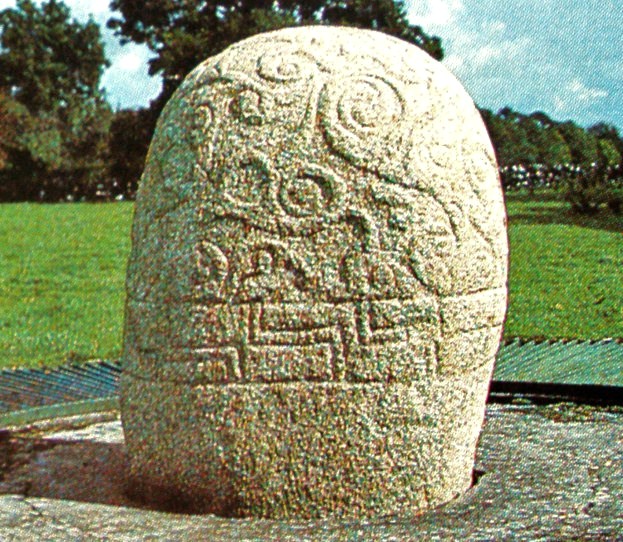
Unfortunately for the people of Ireland, the country is frequently subjected to some pretty crude stereotypes in the United Kingdom and further afield. Think of Ireland, and you'll probably think of the Blarney Stone, leprechauns, and Guinness. That's an unfair representation of the country and its history - one that's largely sustained in the here and now by hugely popular online slots like the "Rainbow Riches" series and their ilk. The Irish theme is arguably the most popular of all the various themes you'll find at online slots websites, but it emphasizes only the most basic aspects of life and history in Ireland. You won't get much of an education about Irish history by playing Playtech slots, even if you do manage to win some money in the process of doing so! If you want to get in touch with the Ireland of the distant past, you have to go there in person and check out the ancient sites.
Knowing where to start is the hardest thing to decide if you’re considering going on a tour of the country’s ancient megaliths. Fortunately, identifying great megaliths is what we do best on this website - so here are our stand-out picks:
The Turoe Stone
Let's start in an obvious place. Those of you who know a thing or two about megaliths will undoubtedly have heard of the Turoe Stone in County Galway already. While it's almost impossible to get an accurate date from stone using current archaeological methods, it's generally believed that the Turoe Stone is about 2100 years old. Getting too close to it isn't an option because it's on the lawn of Turoe House and covered by a protective framework, but you can still see the inscriptions on its surface clearly even if you're looking from a distance.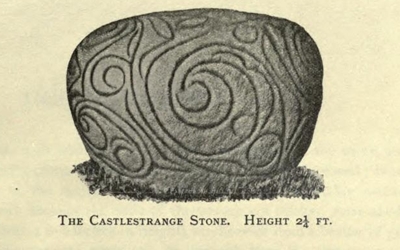 The design is similar to that of the Castlestrange Stone, although its meaning remains unknown to us. Its current location isn't the place it was found - originally, it stood at a 'fairy fort' around three miles away but was moved for its own protection during the 19th century. That was a good move in terms of preserving the stone for generations to come, but the move destroyed all of the stone's historical provenance.
The Castlestrange Stone
Having mentioned the Castlestrange Stone in passing, we should probably give it the full attention it deserves. You'll find this ancient monument in front of Castlestrange House in Athleague, County Roscommon. Like the Turoe Stone, this is a granite standing stone, covered with geometric shapes and a flowing design that's typical of the "La Tene" style, generally believed to have been practiced by the ancient Celts. Archaeological investigations suggest that this is slightly older than the Turoe Stone, having been carved during the Iron Age around 2300 years ago. Interestingly, despite being miles away from the Turoe Stone or the similar Killycuggin Stone and Derrykeighan Stone, all four of these huge stones are arranged in a line. That surely can't be a coincidence, but the significance of their positioning is a mystery that's been lost to time.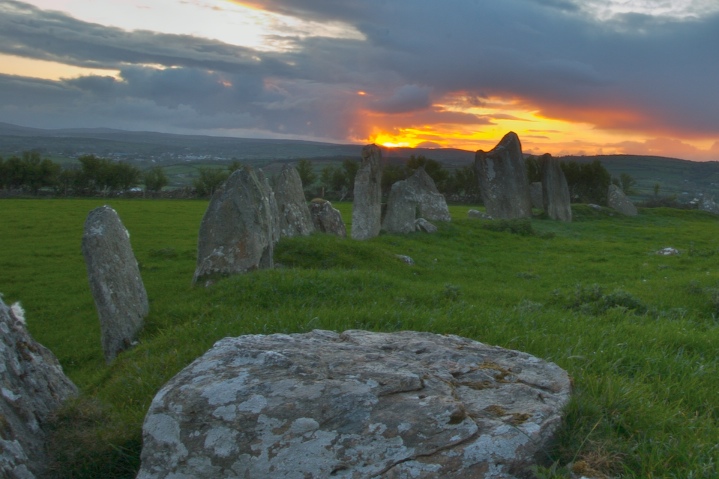
Beltany Stone Circle
You have to go back much further in time if you want to find the origin of the Beltany Stone Circle. The most conservative estimate of its age says that it’s around 2700 years old, although some estimates stretch that as far as 4100 years. Its purpose is more mysterious than its age - nobody knows what it was built for, although the Irish national press sometimes has fun speculating about it. Some experts think that this might have been a much larger site during Neolithic times and might have been the place that the Irish art of building passage tombs began. The stone circle at Beltany is made up of 64 individual stones encircling a raised earthen platform. During the 18th century, the platform was dug up by locals looking for stones to build with, during which time several ancient graves were disturbed. A few of the stones bear cupmarks, whereas others appear to have the outlines of constellations etched onto them. The name of the site probably comes from "Beltane," the Gaelic May Day festival of fertility, although the precise connection between the circle and the event is just as unknown as almost everything else at this ancient and mysterious location.Brownshill Dolmen
If size impresses you, look no further than Brownshill dolmen in Co. Carlow. If the experts have performed their calculations correctly, this is the place where you'll find the most massive capstone in Europe, weighing in at around one hundred metric tons. Brownshill Dolmen is a gigantic portal tomb, assembled approximately six thousand years ago. Nobody knows what it was called back then - its name comes from the Browne family, who used to live on the estate to which this piece of land belongs.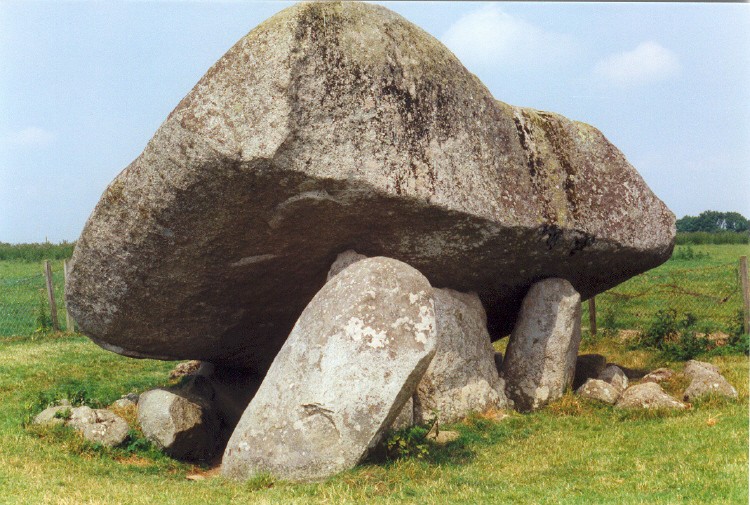 The capstone probably used to have an earthen mound for protection, and the entrance to the tomb was blocked off with a gate stone. All of that protection has since been removed, but the tomb is no less impressive because of it. Whoever was buried here must have been enormously important during their lifetime.
This concludes our brief tour of Ireland's outstanding megaliths. We realize that we've left a lot of incredible sites out, but if we carried on, we (and you) would be here all day. The truth is that Ireland is covered in stunning megaliths. If you journey between these four, you'll find plenty more nearby on your travels - and that's half the fun! You shouldn't need a special reason to visit Ireland because it's a great place to spend a vacation for any purpose, but checking out some of its ancient historical sites makes any trip that much more special. We hope that learning about these sites has inspired you to start making plans.
With many thanks to Sunny100, TwentyTrees and Angie Lake for their kind help and support of this article, including their lovely photos.