
Russian giant stone pillars: Seven boulders stood for 200 million years
Submitted by Andy_B on Sunday, 07 February 2021 Page Views: 1692
Resources Russian giant stone pillars: Seven boulders stood for 200 million years without falling down, only one person succeeded in reaching the top. Here is more about them. Many people don’t know that Russia is made up of 194 ethnic groups in 22 autonomous republics. If calculated as the main body of the Federation, there are as many as 85. The most special one is the Komi Republic, where the Komi (yellow race) is the main ethnic group. Everything has to start with the seven megaliths, that is, the Manpupuna rock group that has stood for 200 million years and is known as one of the seven wonders of Russia.
The Seven Giants are located in the Kara Sea of the Arctic Ocean extending to the middle of the Ural Mountains of Kazakhstan. There are large cities at the north and south ends of the mountains. For example, Yekaterinburg, the third largest city in Russia, is located at the southern end, but there are thousands of kilometers of wild land in the middle of the mountains. , The Komi Republic is located exactly in the middle, the geographic boundary of Eurasia. The Komi Republic was established only a hundred years ago, but the Komi people have a very long history
According to research by Russian experts, the ancestors of the Komi people are mainly the Finno-Ugric people, and some of them are Chuvash people who lived in the Tianshan Mountains and central Altai in 3000 BC. In the Bronze Age, they moved to the Ural region in the form of tribal nomadism, and gradually entered the Volga basin after the 10th century. In the 12th century, the Eastern Slavs recorded them as "hairy orcs (people living on fur trade)."
After the Russians discovered a large amount of minerals and timber reserves in the Komi area in the early 19th century, they established the Komi Republic (in the form of an autonomous prefecture) and joined the Soviet Union, becoming one of the exiles for prisoners in the Soviet Gulag concentration camp in the 20th century.
To put it another way, the Komi people have not actually been exposed to modern civilization for a long time. Most of the towns are built by prisoners, such as Ukhta, a well-known oil and gas industrial center in Europe, and Pechora, which supplies one-third of the anthracite in the Far East , Even most roads and railways in Komi were built by prisoners.
The originally designed railway of the Soviet Union was divided into two from Moscow directly to the Ural Mountains. One railway descended to Yekaterinburg to connect the cities of Novosibirsk, and the other line passed through Yakuzsk to Magadan on the Sea of Okhotsk, realizing the connection to the Sea of Japan and the Bering Sea. Direct control.
But at the beginning of the construction, it was rejected by the Komi people, because the Seven Giants were located just near the explosion point of the railway project, and they were likely to collapse due to the explosion. The railway eventually diverted to Yekaterinburg and then to Irkutsk on Lake Baikal, which is now Mongolia’s only land railway line for trade with Europe, that is, the second half of the K3 train from China to Moscow.
Then, why do the Komi people value the Seven Giants so much that they can give up on the development of future railway lines?
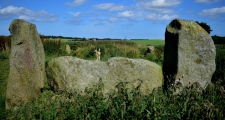
 In fact, the Ural region hundreds of millions of years ago was a vast soft rock plateau. Under geological movements such as plates, volcanoes, and earthquakes, the soft rocks were gradually destroyed by weathering. Only the Ural with an altitude of 500-1200 meters remained in the area of tens of thousands of square kilometers. The mountain range survived because of the extremely hard stone. Among them, the seven giant stone pillars that were not weathered were 30-42 meters high and have stood for 200 million years, standing upright on the top of the mountain like seven giants.
The Chuvash tribe, who immigrated from the vast snow sea of Siberia, has never seen such a magnificent “building”. Therefore, they believe that the seven giant stone pillars are the “seven gods” who guard the earth. Although there are more than ten legends, all It has the meaning of "shelter of the gods". It is well-documented 300 years ago that foreigners were prohibited from approaching, not to mention that the construction of a railway requires nearby blasting.
Some scientists pointed out that the rock composition of the Seven Giants is of great significance to the study of the geological evolution of Siberia.
This has also led to more than 1,200 climbers attempting to climb the Seven Boulders with their bare hands from the 17th century to the present. All of them have failed. Even the lowest 30-meter stone pillar has no precedent for success, because the stone pillar has long been weathered and can’t stand it anymore. The destruction of external forces. It was not until 2015 that the Russian youth Litar succeeded in climbing the 42-meter stone pillar, but he was sentenced to 5 years for this, making him the only human who has successfully climbed the summit with his bare hands.
In order to protect the Seven Giants, the Russian government simply opened up to the outside world and required tourists to supervise each other to reduce the possibility of malicious climbs without being present.
It’s worth mentioning that the cost of visiting the Seven Giants is quite high. It takes 8 hours to reach the nearest landing point on a motorboat on the Ilich River, and another 20 miles to spend the night in a designated camp. It takes 2-3 days to hike. Arrive at Seven Giants National Park. Of course, there are also time-saving helicopters that go straight to the Seven Giants scenic spot, but the cost is at least 200,000 rubles.
Would you like to visit the Russian giant stone pillars? First, you need to get your Russian visa in order. With many thanks to Kasimys and Asankheia for their kind help and support of this article, including their lovely Creative Commons photos.