

Rituals of Fate to Digital Games: How Ancient Cultures Interpreted Randomness
Submitted by Andy_B on Saturday, 22 November 2025 Page Views: 55
Resources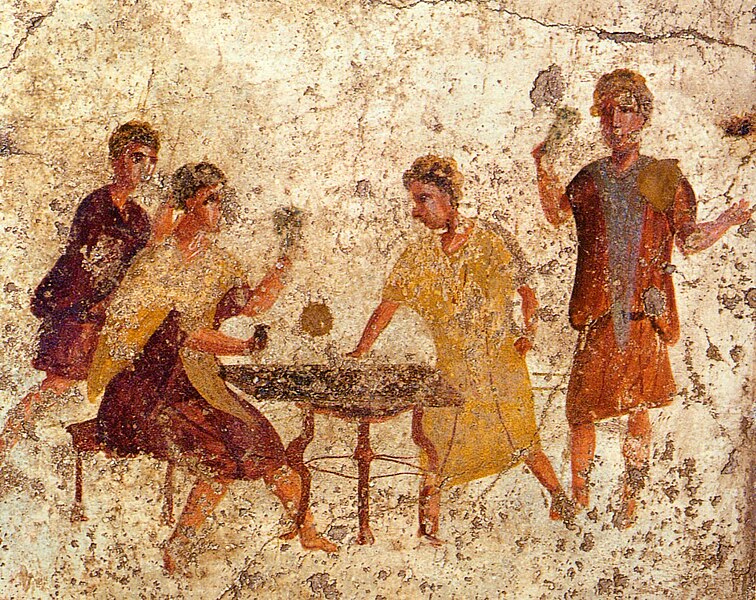
Bones, stones, carved fragments and marked sticks served as tools through which people sought guidance. These were not recreational items in the modern sense but instruments for interpreting the world. Random outcomes helped shape decisions, mediate disputes and establish social responsibility. Even today, echoes of these ancient rituals appear in the way individuals respond to unpredictability in digital environments. Modern entertainment platforms, including networks associated with Rockstar Casino, reveal how enduring these cognitive patterns remain.
Ritual Objects and the Significance of Uncertainty
Archaeological finds suggest that early humans intentionally crafted or selected objects suitable for interpreting chance. Knucklebones discovered across Europe and the Near East, for instance, were used not only in competitive play but also in ritual consultation. Their irregular form allowed outcomes to feel both uncertain and meaningful.Cultural symbolism was often deeply embedded in the materials themselves. Stones with natural markings, shells with imbalanced weight or carved wooden pieces acted as conduits for understanding hidden forces. Casting or drawing such objects was never intended to produce definitive answers; rather, it established a pathway for reflection. Randomness became a means of accessing structures believed to lie beyond ordinary perception.
This logic is mirrored in contemporary digital systems. Algorithms reproduce randomness using mathematical models, yet the psychological experience is surprisingly similar. Human responses to unpredictability—anticipation, interpretation, meaning-making—continue to follow ancient patterns. Platforms connected to Rockstar Casino exemplify how modern environments sustain these cognitive responses.
Reading Fate Through Patterns
Ancient cultures frequently perceived randomness as patterned rather than chaotic. Instead of assuming chance events were arbitrary, many believed that outcomes reflected the influence of forces operating beyond visible reality. Divinatory systems relied on repeated casting to identify meaningful tendencies. Whether through oracle bones in ancient China, rune stones in northern Europe or inscribed pottery across the Mediterranean, the principle remained consistent: patterns revealed truths.These practices also played practical roles. Communities used them to guide decisions about travel, agriculture and conflict resolution. Randomness thus served as a cognitive mechanism for navigating uncertainty in situations where evidence was limited.
Modern digital cultures retain echoes of these behaviours. Users often search for significance in algorithmically generated outcomes, interpreting sequences as if they hold structure. This can be observed in interactions with platforms such as https://rock-star-casino.com, where perceived patterns shape engagement. The human inclination to identify structure within randomness persists strongly.
The Shift From Ritual Purpose to Recreation
As societies evolved, many ritual practices gradually transformed into recreational activities. Objects once dedicated to sacred consultation began to appear in social contexts. Knucklebones, dice and carved tokens uncovered across Eurasia suggest that these items served dual purposes, navigating between ceremonial and playful settings.This transition reflects changing relationships with uncertainty. As economic and social systems grew more complex, randomness adopted additional roles. It became a source of tension, excitement and structured competition. Games allowed communities to explore the nature of unpredictability in controlled, low-risk environments.
Modern digital entertainment follows similar trajectories. Platforms operating within chance-based systems, including those linked to Rockstar Casino, build upon this longstanding connection between uncertainty and engagement. While contexts have evolved, the psychological appeal is grounded in ancient cultural behaviours.
Symbolic Responses to Chance
One of the most enduring features of early approaches to randomness is the symbolic interpretation of outcomes. Cracks on oracle bones, markings on stones or the fall of carved objects were believed to communicate insights that extended beyond the surface result. This symbolic layer shaped both individual and communal identity.Communities collectively participated in interpreting randomness. Ritual specialists guided readings, yet the wider society contributed to shared narratives. Randomness helped construct myths, reinforce cultural cohesion and organise social order.
Digital environments replicate similar tendencies. Users frequently assign meaning to chance-based outcomes, creating shared interpretations even when aware that results stem from algorithms. Platforms connected with Rockstar Casino highlight how quickly symbolic meaning attaches itself to unpredictable events.
Randomness as a Cultural Continuity
Despite technological transformation, the fundamental relationship between humans and randomness has remained remarkably consistent. Ancient people developed ritual structures to interpret uncertainty, whereas contemporary systems use computational randomness to shape interactive experiences. The tools have changed, but cognitive responses have not.Randomness still informs decision-making, creativity, scientific analysis and entertainment. Its persistence across time suggests that uncertainty remains central to how humans understand agency, fate and possibility.
Modern entertainment ecosystems, including those influenced by, show that randomness continues to serve as a compelling force in digital culture. What once guided spiritual consultation now influences online engagement, yet the psychological foundations remain familiar.
Studying Ancient Randomness Today
Research into early understandings of chance provides insight into cultural development, cognition and symbolic behaviour. Archaeology, anthropology and computational modelling collectively contribute to an expanding field that examines how humans structure meaning under conditions of uncertainty.The connection between ritual randomness and contemporary interactive systems demonstrates a broader continuity: societies continually seek frameworks through which to interpret unpredictability. Whether using carved bones or digital algorithms, people respond to randomness with curiosity and structured interpretation.
Understanding these long-standing patterns reveals why modern environments—both physical and digital—rely so heavily on randomness to engage, inform and connect individuals. The evolution from ritual objects to digital systems shows that while cultural forms change, the underlying human relationship with uncertainty remains constant.
