

From Neolithic Ingredients to the Modern British Table
Submitted by Andy_B on Friday, 23 October 2026 Page Views: 7
Resources Lay out a British breakfast or a festive spread and ask which ingredients a Neolithic farmer would recognise. Honey, pork, cheese, hazelnuts and porridge-like grains would probably seem familiar. Tea, potatoes, sugar and chocolate would not; those arrived millennia later.
But recognising an ingredient is not the same as recognising a recipe. Hazelnuts in a Neolithic diet and hazelnuts in a modern praline share a plant, not a technique. This article follows the archaeological evidence for prehistoric British food, from charred seeds to pottery residues, and asks what has genuinely continued, what has changed beyond recognition, and what counts as a modern reinvention wearing an ancient ingredient's name.
What counts as evidence for prehistoric food?
Archaeologists piece together Neolithic Britain's food from fragments, not menus. Animal bones are the most durable evidence; at Durrington Walls, near Stonehenge, excavators found over 38,000 discarded animal bones, representing at least 1,000 animals. Plant evidence is scarcer and more fragile. As English Heritage notes, "unlike animal bones, plant remains often don't survive on archaeological sites", so researchers rely on pollen grains, charred plant fragments, and microscopic fossils preserved in mineralised human faeces or trapped in dental calculus, the hardened plaque on ancient teeth.Pottery adds another layer. Lipid residue analysis can detect fats absorbed into the fabric of a vessel, revealing whether it once held meat, dairy, or plant oils, even when no visible food remains. Combined with isotope analysis of bones and teeth, which can indicate whether an animal grazed locally or was moved long distances, this builds a picture of diet and trade.
Crucially, absence of evidence is not evidence of absence. Poor preservation of plant remains has previously encouraged a meat-heavy caricature of prehistoric eating. In reality, evidence from sites such as El Sidrón in Spain shows even Neanderthals ate mushrooms, pine nuts and moss, a reminder that gaps in the archaeological record often reflect what survives, not what people actually ate.
Hazelnuts and gathered foods: real continuities
Hazelnuts appear consistently in the archaeological record and on English Heritage's list of foods eaten around the time of Stonehenge, alongside mushrooms, sloes, apples and leafy vegetables. Wild gathering remained important even after farming arrived in Britain around 4000 BC. By the later Neolithic, people had been farming domesticated plants and animals for over 1,000 years, yet they continued hunting wild animals and gathering wild plants rather than relying solely on cultivated food.This is a genuine point of continuity: the hazelnut as an ingredient has barely changed in thousands of years, and gathering wild foods alongside farmed ones is a pattern many households still recognise today. What it is not, is evidence of a specific Neolithic recipe. We don't have details of how prehistoric communities prepared or roasted their hazelnuts, so it would be a stretch to describe a modern hazelnut praline, spread, or cake as a "surviving Neolithic dish." The ingredient persisted; the recipe did not.
Grain farming arrives, but bread history is complicated
Cereal cultivation reached Britain as part of the same Neolithic package as domesticated animals, arriving from the Continent from around 4000 BC. English Heritage records that by the late Neolithic period, people "cultivated and processed cereals, although not on a large scale," with domestic animals for meat and milk likely more central to the diet and economy than grain farming. Permanent field systems and settled agriculture on a larger scale are a Bronze Age development, from around 1500 BC, later than the Stonehenge period.This tells us cereals were present and processed, but it doesn't tell us how. There's no supported evidence here for a specific baking method, a particular style of loaf, or the kind of bread most people would picture today. Treating "Neolithic people grew grain" as equivalent to "Neolithic people baked bread as we know it" conflates ingredient presence with a defined culinary technique. The honest version is more modest: grain was there, and people worked with it, but the exact form it took on the plate remains largely unknown.
Milk, cheese and the clues trapped in pottery
Dairy offers one of the more striking examples of what residue analysis can reveal. At Durrington Walls, around a quarter of tested Grooved Ware pots, a style of flat-bottomed pottery with geometric decoration found at henges and ceremonial sites, contained traces of dairy products: milk, butter, yoghurt or cheese. Notably, most of these dairy-residue pots clustered in and around the Southern Circle timber monument, hinting that milk products may have played a role in ceremonial activity rather than purely everyday eating (English Heritage).There's a biological wrinkle worth noting: people in Britain at this time were likely lactose-intolerant, unable to digest raw milk comfortably. This makes processing into cheese or yoghurt, which reduces lactose content, a plausible and well-supported practice rather than a modern assumption projected backward. English Heritage describes work by Dr Penny Bickle of the University of York exploring how Neolithic communities might have made cheese.
What the residues cannot do is specify a recipe. Knowing dairy was processed doesn't tell us whether the result resembled a soft curd cheese, something closer to yoghurt, or a product with no modern equivalent at all. The pot tells us dairy was there and processed; it doesn't hand us a method.
Feasting, meat and communal food culture
The animal bone evidence at Durrington Walls points toward something more specific than daily meals: feasting. Around 90% of the bones and teeth recovered were from pigs, with most of the remainder from cattle. Many bones still had meat attached when discarded, and flint cut-marks on beef bones alongside burnt pig foot bones suggest animals were roasted over open fires rather than carefully butchered for maximum yield (English Heritage).The timing is telling. Analysis of pig mandibles and maxillae by a University of Sheffield team found that pigs were overwhelmingly killed at around nine months old, younger than the age that would yield the best meat. Since piglets were likely born in spring, a nine-month lifespan points to killing around midwinter. That lines up with the architecture: Durrington Walls' Southern Circle timber monument aligns with the midwinter sunrise, while the Stonehenge Avenue and stone circle align with the midwinter sunset. English Heritage's Dr Lizzie Wright notes that researchers still aren't certain whether Durrington Walls functioned as "a construction camp... or a place for gatherings and ritual celebrations at midwinter solstice" once building was complete (English Heritage blog).
Isotope analysis of animal teeth adds a further layer: some pigs were reared as far away as west Wales, upland northern England, and even north-east Scotland, with cattle not raised locally on the chalk either. People seemingly travelled substantial distances with their animals to gather at this site, whether for construction work, ceremony, or both. Pig teeth also show decay consistent with fattening on something sweet, perhaps honey, a small but evocative detail about Neolithic appetites.
What this evidence supports is a picture of large, infrequent communal gatherings centred on meat, not an everyday diet of roast pork and beef. The exact ritual meaning behind these feasts, and precisely what else was served alongside the meat, remains genuinely uncertain. For readers wanting more on the wider landscape surrounding these monuments, Historic England's chapter on the Neolithic and Bronze Age landscape offers further context.
What changed before today's British table?
 Many of the raw ingredients on a modern British table have deep roots: pork, beef, dairy, hazelnuts and cereals all appear in the Neolithic record. But the table itself transformed dramatically over the following millennia. Romans introduced new foods and culinary ideas during their occupation.
Many food traditions have managed to translate themselves into what we currently call British food heritage through the Protected Designation of Origin and other schemes looking to protect the traditional way of producing food.
Centuries of European exploration later brought potatoes, tomatoes, sugar and chocolate, ingredients with no place at all in a Neolithic larder. Tea, too, arrived as a much later addition to British drinking habits. Cooking methods, field systems, and large-scale arable farming also developed well beyond the Stonehenge period, with permanent field systems not appearing until the Bronze Age.
The table below summarises where the evidence is strong, where it only supports general inference, and where any resemblance to modern food is reinvention rather than continuity.
| Documented ingredient | Likely practice | Modern reinvention |
|---|---|---|
| Hazelnuts and wild plant foods | Gathered alongside farmed food; eaten seasonally | Hazelnut spreads, confectionery, baking |
| Cereals (grain) | Cultivated and processed on a small scale | Modern bread-making techniques and loaf styles |
| Milk-based residues in pottery | Processed into cheese, yoghurt or butter, likely due to lactose intolerance | Specific modern cheese or yoghurt recipes |
| Pig and cattle bones at Durrington Walls | Roasted over open fires; consumed at large midwinter gatherings | Everyday roast dinners as a direct descendant |
| Honey (inferred from pig tooth decay) | Possibly used to fatten animals or sweeten food | Modern honey-based cooking and baking |
Continuity of ingredients, not continuity of recipes
The throughline across the hazelnuts, the grain, the dairy residues and the feasting bones at Durrington Walls is the same: Neolithic Britain gives us strong evidence for which raw materials people used, and only fragmentary, often indirect evidence for how they turned them into meals. That distinction matters. It's tempting to draw a straight line from a charred grain or a dairy-fat residue to a familiar dish on a modern plate, but the archaeological record resists that leap.What it does offer is something arguably more interesting: a genuine, evidence-based connection to ingredients still eaten today, paired with honest uncertainty about exactly how they were prepared. For anyone curious to dig further, English Heritage's research on food and feasting at Stonehenge and its exploration of midwinter feasts are good starting points, alongside Historic England's broader work on the Neolithic and Bronze Age landscape surrounding these sites.
Meta data
Meta titleNeolithic Britain Food: What Really Survived to Today?
Meta description
What did Neolithic Britain really eat? Explore the evidence behind the prehistoric British diet, from hazelnuts to Stonehenge's midwinter feasts.
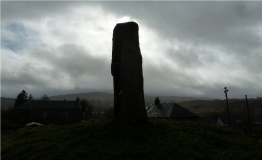
With many thanks to Sidestone Press, Diederik Pomstra, Dorothee Olthof, Karsten Wentink and Dawn Brebo for the Creative Commons photos at top.
