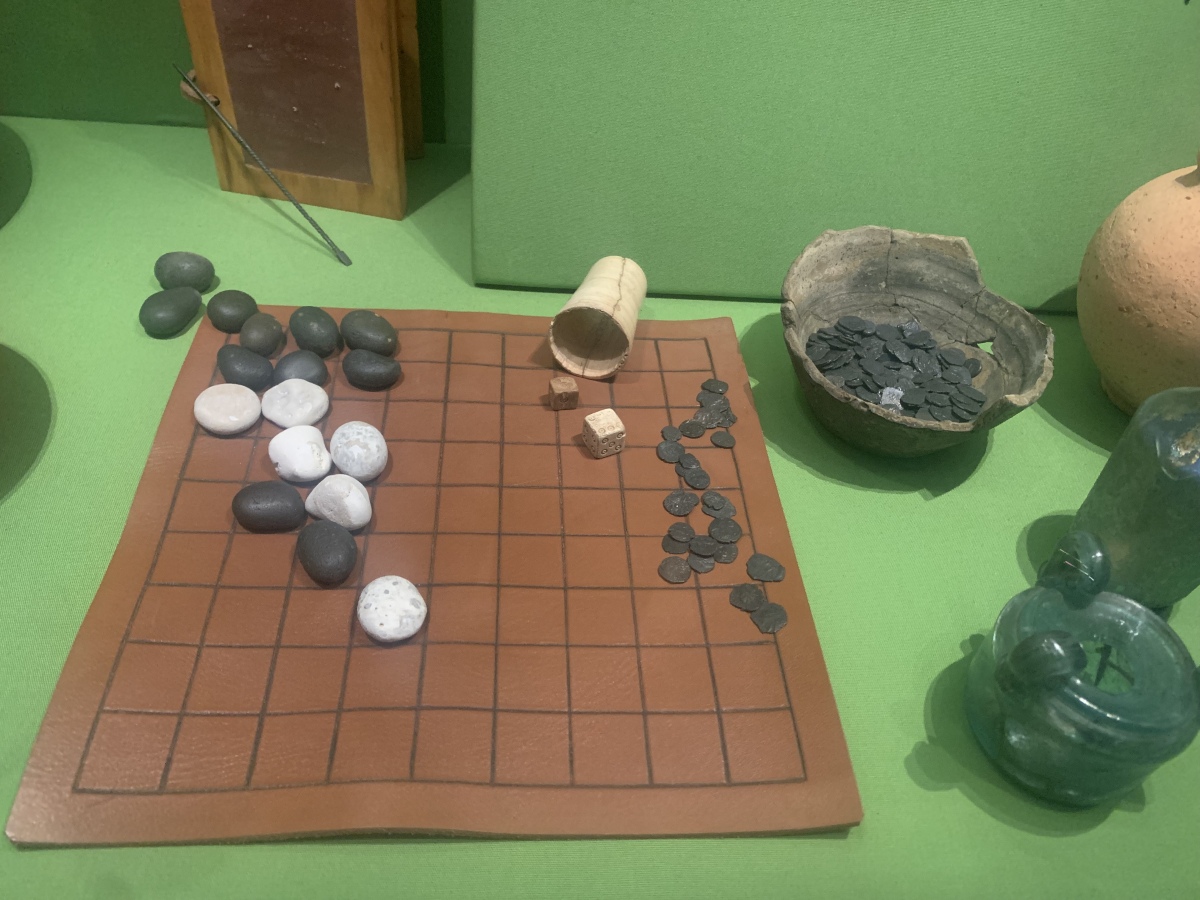
Brighton Museum and Art Gallery submitted by Andy B : Roman gaming / gambling board and pieces. (Vote or comment on this photo)
From Mesopotamian dice to modern online casinos, the spiritual origins, evolution, and psychological appeal of gambling through the ages. Read more about ancient games of chance - from rituals to online casinos.
Games of chance have fascinated humankind for millennia. What began as sacred rituals in ancient temples has evolved into one of the world’s largest digital industries: online gambling. But while the tools and technologies have changed, our fascination with fate, risk, and reward has remained constant. This article explores the deep historical roots of games of chance and shows how their ancient spirit lives on in modern online casinos.
How did ancient civilizations approach games of chance?
Long before the first slot machine lit up Las Vegas, humans played games of chance to divine the future, settle disputes, or commune with higher powers. In Mesopotamia, dice made from animal bones were used as early as 3000 BCE – not just for entertainment but for religious and decision-making purposes. The Egyptians, too, had games like Senet, which scholars believe had spiritual significance, possibly representing a soul’s journey through the afterlife. For many ancient cultures, luck and fate were intimately tied to divine will, and games became a medium to interpret that will. Today, the allure of chance lives on in digital form – for example, in modern platforms featured on bonusetu.com, where contemporary players still chase luck, albeit in a far different context.
Were these games purely recreational?
In most early societies, games of chance were woven into religious and cultural traditions. The Greeks consulted oracles, but they also threw knucklebones (astragali) to determine outcomes, believing gods could influence the toss. Roman soldiers played dice games not only for leisure but also to invoke the favor of Fortuna, the goddess of luck. Rather than separate pastimes, these activities served social, spiritual, and often political functions.
How did games evolve from sacred to secular?
As empires rose and fell, the sacredness of many games began to erode. By the Middle Ages, dice and card games were increasingly seen as secular amusements – sometimes to the dismay of the Church. Gambling was regulated, forbidden, or taxed, but it never disappeared. Instead, it adapted. By the 15th century, card games had spread throughout Europe, and by the 17th century, early gambling houses in Italy began to resemble today’s casinos. The shift reflected broader changes: a more secular worldview and growing interest in probability, mathematics, and risk.
What are the historical roots of the modern casino?
The modern casino can trace its lineage back to, where the “Ridotto” was established in Venice in 1638 as a government-sanctioned gambling house. Over time, casinos evolved into lavish entertainment complexes, spreading from Europe to the United States. While ancient players rolled bones and cast lots, modern gamblers sat at roulette wheels or card tables – yet the core appeal remained unchanged: the thrill of risk and the promise of reward.
How did the internet revolutionize gambling?
The late 20th century introduced a seismic shift with the advent of online gambling. In 1994, Antigua and Barbuda passed the Free Trade & Processing Act, allowing companies to offer internet-based gambling licenses. By the early 2000s, online casinos had exploded in popularity, offering virtual versions of classic games like blackjack, poker, and slots. The transition from physical dice to digital RNGs (random number generators) represented not just technological progress, but a new kind of accessibility and anonymity for players.
Are online casinos merely digital versions of ancient rituals?
In some ways, yes. Just as ancient people sought control over fate through ritualistic gaming, modern users engage with online casinos to test chance, skill, and sometimes superstition. Bonus rounds, themed slots, and live dealer games often invoke mythology, history, or even spirituality – echoes of the ancient mindset that saw chance as something greater than mere randomness. Though mediated by software, today’s online games still tap into deep psychological patterns shaped thousands of years ago.
What role does psychology play in the evolution of gambling?
The psychological thrill of gambling – risk-taking, anticipation, reward – has always been a central driver. Ancient games relied on suspense and symbolic stakes; modern versions use audio-visual feedback, near-misses, and variable rewards to maximize engagement. Online casinos have further refined this with algorithm-driven experiences tailored to user behaviour, making the games as addictive as they are entertaining.
What does this long history tell us about human nature?
From ancient temple courts to modern smartphone screens, the enduring presence of games of chance reveals a timeless human desire: to understand fate, to test luck, and to find meaning in uncertainty. Whether through bone dice, golden tokens, or digital chips, we have always been drawn to the edge between chaos and control. Gambling is not just a game – it’s a mirror of our need to make sense of a world ruled by chance.