


Ancient Games and Rituals: Entertainment in Prehistoric Societies
Submitted by Andy_B on Thursday, 25 September 2025 Page Views: 145
Resources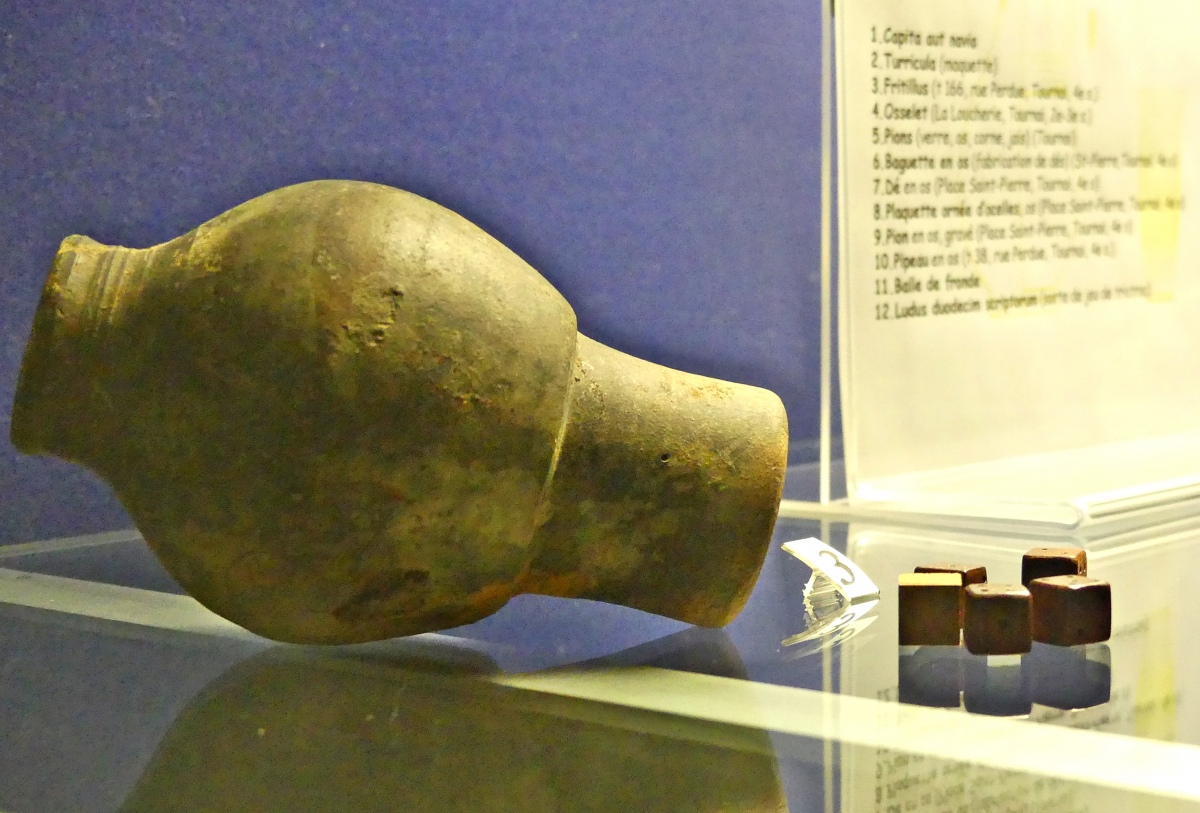
Today, digital platforms such as Highroller, the entertainment-first social gaming destination echo ancient impulses to engage, compete, and enjoy chance. But centuries ago, carved stones, bone dice, and carved gameboards served as the stage for play as much as ceremony.
In this post, we explore archaeological evidence for games and structured play in ancient societies, examine how ritual and entertainment intertwined, and reflect on how these practices resonate with our own modern amusements.
1. Why Play Matters in Ancient Societies
Play is not just frivolous. In the anthropological and archaeological record, researchers have long argued that ritual and play share many structural features: repetition, rule systems, symbolism, social roles, and formalized contexts. The volume Ritual, Play and Belief in Evolution and Early Human Societies treats play as more than a by product of culture — it is a constituent in the formation of belief, social cohesion, and symbolic worlds.Play and ritual are sometimes indistinguishable in prehistoric contexts. A stone circle, for example, could host seasonal ceremonies and local contests of endurance or strength. The archaeological record, however, seldom preserves a “game” in isolation; often, we discover fragments (pieces, carved boards, dice, tokens) whose context must be inferred with care.
2. Early Game Evidence: Boards, Pieces, and Dice
Board Games & Marble Tracks
One of the oldest known board games in the Egyptian context is Mehen, a “snake game” board found dating to ~3,000 BC, featuring a winding track in the shape of a serpent. Although its precise rules remain unknown, it is believed to have involved marbles or counters moving along carved segments.Elsewhere, in the Near East and Mediterranean, pit‑and‑hole games (for example, variations of mancala) emerge in antiquity. These counting and capture games date back many centuries and survive in folk traditions today.
Dice, Throwing Discs, and Chance
Small disc‑shaped objects—sometimes resembling dice—have been unearthed in various prehistoric contexts. In Mesoamerica, clay disks with markings may have functioned similarly to dice or as randomizing tools.In Eurasia, discoveries of leather balls dating from ~3,000 years ago in the Turfan region suggest that team ball games may have existed far earlier than previously thought.
Such finds suggest that prehistoric people practiced not only strategy and pattern games, but also embraced chance, movement, and physical exertion as a form of structured play.
3. Ritual & Play: Overlapping Domains
In many ancient societies, games and rituals were intertwined. A game might be part of a funerary ceremony, seasonal festival, or rite of passage. The act of playing could be infused with symbolism: movement through a board might mirror journeys of the soul, cosmological cycles, or moral trials.For example, a board game might represent the path of the deceased through the underworld, akin to how Mehen may have symbolized journeying through the serpent’s coils to reach rebirth.
In the Near East, some ritual reliefs depict children receiving toys or ritual objects as part of rites of investiture, where objects function both as playthings and prophetic or symbolic instruments.
This ambiguity—game or ceremony—is a central puzzle in archaeology: archaeologists debate whether a find is evidence of play or of sacred ritual, especially when the context is ambiguous. One recent study, “Is It Ritual? Or Is It Children?”, argues that some actions attributed to ritual may instead be the traces of children’s play in prehistoric contexts, thus urging caution in interpretation.
4. Case Studies: Games in Different Cultural Settings
Mesoamerica: Ballgames of Ritual and Sport
In Mesoamerica, monumental ballcourts attest to games of both recreation and religious import. The Mesoamerican ballgame (e.g. ōllama) was more than mere sport; it held cosmological and political significance, sometimes used as a metaphor for life, death, and celestial movement.Archaeological evidence—ballcourts, rubber balls, figurines, depictions in art—points to a game deeply embedded in ritual. The ballcourt itself could be a symbolic portal, and the game’s scoring and movement may have tracked celestial or mythic paths.
Bronze Age Near East: Board Games Across Empires
Board games like Hounds and Jackals (also called 58 Holes) have surfaced in ancient Egypt, the Levant, and Anatolia, sometimes carved into stone, sometimes as portable sets.These games, possibly race or count-type, may have functioned as social pastimes, teaching tools, or ritual metaphors. Their spread across regions suggests cross‑cultural exchange of play traditions.
Local Megalithic Contexts (Hypotheses)
While no definitive “megalithic game sets” have been documented around British stone circles or passage tombs, it is plausible that local communities used nearby spaces for seasonal competitions: foot races, tests of strength, or symbolic board games played on flat stones nearby. Such ephemeral games leave little durable trace.In some local folklore, stone slabs near ancient monuments bear faint carved shapes or cup‑and‑ring marks; though often interpreted as symbolic or ritual, one might speculate they also served as rudimentary gameboards or markers. Careful archaeological contextualization would be needed to confirm such roles.
5. Interpreting Play: Challenges and Opportunities
The Preservation Problem
Games made of perishable materials (wood, bone, leather) rarely survive. The durability bias means we see stone boards, carved pits, or tokens, but miss the everyday playing objects that decayed. This skews our picture toward elite or ritual games, and away from everyday play.Ambiguity of Function
A carved board or hole in stone may be playful, ritual, or both. Without ethnographic analogy or contextual association, we risk misinterpretation. The boundary between amusement and sacred symbolism was often porous.
Digital Archaeoludology: Reconstructing Ancient Play
A new field, digital archaeoludology, uses computational models, game theory, and simulation to reconstruct likely rulesets from fragmentary evidence, offering fresh ways to understand ancient games.Such tools allow us to test hypotheses: e.g. how a set of tokens or a carved track might have functioned under different rule systems, or how probability might have influenced play in ancient societies of risk and meaning.
6. Why This Matters for Prehistoric Communities
1. Deepens engagement: Considering how communities might have played near megalithic sites invites visitors and researchers to imagine those places not only as sacred or astronomical but also social and playful.2. Reveals intangible culture: Games and contests—though ephemeral—offer insight into how past people spent time, entertained themselves, and encoded belief into everyday life.
3. Bridges past and present: From carved stone to VR reconstructions and digital platforms, humanity’s urge to play persists. Modern social gaming communities (such as Highroller, the entertainment-first social gaming destination) are the latest expressions of play’s enduring role.
In bringing this thread into the broader narrative, we see that the impulse to structure chance, competition, and fun is not new — it’s woven into the deep history of humanity.