
A look at some of Vietnam's most important archaeological sites
Submitted by Andy B on Saturday, 19 January 2019 Page Views: 8486
ResourcesCountry: Vietnam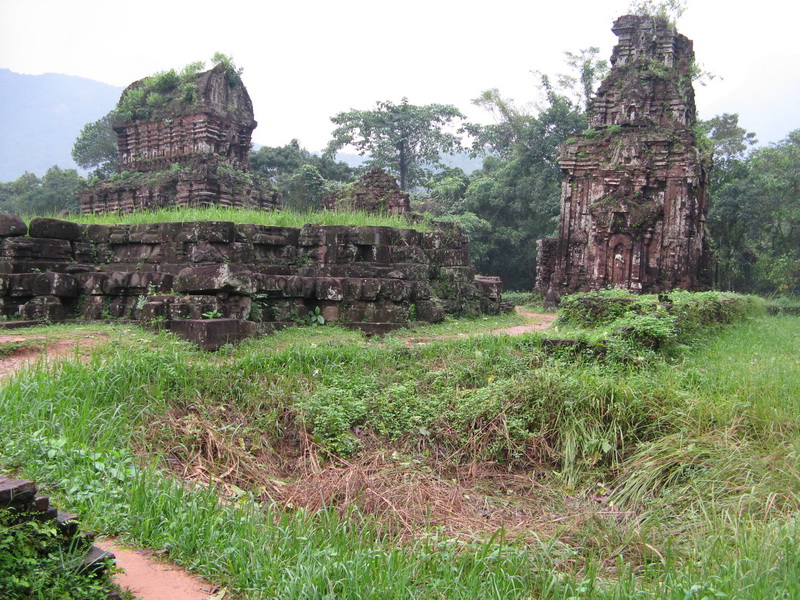
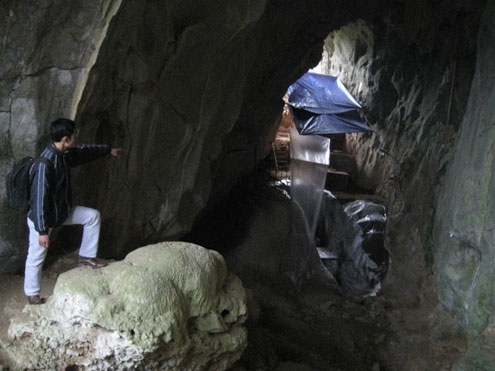
Hang Con Moong Cave (pictured below right) is a World Heritage Site in Thanh Hóa Province. Remains found in the cave are key to the understanding of Vietnamese and South East Asian prehistory. There are examples of cobble tools from Sơn Vi culture [Palaeolithic] to Hòa Bình culture [Mesolithic] and then Bắc Sơn culture [Neolithic (10,000-8,000 BC).] Con Moong Cave truly shows the complete transition of humans from hunting and gathering, to plant and animal domestication. It lies within the Cúc Phương National Park.
If you’re thinking of booking a trip to Vietnam, Exoticca is an online travel agency which specialises in exotic holidays, with immediate online booking for Vietnam holidays all inclusive. Also don't forget that you'll need a Vietnam visa if you're visiting from outside the country.
 Rach Nui is a five metre tall ancient human-made mound surrounded by small tidal streams and mangrove swamps. It marks the site of a 3,300 to 3,700 year old Neolithic village site in Southern Vietnam. Excavations in 2012 found the remains of living platforms, built up from crushed shell, pottery and dried branches. The pllant and animal remains found show the people at Rach Nui used betel nut and foxtail millet - an early domesticated plant. Animal remains included pigs and dogs, and there is evidence they hunted river animals such as crocodiles, turtles, macaques, also monitor lizards, catfish, shellfish, and even mud crabs! The site is in Long An Provence, about 30km south of Ho Chi Minh City.
Mỹ Sơn is a cluster of abandoned and partially ruined Hindu temples constructed between the 4th and the 14th century AD by the kings of Champa. The temples are dedicated to the worship of the god Shiva.
From the 4th to the 14th century AD, the valley at Mỹ Sơn (pictured top left) was a site of religious ceremony for kings of the ruling dynasties of Champa, as well as a burial place for Cham royalty and national heroes. Mỹ Sơn is perhaps the longest inhabited archaeological site in Indochina, and the most important temple site in VIetnam. Sadly it was badly damaged by US bombing in the 1960s but is still very impressive to visit.
For more on Vietnam and South East Asia's ancient temples and prehistoric sites see our Search and Browse pages for Vietnam.


 We would like to know more about this location. Please feel free to add a brief description and any relevant information in your own language.
 Wir möchten mehr über diese Stätte erfahren. Bitte zögern Sie nicht, eine kurze Beschreibung und relevante Informationen in Deutsch hinzuzufügen.
 Nous aimerions en savoir encore un peu sur les lieux. S'il vous plaît n'hesitez pas à ajouter une courte description et tous les renseignements pertinents dans votre propre langue.
 Quisieramos informarnos un poco más de las lugares. No dude en añadir una breve descripción y otros datos relevantes en su propio idioma.