

10 Key Historical Sites Every History Student Should Study
Submitted by Andy_B on Wednesday, 19 February 2025 Page Views: 233
Resources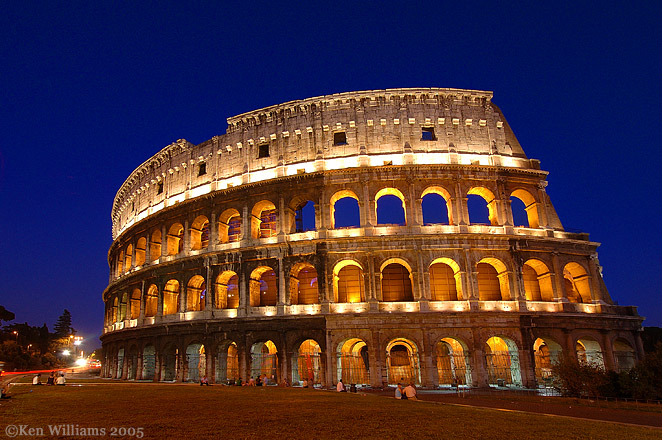
From ancient wonders that defy explanation to battlefields that changed the course of history, these 10 key historical sites offer invaluable insights into humanity’s collective past. Whether you’re able to visit them in person or explore them through research and virtual tours, each of these landmarks provides a unique perspective on the evolution of societies. Let’s take a journey through time and uncover the historical treasures every student of history should study.
Why Do Students Study History? Faculties and Programs Explained
History allows us to learn from past successes and failures. By studying how societies have evolved, students can identify patterns that help predict future trends. Wars, revolutions, economic crises, and social movements all provide lessons that inform modern governance, policy-making, and international relations.For example, understanding the causes of World War II helps historians and policymakers recognize the warning signs of authoritarianism, while studying past pandemics can guide public health responses today. Without historical knowledge, societies risk repeating past mistakes.
A history student doesn’t just memorize dates and events—they analyze evidence, interpret sources, and evaluate conflicting viewpoints. Whether examining primary documents, archaeological findings, or historical narratives, students learn to question biases and construct well-reasoned arguments.
These skills are valuable not only for historians but also for careers in law, journalism, politics, and business. The ability to think critically and assess complex information is essential in many professional fields.
Historians are skilled researchers who know how to gather, organize, and interpret large amounts of information. They also develop strong writing and communication skills, as they must present their findings in clear, compelling ways. Whether crafting a thesis, writing a policy brief, or presenting historical research, students of history become effective communicators—an invaluable skill in any career.
History provides insight into the development of cultures, traditions, and social structures. By studying different civilizations, students gain a deeper appreciation for cultural diversity and the factors that shape human behavior. This knowledge is especially useful in fields like anthropology, sociology, and international relations.
For instance, studying the civil rights movement in the United States or the decolonization of Africa and Asia helps students understand ongoing struggles for justice and equality.
For students passionate about history, numerous academic paths are available at universities around the world. Depending on interests and career goals, students can choose from undergraduate, graduate, and specialized programs in history.
Undergraduate History Degrees
A Bachelor’s Degree in History (BA or BSc) is the starting point for most students interested in studying the past. This program typically lasts three to four years and provides a broad foundation in historical studies, including coursework in ancient, medieval, modern, and world history.Some universities offer specializations within history degrees, such as:
• Political History – Focuses on governments, revolutions, and diplomacy.
• Economic History – Examines the development of economies, trade, and financial systems.
• Social and Cultural History – Explores everyday life, gender roles, and societal changes.
• Military History – Studies wars, battles, and strategies.
• Public History – Involves working with museums, archives, and historical preservation.
Graduate Programs in History
For students who wish to advance their studies, a Master’s Degree in History (MA or MSc) provides an opportunity to specialize further. These programs often involve coursework, independent research, and a thesis. Some graduate programs also include practical training in archives, museums, or digital history projects. During such studies, students actively use study documents to share notes and maximize collaboration with other students. Graduates often work in super busy schedules.A Ph.D. in History is for students who wish to conduct original research and contribute new knowledge to the field. Ph.D. candidates often go on to become university professors, researchers, or experts in specialized historical topics.
The Great Pyramid of Giza (Egypt)
The Great Pyramid of Giza, standing for over 4,500 years, is one of the most enduring symbols of human ingenuity. Built as a tomb for Pharaoh Khufu, it is the largest and most precise of Egypt’s pyramids. Despite centuries of study, historians and archaeologists are still fascinated by the mystery of how the ancient Egyptians managed to construct such a massive structure without modern technology. The precision with which it aligns with celestial bodies suggests an advanced understanding of astronomy, while its massive stone blocks, some weighing several tons, indicate an exceptional level of engineering skill.Studying the Great Pyramid gives insight into ancient Egyptian society, their religious beliefs, and their mastery of architecture. It also raises intriguing questions about labor organization—were the builders slaves, or was it a workforce of skilled laborers? The pyramid’s ability to endure millennia of natural and human-made threats further emphasizes the sophistication of the civilization that built it.
The Colosseum (Italy)
Few structures capture the grandeur and brutality of ancient Rome like the Colosseum. Built between 70-80 AD, this vast amphitheater could hold up to 50,000 spectators, who gathered to watch gladiatorial contests, public executions, and dramatic re-enactments of famous battles. The Colosseum was more than just an entertainment venue—it was a tool of propaganda, demonstrating Rome’s power and control while keeping the public entertained and distracted from political issues.Studying the Colosseum provides insight into Roman engineering, as its innovative use of concrete and arches allowed for a durable, multi-tiered structure that influenced stadium designs for centuries. It also reveals the values of Roman society, where honor, violence, and spectacle played significant roles. The remains of the Colosseum stand today as a powerful reminder of both Rome’s architectural brilliance and its sometimes ruthless culture.
Machu Picchu (Peru)
 Nestled high in the Andes Mountains, Machu Picchu is one of the most remarkable remnants of the Incan civilization. Built in the 15th century as a royal estate for Emperor Pachacuti, this site was abandoned during the Spanish conquest and remained hidden from outsiders until its rediscovery in 1911. Its breathtaking location and intricate stonework make it one of the most significant archaeological sites in the world.
Machu Picchu provides valuable insights into the Inca Empire's urban planning, agricultural techniques, and religious practices. The layout of the city, with its carefully arranged temples, terraces, and astronomical observatories, suggests that the Incas had a deep understanding of both engineering and the natural world. Despite its isolation, Machu Picchu’s advanced irrigation and drainage systems highlight the ingenuity of the Incan people, making it an essential site for any history student.
The Acropolis of Athens (Greece)
Perched atop a rocky hill, the Acropolis of Athens is one of the most significant sites of Classical Greece. Built in the 5th century BC, this sacred complex houses several ancient structures, the most famous being the Parthenon, a temple dedicated to Athena, the city's patron goddess. The Acropolis symbolizes the artistic and intellectual achievements of ancient Greece, particularly during its Golden Age under Pericles.Studying the Acropolis helps students understand the foundations of democracy, philosophy, and classical art. The architectural precision of the Parthenon, with its subtle optical illusions that make its columns appear perfectly straight, is a testament to Greek innovation. The site also represents the enduring legacy of Greek thought, influencing Western political and cultural traditions for millennia.
Stonehenge (United Kingdom)
http://Stonehenge, a prehistoric monument dating back over 4,000 years, continues to puzzle historians and archaeologists. This mysterious circle of massive standing stones is aligned with the solstices, suggesting that it may have served as an astronomical observatory, a religious site, or even a burial ground. The methods used to transport and arrange the stones, some of which were moved from locations over 150 miles away, remain a topic of speculation.Stonehenge is essential for understanding the spiritual and technological advancements of Neolithic and Bronze Age societies. The monument reflects early human efforts to track time, understand celestial movements, and possibly connect with the afterlife. Its enduring presence sparks debates about its true purpose, making it one of the most intriguing historical sites for students to explore.
Angkor Wat (Cambodia)
 The massive temple complex of Angkor Wat is one of the greatest architectural wonders of the medieval world. Originally built in the 12th century as a Hindu temple dedicated to Vishnu, it later became a Buddhist site and remains an important religious landmark today. The temple’s intricate carvings and towering spires reflect the grandeur of the Khmer Empire, which once ruled over much of Southeast Asia.
Angkor Wat offers insight into the Khmer civilization’s advancements in architecture, irrigation, and urban planning. The vast network of temples and reservoirs demonstrates the empire’s ability to sustain a large population in a tropical environment. The bas-reliefs carved into the temple walls depict both mythology and historical events, providing a glimpse into the culture and politics of the time.
The Forbidden City (China)
For nearly 500 years, the Forbidden City in Beijing was the political and ceremonial center of China. Built in the early 15th century, this massive palace complex housed emperors, their families, and an elite circle of officials. Its design follows principles of feng shui and traditional Chinese architecture, emphasizing balance, harmony, and imperial authority.Studying the Forbidden City provides an understanding of Chinese imperial rule, Confucian values, and the role of symbolism in governance. The palace’s strict hierarchy and restricted access reflect the centralization of power in the hands of the emperor. Today, the Forbidden City stands as a reminder of China’s dynastic history and cultural heritage.
The Alhambra (Spain)
The Alhambra, a stunning Moorish palace in Spain, is a masterpiece of Islamic architecture. Built during the Nasrid Dynasty in the 13th and 14th centuries, its intricate geometric designs, serene courtyards, and poetic inscriptions reflect the artistic achievements of Islamic civilization.Studying the Alhambra helps students understand the cultural and intellectual exchanges between Muslim, Christian, and Jewish communities in medieval Spain. The palace stands as a symbol of the rich heritage that shaped Spain’s history, blending Islamic, Gothic, and Renaissance influences.
Auschwitz-Birkenau (Poland)
Auschwitz-Birkenau, the largest Nazi concentration and extermination camp, is a haunting reminder of the Holocaust. Over one million people were murdered here, most of them Jewish. Today, it stands as a museum and memorial, ensuring that the horrors of genocide are never forgotten.Studying Auschwitz is crucial for understanding the dangers of extremism, discrimination, and totalitarianism. The site serves as a powerful lesson in the importance of historical awareness and human rights.
Independence Hall (United States)
Independence Hall in Philadelphia is where the U.S. Declaration of Independence and Constitution were debated and signed. This site played a pivotal role in shaping modern democracy and Enlightenment principles.By studying Independence Hall, students gain insight into the revolutionary ideas that influenced governance worldwide. The debates that took place here continue to shape political thought and institutions.
These historical sites serve as windows into the past, revealing how civilizations rose, thrived, and sometimes fell. By studying them, history students can develop a deeper appreciation for humanity’s collective journey. Which of these sites would you most like to visit?