

Register here - as a registered user you get more features and fewer ads.
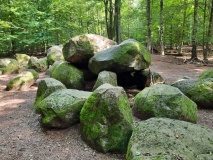
Megalithic Samadhies of ZURA KOTADI area North of BHUJ –KUTCH and JANGADIYA Many of questions have been raised for the place of Megalithic Samadhies of ZURA KOTADI area North of BHUJ –KUTCH and JANGADIYA as the area has remained still unexplored. Both places has different characteristics, In old time last respect to body was not ONLY by cremations but also methods called SAMADHIes as well. We have closely inspected both varieties with an expert Mahant shree who does these type of ceremonials of samadhies at present time as well. As per his opinion those are regular SAMADHIES in sitting posture (As we explain in YOGA as PADMASHANA) and other type is where body is laid down in supine (flat) posture. But JANGADIYA has special characteristic of the supine posture Samadhies. As the SAMADHI is Shaped as body shape and that’s the most different type of characteristic of such SAMADHIes. Most have not visited such places and so raised questions. But it self is suggestive that WORD JANGADIYA / JANGADIA is saying that JAN (person) GADIYA (Burried) / JAN (person) GADIA (Burried) While examining the place all aspect of the place is to be undisturbed so as to without tempering any places. But weather does its job of its own. Rain and wind do expose upper part of the area and so area is exposed from top only. So in case of sitting postures the part exposed first is Cranium – upper part of head. And in case of supine postures is more likely from toes parts of legs. According to Mahant shree who practice Samadhi ceremonials, if Samadhi is given in sitting posture a lamp (KODIYU) is placed behind the head region and body is covered with sand and SALT. A part of Samadhi area is open on east side as a tradition, suggestive those people worshiped sun at that time. We examined weather exposed area of Samadhies and we found some of potteries of ancient time in two colours, Red as usual and Black as well. But along with the curved black potteries there are some gray artefacts. But that was lighter than the clay potteries. Those were actual bone parts discoloured by salt and weathering effects. And is also more confusing in sitting posture as its shape similarity with curved cranial bones and similar shape and coloured pottery parts. But an expert eye can differentiate as bone parts are lighter and cranial bone has specific groves in side the curve bones. That’s the specific feature of internal cranial anatomical features. In one of such specimen such groves of internal cranial bone veins are clearly visible in temporal bone. That’s is clearly suggestive of all procedures in the ancient time and dating can be done by many methods, Carbon dating may prove inconclusive as may be carbon contamination is more common. But Bone DNA are very specific to Identify the Human nature, Type of populations and timing of the ceremonials by the process of DNA haplography study. In the attached picture all features explained are clearly visible in pictures and cranial bone groves for internal cranial veins are also visible. And discolouration is also remarkable to see the matching with potteries of some artefacts used at the time. Generally all megalithic structure may be covered from top or may remained open depending on the type of culture / traditions used for the ceremonials. Dr. BHUDIA Science Group Of INDIA President:'Kutch Science Foundation'. Founder :'Kutch Amateurs Astronomers Club - Bhuj - Kutch'. Life Member:'kutch Itihaas Parishad'. in.groups.yahoo.com/group/scienceclubofindia in.groups.yahoo.com/group/kutchscience in.groups.yahoo.com/group/kachchh in.groups.yahoo.com/group/bhuj Do visit our ABOVE Clubs/Groups of Science Groups of India.
Something is not right. This message is just to keep things from messing up down the road