

Register here - as a registered user you get more features and fewer ads.
A CARVED stone has set historians thinking about the ancient history of a Yorkshire landmark.
English Heritage archaeologists yesterday revealed the stone they uncovered on Whitby's headland, which may date back 4,000 years,
Since 2001 they have been exploring the headland to find out more about life there in Anglo-Saxon times, when St Hild founded Whitby Abbey.
Archaeologists also uncovered evidence of an Iron Age home, dating from between 500BC and 100AD, and when they returned to the cliff top this autumn to continue their investigations found even older remains.
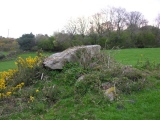
The carved stone, which measures 16in by 20in and was found to the east of the abbey, has linear carved markings, similar to Bronze Age stones found on the North York Moors, which date from between 700BC and 2000BC.
Historians think the carvings may have marked tribal boundaries or had a ritual significance – the best-known carved stone found on Fylingdales Moor in 2003, which is much more ornate, has been likened to grave art found in Ireland.
Archaeologist Sarah Jennings, English Heritage's project director for the excavation, said the headland stone was potentially very significant as little material from this period has been found.
"But we need to wait for detailed analysis before we draw firm conclusions," she said. "If it is Bronze Age, then it underlines that the headland has a long history of settlement, well before St Hild founded the Abbey in 657AD."
The headland's cliff top is eroding each year and much of the area under investigation could disappear in the next 20 years. English Heritage is trying to recover as much historical information as possible before nature takes its course.
Archaeologists also uncovered a defensive Iron Age enclosure, while signs of later industrial activity during the Anglian period, from the 7th to 9th century AD, may date to the foundation of the first abbey.
During the 2002 dig, iron slag and evidence of glass and lead-making were found nearby.
"Perhaps we also need to start to think of the site as an Anglo-Saxon industrial estate," said Ms Jennings.
http://www.yorkshirepost.co.uk/news/Carved-stone-makes-its-mark.3373467.jp
Something is not right. This message is just to keep things from messing up down the road