



The Dice of the Gods: How Ancient Cultures Played with Luck and Destiny
Submitted by Andy_B on Wednesday, 10 June 2026 Page Views: 71
Resources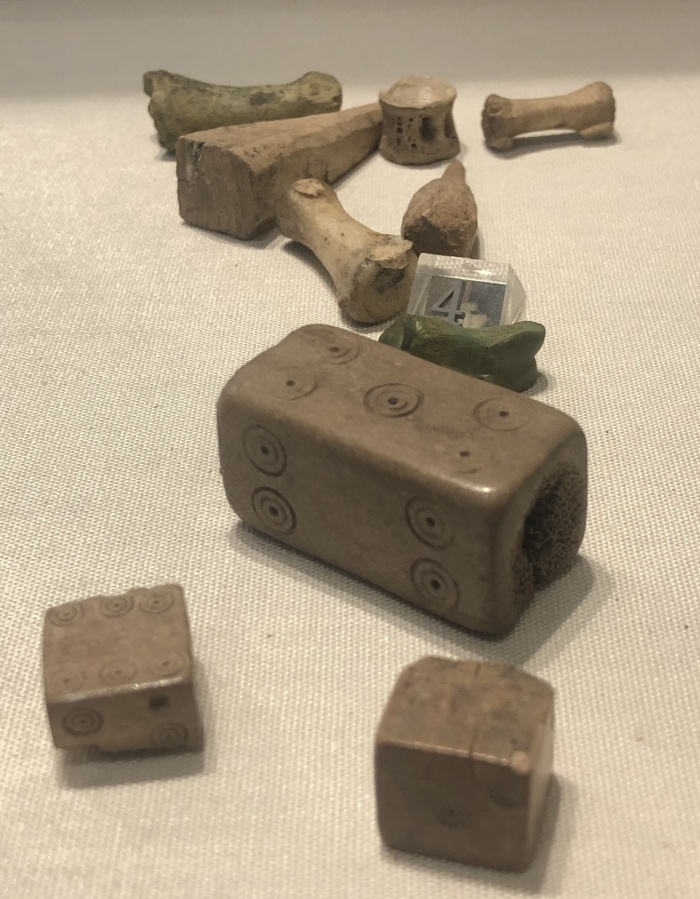
Bone Rollers: The Ice Age Origins of Dice
Long before humans carved cubic stones, they used animal parts to generate random numbers. Archaeologists frequently find talus bones from sheep and goats, known as astragali, at prehistoric campsites. The core human desire to test fortune has remained remarkably stable throughout history. While modern enthusiasts visit bestcasino.com for recreation, ancient hunters tossed these knucklebones onto cave floors to divine the future. These four-sided bones provided a primitive system of probability.Excavations across Eurasia reveal how deeply these bones were integrated into daily life. They were not merely discarded food waste. People modified, polished and kept them in special pouches. Here are the primary ways ancient communities utilized astragali:
• Divination: Priests used them for cleromancy, interpreting the landing positions as direct messages from ancestral spirits.
• Skill games: Youth threw them into circles to knock out opponent bones, testing physical accuracy.
• Burial offerings: Mourners placed decorated knucklebones in graves to guide the deceased in the afterlife.
Royal Games and Cosmic Journeys
As civilizations grew, games became more complex. In Mesopotamia, Sumerian elites played the Royal Game of Ur around 2600 BC. They threw four-sided tetrahedral dice to move pieces across a beautifully inlaid wooden board. In neighboring Egypt, people played Senet before 3100 BC. Players threw split reeds or flat wooden sticks instead of cubes. The landing positions of these sticks determined how far a piece could travel.Senet was far more than a recreational activity for the pharaohs. The gameboard represented the journey of the human soul through the underworld, known as Duat. Players had to navigate dangerous squares to reach safe zones. Ancient texts describe several key squares that held deep spiritual meaning:
1. The House of Netting: A hazard square that trapped pieces, representing spiritual danger.
2. The House of Water: A space where failed rolls sent pieces back, symbolizing the watery abyss.
3. The House of the Three Truths: A safe haven that offered protection and bonus moves.
Roman Passion and Dice Tricks
While Egyptians focused on the spiritual journey, other Mediterranean societies turned play into a daily obsession. Classical antiquity elevated dice games to a massive scale. Greek and Roman players used six-sided clay, bone or bronze cubes. Romans called the game alea and played it in taverns, military camps and palaces. Emperors like Caligula and Claudius were notorious gamblers, with Claudius even writing a celebrated handbook on dice strategy. Even though Roman law banned gambling outside the Saturnalia festival, citizens ignored the rules daily.To protect their coin, players had to stay alert. The urge to win pushed some ancient gamblers to manipulate their equipment. Archaeologists have discovered Roman dice that prove cheating is as old as the games themselves. Gamblers used various methods to tilt the odds in their favor:
• Loaded dice: Inserting small lead weights inside one side to make the opposite number land face up.
• Shaved edges: Shaving down specific corners to alter the roll dynamics on flat tables.
• Rigged cups: Designing leather throwing cups with internal ridges to catch or guide the dice.
Modern players might use digital algorithms, but the core human instinct remains unchanged. We still look at a random result with the same hope that filled ancient Sumerian temples. Every roll is a small leap into the unknown. When you toss a die, you connect with thousands of years of human history.
