

Register here - as a registered user you get more features and fewer ads.
Quote:
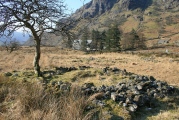
"Kintyre also has a fine collection of standing stones, from single stones to multiple stones, for example at Ballochroy (Fig. 1.5). The association of a cist with the standing stones here is suggestive of a Bronze Age date, although not definitively demonstrated. The 38 documented panels of rock art may also date to this period (RCAHMS 1971, 52-61; Stevenson 1997)."
- although not definitively demonstrated -
The stones appeared to me to very strongly represent something astronomical in addition to the promoted archaeological/archaeoastronomical consensus of one of Alexander Thom's solstitial sites that never was - except by coincidence (Burl) regarding the mid-winter solstice to southwest. Largely also due to the work of Clive Ruggles in demolishing the degree of accuracy achievable at prehistoric astronomical observatories, not the least at Scottish sites.
I turned my gaze to Scottish sites for the first time recently, starting at Ballochroy/Kintraw, in the wake of my research way down south!
Using conclusions from that research, I believe I have convincingly dated the stones to around the 3000BC epoch. Furthermore, the accuracy to which the stones have been laid out reflect an observational accuracy of the builders to 1/6 of a degree, exactly "on the money" as per my starting hypothesis. This puts a completely different perspective on why Kintraw was brought into play - a scientific objective to increase the accuracy of their "instrumentation" of the day!
The authors' should keep their comment well in mind.
Look to Academia.edu for my report coming shortly.
Something is not right. This message is just to keep things from messing up down the road